What Is Auto Leasing? A Complete Guide to Leasing vs. Buying a Car Ever wondered if auto leasing could slash your monthly payments without owning the vehicle? Leasing offers a flexible way to drive a new car, contrasting with traditional buying where you build equity over time. This guide demystifies the process-from lease terms and costs to pros, cons, and key differences-helping you choose the smartest path for your next vehicle.
Table of Contents
Key Takeaways:
- Auto leasing lets you drive a new car for a fixed term with lower monthly payments than buying, but you don’t own it-return it at the end or buy it out.
- Leasing advantages include lower upfront costs, depreciation protection, and warranty coverage; disadvantages are mileage limits, no equity buildup, and potential end-of-term fees.
- Compared to buying, leasing avoids long-term ownership hassles but costs more over time without building equity-ideal for frequent upgraders.
How Auto Leasing Works
Auto leasing constitutes a financed form of vehicle rental, whereby payments are made to cover the vehicle’s depreciation and rent charge in addition to applicable fees over a predetermined lease term. According to NerdWallet’s analysis, such payments generally encompass 50-60% of the vehicle’s total value.
Key Lease Agreement Terms
Core lease agreement terms encompass the capitalized cost, defined as the vehicle’s price reduced by any down payment; the residual value, which represents the projected worth of the vehicle at the end of the lease term (typically 50-60% for a three-year lease); and the money factor, an equivalent to the interest rate (for example, a factor of 0.0025 corresponds to an annual percentage rate of 6%).
Additional essential terms include:
- Lease term, commonly ranging from 24 to 36 months;
- Purchase option, allowing the lessee to buy the vehicle at the residual value (e.g., $16,500 for a vehicle with a capitalized cost of $30,000);
- Down payment, an initial cash outlay that lowers the capitalized cost;
- Acquisition fee, a dealer-imposed charge typically between $500 and $1,000;
- Disposition fee, an end-of-lease cost generally amounting to $300 to $500;
- Mileage allowance, usually set at 10,000 to 15,000 miles per year, with excess mileage incurring fees of $0.15 to $0.25 per mile;
- And wear-and-tear charges, covering repairs for damage exceeding normal use.
Pursuant to the Truth in Lending Act, all lease agreements must clearly disclose these terms to ensure transparency for consumers.
The monthly lease payment is calculated using the formula: [(Capitalized Cost – Residual Value) / Lease Term] + [(Capitalized Cost + Residual Value) x Money Factor].
For instance, consider a $30,000 Tesla Model 3 with a capitalized cost of $25,000, a 55% residual value ($16,500), a money factor of 0.0015, and a 36-month term: [($25,000 – $16,500) / 36] + [($25,000 + $16,500) x 0.0015] $236 + $63 = $299 per month.
Mileage Limits and Wear Rules
Standard mileage allowances in vehicle leases typically include a mileage limit of 10,000 to 15,000 miles per year, with overage fees averaging between $0.15 and $0.25 per mile, according to Consumer Reports’ 2024 leasing guide.
For urban drivers, 12,000 annual driving miles is considered standard, based on Edmunds data indicating a U.S. national average of 13,476 miles per year.
To prevent incurring such fees, it is advisable to monitor mileage using applications such as MileIQ, which employs GPS technology to automatically log drives; the service is available at no cost for basic features or for a premium subscription of $5.99 per month.
Additionally, negotiating terms such as higher mileage limits at the outset of the lease-for an additional $20 to $50 per month-proves particularly beneficial for individuals with extended commutes.
Regarding wear and tear, lease agreements generally permit minor scratches but impose charges exceeding $100 for dents larger than two inches in diameter.
In a practical example, a commuter who surpasses 15,000 miles annually over the course of a three-year lease may incur penalties totaling more than $1,500, underscoring the critical need for diligent and proactive mileage tracking.
Advantages of Leasing a Car
Leasing provides lower monthly payments-averaging $516 compared to $738 for purchasing, according to Experian’s 2023 State of the Automotive Finance Market report-while granting access to new vehicles under comprehensive warranty coverage.
Leasing typically results in 20-30% savings on monthly payments relative to financing options, frequently including maintenance packages that minimize out-of-pocket expenses.
For instance, a Tesla Model Y lease at $399 per month, when combined with monetary perks such as the $7,500 federal tax credit, reduces the effective cost by 25%, yielding an approximate return on investment of $4,500 over a three-year term.
This strategy enables individuals to operate higher-end vehicles in the EV market, including PHEVs, or premium models without the challenges of resale, while benefiting from exceptional fuel economy-up to 120 MPGe in vehicles such as the Model Y.
An AAA study substantiates that leased vehicles experience 15% lower repair costs, attributable to extensive warranties that address most issues throughout the lease duration.
Disadvantages of Leasing a Car
A significant disadvantage of leasing is the imposition of mileage restrictions, which can result in fees exceeding $3,000 for high-mileage drivers. According to Edmunds 2024 data, such penalties affect approximately 40% of lease returns.
For example, one driver incurred a $2,000 penalty for exceeding the 12,000-mile limit; to mitigate future risks, he negotiated an 18,000-mile allowance at the outset of his next lease.
Along with mileage limitations, leasing presents several other challenges, each accompanied by practical solutions:
- Lack of equity accumulation: Leasing agreements do not contribute to ownership equity. To address this, consider exercising the end-of-term purchase option, as recommended by Consumer Reports guidelines.
- Charges for wear and tear: Fees for interior damage typically range from $200 to $500; prevent these by installing protective mats and seat covers from the beginning of the lease term.
- Early termination penalties: These can amount to as much as three months’ lease payments. To avoid such fees, explore lease transfer options through platforms like Swapalease.com.
- Restrictions on customization: Vehicle modifications may lead to deductions of up to $1,000. To maintain value, refrain from making any alterations during the lease period.
- Elevated long-term costs: Over a six-year period, an auto lease may cost approximately $10,000 more than purchasing outright, based on calculations from NerdWallet tools. It is advisable to conduct a thorough cost comparison prior to committing to a lease.
Leasing vs. Buying: Core Differences
The financial decision between leasing and purchasing a vehicle primarily depends on an individual’s priorities regarding usage versus car ownership. Leasing is particularly advantageous for low-mileage drivers who prefer frequent access to new models, while buying is more suitable for those aiming to build long-term equity.
According to a 2023 J.D. Power study, 65% of consumers favor ownership due to its perceived long-term value.
Upfront and Monthly Costs
Leasing generally entails lower initial costs, with down payments typically ranging from $2,000 to $3,000, compared to 10-20% ($3,000-$6,000) required for purchasing. This structure results in average monthly payments of $450 for leasing, in contrast to $650 for a 60-month long-term loan or auto loan, according to Bankrate’s 2024 data.
Leasing provides no ownership rights, whereas purchasing enables the accumulation of equity. The following comparison for a Ford F-150 illustrates key differences:
| Aspect | Leasing | Buying | Example | |———————|————————–|———————————|———————————-| | Upfront Cost | $2,500 down | $5,600 (20% of $28,000) | F-150 lease vs. purchase | | Monthly Payment | $500 (36 months) | $650 (60 months at 6% APR) | Total lease: $20,500; Buy: $39,000 | | ROI Over 3 Years | Saves $12,000 but no asset | Builds $10,000 equity | Edmunds 2023 data | | Negotiation Tips | Seek subvented leases (0% money factor) | Haggle for 4-7% loan rates, cap cost reductions | AAA recommends comparing dealer incentives |
Leasing is appropriate for short-term needs, while purchasing aligns with long-term value considerations. For auto finance when buying, consider options from lenders like LightStream, Auto Credit Express, and MyAutoloan, or use services such as NerdWallet’s Build & Buy Car Buying Service. Professionals are advised to consult tools such as Kelley Blue Book for accurate quotes. These recommendations are based on data as of Sept. 30, 2025, and may evolve in the second quarter of 2025.
Ownership and Equity Building
Purchasing a vehicle establishes equity through principal and interest payments on the loan, enabling the owner to realize value upon trade-in or resale.
For instance, a certified pre-owned used vehicle valued at $25,000 may retain approximately 70% of its resale value after three years, according to Kelley Blue Book data.
In contrast, leasing provides no ownership interest, as it functions akin to a rental agreement-a fee for usage that accounts for depreciation and interest without accruing any equity, resulting in no residual asset at the lease’s conclusion.
Consider a $30,000 Chevrolet Equinox financed over 36 months at a 4% interest rate. With purchasing, payments amortize toward the principal balance, generating equity equivalent to total payments minus accrued interest-approximately $15,000 in ownership value after 36 months.
Experian data indicates that the average auto loan achieves about 40% equity by the third year, which could yield a resale profit of around $18,000.
To mitigate risks while balancing cost and reliability, individuals may opt for certified pre-owned (CPO) vehicles, which often include extended warranties. For example, Ford and General Motors offer a 6-year/100,000-mile coverage on qualifying models.
End-of-Term Options
At the conclusion of a vehicle lease, lessees have several options: returning the vehicle (incurring a disposition fee of $350-$600), purchasing it at the predetermined residual value (for example, $18,000 on an original lease value of $30,000), or trading it in toward a new lease, an approach adopted by 55% of lessees according to Edmunds data.
Returning the vehicle provides a straightforward transition provided mileage limits are not exceeded (typically 10,000-15,000 miles per year); however, any accumulated equity is forfeited, and excess wear-and-tear charges may apply, up to $500.
For a buyout, lessees must account for additional taxes and fees amounting to 6-8%; financing options such as those offered by LightStream at a 5.99% APR can enhance affordability, particularly when the vehicle’s market value surpasses the residual value-as illustrated by Tesla models, where depreciation rates of 53% can yield savings exceeding $5,000 compared to retail pricing, per Kelley Blue Book.
Trading in the vehicle allows any negative equity to be incorporated into the new lease agreement, facilitating a smoother transition in accordance with UCC Article 2A provisions governing lease-end rights.
Lessees should consider depreciation protection add-ons (ranging from $500-$1,000), available from providers such as Ally, to offset potential losses; this is supported by Experian data indicating that 40% of vehicles experience 50% depreciation within three years.
Understanding Lease Costs
Lease costs typically consist of depreciation (representing 50-60% of the manufacturer’s suggested retail price over the lease term), money factor charges (principal interest equivalent to an interest rate of 3-7% APR), and various fees, such as acquisition fees ranging from $595 to $1,095.
According to the NerdWallet calculator, these elements can increase the total payment by 10-15% above the base amount.
To determine your monthly lease payment, utilize a reliable tool such as the Edmunds lease calculator and follow these steps:
- Calculate the capitalized cost (for example, $28,000 after a $2,000 down payment on a $30,000 vehicle).
- Estimate the residual value (typically 55% for a 36-month term, resulting in $16,500).
- Compute the rent charge using the money factor (e.g., 0.0025 x ($28,000 + $16,500) = $111.25 per month).
- Incorporate taxes, fees, and registration costs (approximately $100 per month in total).
In the EV market, for electric vehicles (EVs) or plug-in hybrid electric vehicles (PHEVs), the $7,500 federal tax credit may reduce effective costs by approximately $200 per month, in accordance with IRS guidelines. As an illustrative example, a 36-month lease for a Toyota Camry Hybrid may total $15,000.
It is advisable to exercise caution regarding potential hidden fees, such as $500 drive-off charges, which can substantially increase upfront expenses.
Prospective lessees should thoroughly review all contract terms prior to signing.
Steps to Lease a Car Successfully
To initiate a successful vehicle leasing process, obtain pre-approval through platforms such as MyAutoloan, which can secure interest rates as low as 4.5% during the second quarter of 2025. Complete this step prior to visiting dealerships by Sept. 30, 2025, to capitalize on year-end incentives.
Adhere to the following six steps for an efficient and streamlined leasing experience.
- Assess your requirements (approximately 1 hour): Utilize NerdWallet’s car lease quiz or Consumer Reports to identify vehicles that align with your lifestyle. Exercise caution in estimating annual mileage to avoid overage fees of $0.20 per mile.
- Review your credit profile (15 minutes): Obtain your free credit report from Experian; target a credit score of 700 or higher, as indicated by Federal Reserve data, to qualify for the most favorable rates.
- Compare financing options (2 days): Evaluate offers from providers such as Build & Buy Car Buying Service, Auto Credit Express and LightStream. According to Edmunds research, average rates stood at 5.2% in the second quarter of 2025.
- Negotiate terms (1 dealership visit): Approach the negotiation of the capitalized cost with the same diligence as a vehicle purchase, utilizing TrueCar for market benchmarks.
- Examine the lease agreement (30 minutes): Confirm key provisions, including 36-month terms, a residual value exceeding 50%, and limitations on mileage and disposition fees.
- Finalize and commence the lease: Execute the agreement, incorporate gap insurance (approximately $500 annually), and benefit from applicable incentives.
Estimated total duration: 1 week. A frequent oversight is failing to account for residual values, which may result in lease payments that are 20% higher than anticipated.
Learn more, Lease vs. Buy: Which car financing option fits your budget?.
Frequently Asked Questions
What Is Auto Leasing? A Complete Guide to Leasing vs. Buying a Car
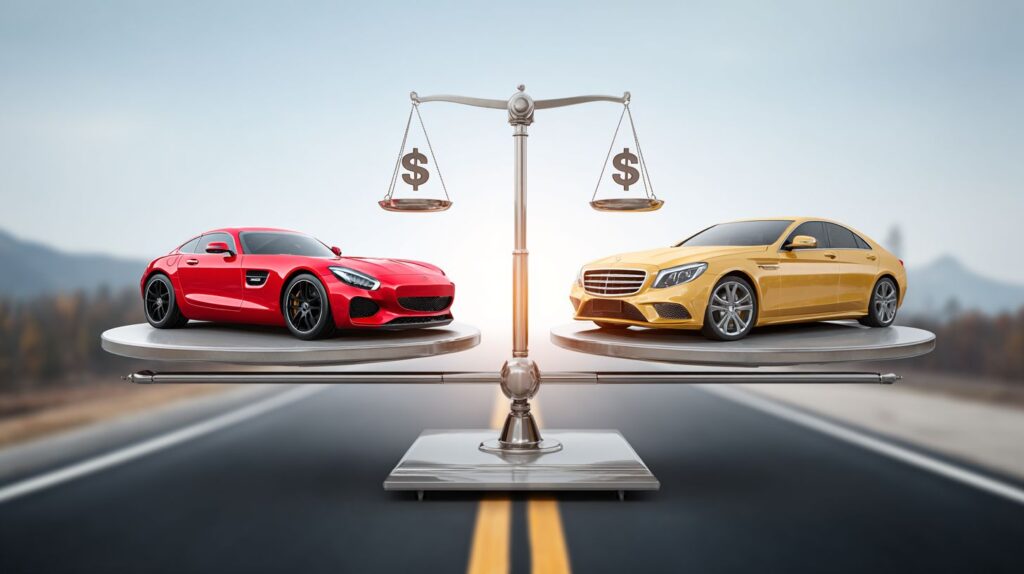
Auto leasing is a popular alternative to purchasing a vehicle outright, where you essentially rent a car from a dealership or manufacturer for a set period, typically 2-4 years. In this complete guide to leasing vs. buying a car, leasing allows you to drive a new vehicle without the long-term commitment of ownership. Unlike buying, where you pay the full price (cash or financed) and own the car at the end, leasing involves monthly payments based on the vehicle’s depreciation during the lease term, plus fees. You return the car at the end or have options to buy it. Leasing often means lower upfront costs and payments, access to newer models, and included maintenance in some plans, but you don’t build equity and face mileage limits.
What are the main advantages of auto leasing over buying a car?
The primary advantages of auto leasing include lower monthly payments since you’re only covering the car’s depreciation value rather than the full purchase price, minimal down payments, and the ability to drive a brand-new vehicle every few years without the hassle of selling an old one. In this complete guide to leasing vs. buying a car, leasing also often covers warranty repairs and provides tax benefits for business users, making it ideal for those who prioritize affordability and variety over long-term ownership.
How does the cost structure of auto leasing compare to buying a car?
Auto leasing typically features lower initial and monthly costs compared to buying, with payments calculated on the difference between the car’s value at lease start and end, plus interest (money factor) and taxes. Buying involves higher payments if financed, but you build equity and can sell or trade the car later. According to this complete guide to leasing vs. buying a car, leasing may include fees like acquisition, disposition, and excess mileage charges, while buying has ongoing maintenance costs after warranty but no mileage restrictions or end-of-term surprises.
What restrictions should I be aware of when auto leasing a vehicle?
When auto leasing, common restrictions include annual mileage limits (often 10,000-15,000 miles), prohibitions on modifications, and requirements to maintain the car in good condition to avoid end-of-lease penalties. In the context of what is auto leasing? A complete guide to leasing vs. buying a car highlights that exceeding mileage or causing excessive wear can lead to fees, unlike buying where you have full freedom over usage and customization without contractual limits.
Can I negotiate the terms of an auto lease like I would for buying?
Yes, auto leasing terms are highly negotiable, similar to buying-you can haggle on the capitalized cost (vehicle price), residual value, money factor (interest rate), and lease duration. This complete guide to leasing vs. buying a car emphasizes comparing multiple offers, as dealers often have flexibility on incentives and fees. Just like financing a purchase, shopping around and understanding your credit score can secure better rates and lower overall costs.
What happens at the end of an auto lease agreement?
At the end of an auto lease, you typically return the vehicle to the dealer for inspection; if it’s in good condition and under mileage limits, there are no further obligations. Options include leasing or buying a new car, purchasing the leased vehicle at its predetermined residual value, or walking away. In what is auto leasing? A complete guide to leasing vs. buying a car, this contrasts with buying, where you own the asset outright and can keep, sell, or continue driving it indefinitely without returning it.