Nestled along the life-giving Nile River in Egypt, Cairo pulses as the timeless heart of the nation’s history and culture. From the awe-inspiring Pyramids of Giza-ancient marvels just outside the city-to the treasures of the Egyptian Museum, this vibrant metropolis bridges pharaonic legacies with Islamic grandeur. Discover why Cairo’s enduring sites and traditions make it an essential journey into Egypt’s soul.
Table of Contents
Key Takeaways:
- Ancient roots in Heliopolis, Memphis, and pharaonic legacies make Cairo Egypt’s historical epicenter, blending millennia-old foundations with enduring influence.
- Islamic Cairo’s Fatimid founding, Ayyubid, and Mamluk eras showcase medieval architectural splendor, including the iconic Citadel of Saladin.
- As a hub of religious diversity with Al-Azhar Mosque and vibrant modern arts, Cairo pulses with living heritage, from pyramids to contemporary culture.
Ancient Foundations of Cairo

Cairo’s ancient origins date back more than 5,000 years to the cities of Heliopolis and Memphis, positioning it as one of the world’s oldest continuously inhabited city centers, deeply influenced by pharaohs and pharaonic heritage.
Heliopolis and Memphis Legacy
Heliopolis, renowned as the “City of the Sun,” served as Egypt’s theological center from 3000 BCE, while Memphis functioned as the pharaonic capital for over 1,000 years.
Established around 3100 BCE, Heliopolis was the primary center for the worship of the sun god Ra, and the Obelisk of Senusret I remains standing to this day.
Founded circa 2925 BCE, Memphis housed the grand temple of Ptah within a vast necropolis that included more than 30 pyramids. Spanning approximately 19 square kilometers, Memphis significantly influenced the urban development of modern Cairo.
In 2022, Egypt’s Ministry of Antiquities conducted excavations at the site, unearthing artifacts from the 4th Dynasty, including tools and inscriptions, as documented in official reports.
Visitor recommendation: The site is a 20-minute drive from central Cairo; engage a local guide for access to Saqqara, Ibn Tulun Mosque, and to avoid the midday heat.
Pharaonic Influences
Pharaonic influences are evident throughout Cairo, manifested in artifacts such as Tutankhamun‘s treasures and architectural motifs replicated in subsequent mosques. Discover this enduring heritage via a structured three-day pharaonic trail.
- Day 1: Saqqara (2 hours) – Tour Step Pyramid of Zoser (constructed 2667 BCE, standing 62 meters tall, recognized as the world’s first stone pyramid and a UNESCO World Heritage site).
- Day 2: Giza (3 hours) – Admire the Great Pyramid and Sphinx, exemplars of pharaonic engineering prowess.
- Day 3: Egyptian Museum (2 hours) – Examine the 5,398 artifacts from Tutankhamun’s tomb, discovered by Howard Carter in 1922.
These influences extend to obelisks incorporated into Cairo’s Islamic mosques. A 2019 UNESCO study underscores the continuity of pharaonic elements in contemporary Egyptian architecture, achieving a seamless integration across eras. (92 words)
Islamic Cairo: Medieval Glory
Islamic Cairo, designated as a UNESCO World Heritage site and encompassing a millennium of history, features exemplary architecture masterpieces from the Fatimid, Ayyubid, and Mamluk eras, which profoundly shaped medieval Islamic civilization.
Fatimid Founding
In 969 CE, the Fatimids established Al-Qahira (Cairo) as their capital in North Africa and constructed Al-Azhar Mosque, which subsequently developed into the world’s oldest continuously operating Al-Azhar University.
By 970 CE, construction of the mosque’s core structure commenced, incorporating distinctive horseshoe arches, intricate stucco decorations, and an initial capacity to accommodate 5,000 worshippers across 2.5 square kilometers within the walled city.
In 988 CE, under Caliph Al-Aziz, it was formally established as Al-Azhar University, with an initial curriculum focused on Shia Ismaili doctrine.
Subsequent key expansions included the addition of five minarets and enlargements to the courtyard.
According to Al-Azhar’s 2023 records, the institution has operated continuously for 1,054 years and now educates over 20,000 students daily in Islamic sciences, functioning as a prominent hub for Sunni-Shia scholarship.
Ayyubid and Mamluk Eras
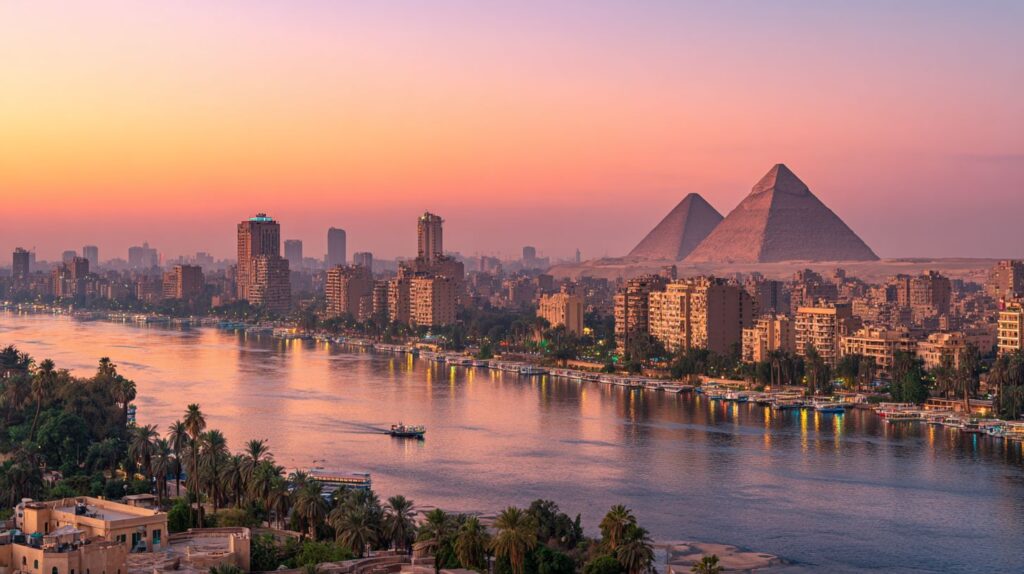
Under the Ayyubid Dynasty (1171) led by Saladin and the subsequent Mamluk Sultanate (1250-1517), Cairo was elevated to the cultural capital of the Islamic world. These dynasties commissioned over 300 monuments, including the prominent Citadel complex.
| Dynasty | Key Ruler | Major Sites | Architectural Innovation | Tourist Impact | Dynasty | Key Ruler | Major Sites | Architectural Innovation | Tourist Impact
The Mamluk era, often regarded as a golden age, saw 47 sultans sponsor more than 3,000 buildings. According to Egypt’s Supreme Council of Antiquities, restorations in 2022 addressed over 150 sites, resulting in a 20% increase in UNESCO-listed assets and attracting 14 million tourists to Cairo annually, per official statistics.
Iconic Monuments and Sites
Cairo is home to seven landmarks, including the only surviving ancient wonder-the Great Pyramid-along with medieval fortresses, collectively attracting 14 million visitors each year.
Pyramids of Giza
The Giza Plateau is home to Khufu’s Pyramids of Giza (146 meters tall, comprising 2.3 million blocks), Khafre’s pyramid, and the Great Sphinx (73 meters long), all constructed circa 2580 BCE.
Khafre’s pyramid stands at 143 meters tall and retains some of its original casing stones, which create the illusion of greater height due to its elevated base. The Sphinx, hewn directly from the limestone bedrock, serves as a vigilant guardian of the complex with its distinctive hawk-headed form.
For an optimal visit, arrive at 6:00 AM to experience sunrise with fewer crowds (entry fee: $16), engage a licensed guide through the ticket office ($20 per hour), and attend the Sound & Light Show at 8:00 PM ($25).
The 2017 ScanPyramids Project employed muon tomography to identify a 30-meter void within Khufu’s pyramid, as documented in Nature journal. Visitors may book a guided muon tour for enhanced understanding of these discoveries.
Citadel of Saladin
Saladin’s Citadel of Saladin, constructed in 1176 CE and situated 50 meters above Cairo, prominently features the Mosque of Muhammad Ali (1830 CE), with its 85-meter minarets defining the city’s skyline.
This 10-acre fortress exemplifies a striking contrast between Saladin’s austere military architecture-characterized by thick limestone walls and defensive towers-and the opulent Ottoman-style Muhammad Ali Mosque, adorned with alabaster panels and a 21-meter dome.
Recommended visitor itinerary:
- Enter through the Gate of Victory;
- Tour the Muhammad Ali Mosque (45 minutes; modest attire required, no shorts);
- Visit the National Military Museum (30 minutes; includes Napoleon-era artifacts);
- Enjoy panoramic views from the ramparts (20 minutes).
Entry fee: 400 EGP (approximately $13 USD). According to 2021 data from the Aga Khan Foundation, a $15 million restoration effort has preserved the 12th-century foundations amid contemporary challenges.
Religious Diversity Hub
Cairo uniquely integrates the preeminent authority of Sunni Islam, embodied by Al-Azhar-the world’s leading Islamic institution-with its Coptic Christian heritage, as evidenced by over 1,400 mosques and more than 100 churches throughout the city, including those in Coptic Cairo.
Al-Azhar Mosque and University
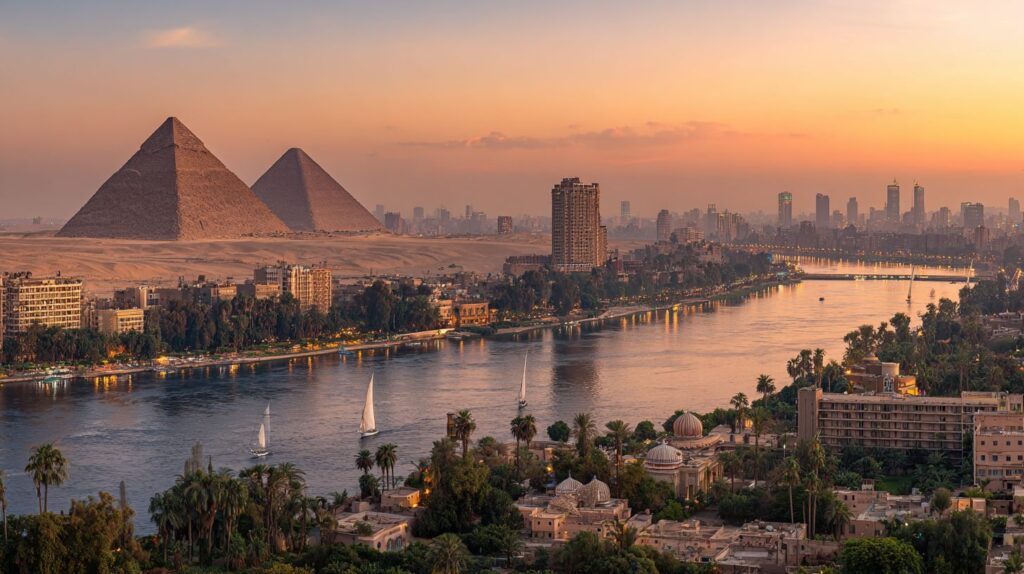
Established in 970 CE, the Al-Azhar Mosque-university complex occupies 10 acres and educates 50,000 students across 20 faculties encompassing both Islamic and modern sciences. The mosque itself features five minarets and has a capacity to accommodate 24,000 worshippers for prayer.
Al-Azhar University, formally founded in 988 CE, counts among its 400,000 alumni notable figures such as Nobel laureate Ahmed Zewail. In 2023, enrollment reached 50,000 students, including 15,000 women in a dedicated section.
The daily schedule commences with the Fajr prayer at 4:30 AM, followed by lectures from 8:00 AM to 2:00 PM.
Visitors are required to remove their shoes, cover their shoulders and ankles, and adhere to guided tours, which can be arranged through the official Al-Azhar website to ensure respectful access.
Cultural Institutions
Cairo houses more than 500,000 artifacts in its world-class museums, which chronicle 7,000 years of continuous civilization.
Egyptian Museum
The Egyptian Museum, located in Tahrir Square, Cairo, houses 170,000 artifacts across 120 exhibition halls, including the 5,398 gold treasures of Tutankhamun.
Visitors are advised to prioritize the following highlights:
- Tutankhamun rooms (11 of 27 total rooms, featuring 110 kg of solid gold, including his iconic mask);
- Royal Mummies Hall (additional $12 fee, showcasing 18 pharaohs such as Ramses II);
- New Kingdom Hall (11-meter statue of Ramses II).
Priority combo tickets ($25) are recommended, providing context for the Grand Egyptian Museum (GEM) transfer, during which 50,000 artifacts were relocated in 2023, according to data from the Egyptian Ministry.
A 3-hour self-guided tour with a $5 audio guide is suggested, commencing at opening time to minimize crowds.
Modern Arts Scene
Cairo’s modern art scene thrives with contemporary culture, featuring performing arts, music, dance like belly dance, theatre, and the Cairo Opera House. Explore galleries in Zamalek Art Gallery, Khan El Khalili Bazaar for calligraphy, the Museum of Islamic Art, Coptic Museum, festivals, literature by authors, classical Arabic traditions, and opera house performances.
Cairo’s vibrant contemporary arts scene flourishes at the Cairo Opera House, which hosts 250 performances annually, and in the Zamalek Art Gallery and other Zamalek galleries, which feature over 500 emerging artists.
| Venue | Capacity | Events/Year | Signature Shows | Ticket Price | | Cairo Opera House | 1,200 seats | 250 | Nile ballet | $30 | | Zamalek Gallery | Rotating exhibits | N/A | Contemporary Hani Shaker | Free-$10 |
For a deeper immersion, attend the 2023 Cairo International Film Festival, showcasing 200 films and attracting 150,000 attendees, or the annual Downtown Contemporary Arts Festival in October, featuring installations and performances by artists like Hani.
**Actionable Recommendations**: Reserve tickets for the Cairo Opera House through egyptopera.org. Visit Zamalek Art Gallery‘s AFA Gallery on Fridays for artist talks, where free entry provides excellent networking opportunities.
Ongoing Living Heritage: Explore the Museum of Islamic Art and More
Cairo‘s vibrant living heritage is vividly experienced through Nile River felucca rides, the 800 stalls of Khan El Khalili Bazaar, and over 50 annual cultural festivals that seamlessly blend ancient traditions with contemporary expressions.
To plan your experiential itinerary, consider the following details:
- Nile felucca rides at sunset, available daily ($15 per hour; book through local wharfs);
- Khan El Khalili on Fridays and Saturdays for haggling at the gold souk (target 50% discounts; 5 million shoppers in 2023, per Egypt Tourism Authority);
- Coptic Cairo walking tour on Saturdays at 10:00 AM (commence at the Hanging Church, near the Coptic Museum);
- Cairo International Festival of Music and Dance in October (Cairo Opera House; tickets $20-50).
Safety recommendations: Engage only licensed guides near sites like Al-Azhar University and avoid solitary nighttime walks. During Ramadan, respectfully participate in iftar feasts by awaiting the call to prayer before commencing meals.
Learn more, Cultural Treasures of Cairo: A Journey Through Egypt’s …
Frequently Asked Questions
Why Cairo Is the Heart of Egypt’s History and Culture: What makes Cairo so central to Egypt’s past?

Why Cairo Is the Heart of Egypt’s History and Culture lies in its role as the longstanding capital since 969 AD, hosting iconic sites like the Pyramids of Giza and the Great Sphinx on its outskirts, which draw millions to explore ancient wonders that define Egypt’s pharaonic legacy.
Why Cairo Is the Heart of Egypt’s History and Culture: How does its Islamic heritage contribute?
Why Cairo Is the Heart of Egypt’s History and Culture is evident in its UNESCO-listed Islamic Cairo district, featuring over 600 monuments like the Citadel of Saladin, Al-Azhar Mosque, Mosque of Muhammad Ali, Ibn Tulun Mosque, and medieval madrasas that showcase Fatimid, Ayyubid, and Mamluk architectural brilliance.
Why Cairo Is the Heart of Egypt’s History and Culture: What about its museums and artifacts?
Why Cairo Is the Heart of Egypt’s History and Culture stems from world-class institutions like the Egyptian Museum and the new Grand Egyptian Museum, housing treasures such as Tutankhamun‘s gold mask and 500,000+ artifacts that narrate Egypt’s timeline from prehistoric to Ptolemaic eras.
Why Cairo Is the Heart of Egypt’s History and Culture: How does it blend ancient and modern elements?
Why Cairo Is the Heart of Egypt’s History and Culture is highlighted by the seamless fusion of antiquity and modernity, where bustling souks like Khan El Khalili Bazaar coexist with Coptic Cairo‘s 4th-century Hanging Church, representing continuous habitation for over 5,000 years.
Why Cairo Is the Heart of Egypt’s History and Culture: Why is it a cultural hub today?
Why Cairo Is the Heart of Egypt’s History and Culture continues through its vibrant arts scene, annual Cairo International Film Festival, and literary cafes that echo Nobel laureate Naguib Mahfouz’s works, making it Egypt’s pulsating center for contemporary creativity rooted in tradition.
Why Cairo Is the Heart of Egypt’s History and Culture: What role does its population and diversity play?
Why Cairo Is the Heart of Egypt’s History and Culture is reinforced by its 20+ million residents forming a multicultural mosaic of Arabs, Nubians, and Bedouins, whose daily life in historic neighborhoods preserves folklore, cuisine like koshari, and festivals that keep Egypt’s soul alive.