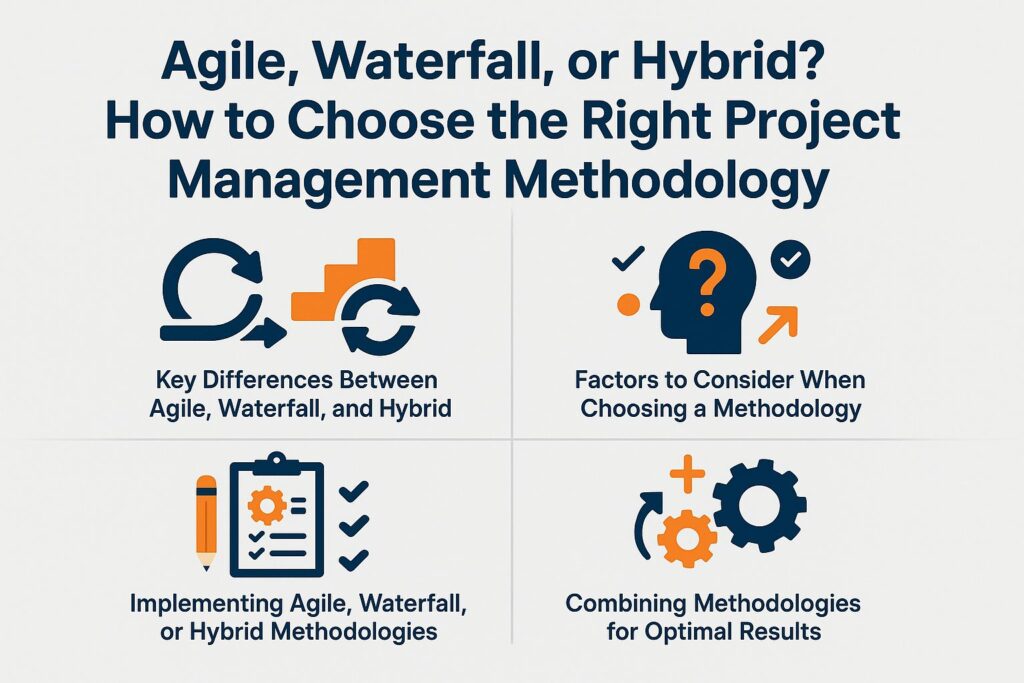
Choosing the appropriate project management methodology can significantly influence the success or challenges faced by a project. Agile, Waterfall, and Hybrid approaches each possess distinct strengths and weaknesses. This article delves into the key differences, examining the advantages and disadvantages of each methodology. It addresses critical factors to consider when selecting a method, presents best practices for implementation, and offers insights on effectively combining methodologies to achieve optimal results. Prepare to enhance your project management capabilities with effective task management and risk management strategies.
Table of Contents
Key Takeaways:
- Agile, Waterfall, and Hybrid are the most common project management methodologies.
- Each methodology has its own set of pros and cons, making it important to consider project requirements, team dynamics, and client/stakeholder preferences when choosing the right methodology.
- Successful implementation and optimal results can be achieved by combining methodologies and following best practices and tips.
Overview of Agile, Waterfall, and Hybrid Approaches
In the field of project management, understanding the fundamental differences between Agile, Waterfall, and Hybrid methodologies is essential for effective software development and successful project outcomes. Each methodology possesses distinct strengths and weaknesses that can significantly impact team dynamics, stakeholder engagement, and the project life cycle throughout project phases.
Agile methodologies excel in environments where flexibility is of utmost importance, as they allow teams to respond swiftly to changes and integrate continuous feedback through iterative processes. Conversely, the Waterfall method is often lauded for its clarity and systematic structure, enabling project managers to plan comprehensively and establish clear expectations; however, it may encounter challenges in user testing methods when faced with unforeseen developments.
The Hybrid approach seeks to reconcile these methodologies by incorporating the adaptability of Agile while maintaining the accountability and predictability associated with Waterfall, thus enhancing project efficiency and documentation. This makes it particularly advantageous in complex projects where both client feedback and project scope require meticulous management. According to the Project Management Institute, evolving methodologies are key to adapting to new challenges and improving project outcomes, as discussed in their research on project management evolution.
Key Differences Between Agile, Waterfall, and Hybrid
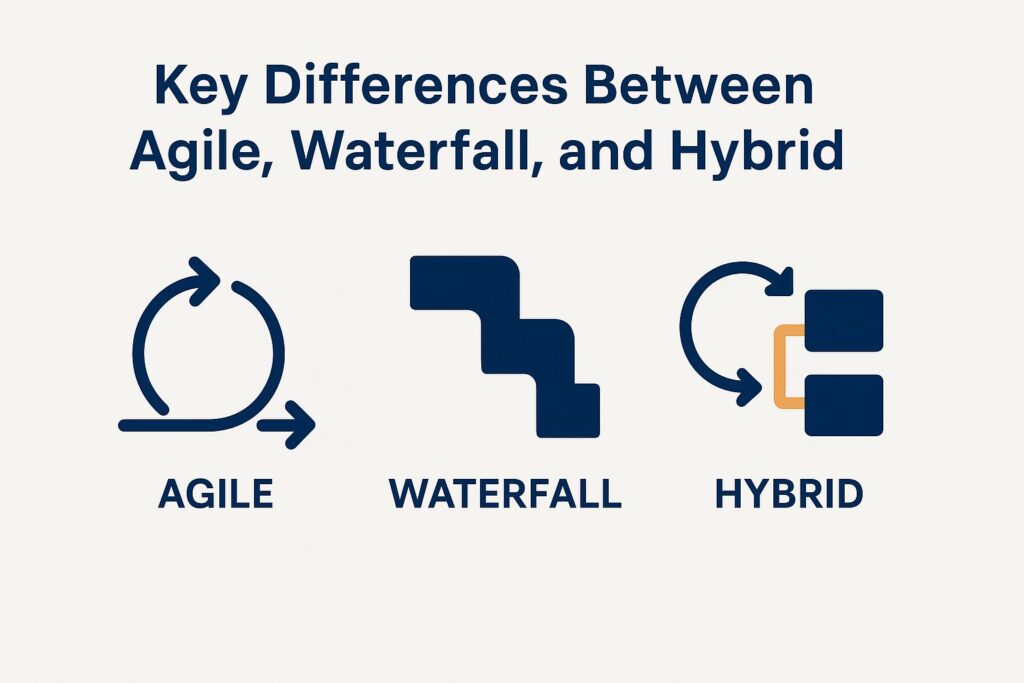
Comprehending the fundamental differences between Agile, Waterfall, and Hybrid methodologies is critical for project managers, software engineers, and stakeholders in selecting the most appropriate approach for their teams and project objectives. Each methodology possesses distinct characteristics that influence the project’s planning process, team dynamics, and overall effectiveness in achieving successful project outcomes and customer satisfaction. For those interested in a comprehensive overview, this analysis by Forbes covers the full spectrum of implications across these methodologies.
Pros and Cons of Each Methodology
Each project management methodology-Agile, Waterfall, and Hybrid-has its distinct advantages and disadvantages, which significantly impact project outcomes and team dynamics.
Agile’s iterative approach facilitates continuous feedback and adaptability, leading to enhanced customer satisfaction and ongoing improvements. In contrast, Waterfall offers predictability and a structured planning process that can be beneficial for projects with well-defined scopes. However, the flexibility inherent in Agile may result in scope adjustments that affect project timelines and user interface designs, while Waterfall’s structured nature may limit collaboration and responsiveness to changes.
The Hybrid methodology seeks to combine the strengths of both Agile and Waterfall, providing a balanced approach that can adapt to varying project requirements.
For example, a project team may employ Waterfall during the initial phases to establish a clear roadmap, while incorporating Agile practices in development cycles to promptly address stakeholder feedback.
This combination may introduce complexity in resource allocation, as teams must navigate different workflow expectations. Ultimately, the selection of the most appropriate methodology is contingent upon the specific context of the project, including its scope, stakeholder involvement, and the degree of flexibility required, all of which can significantly influence project efficiency, performance metrics, and overall output. As Tandfonline discusses in their recent article, supporting students to engage with case studies can enhance understanding of such methodologies and foster a deeper comprehension of their application in various contexts.
Factors to Consider When Choosing a Methodology
Selecting the appropriate project management methodology is a pivotal decision that can significantly influence project efficiency and outcomes.
It is essential to carefully evaluate factors such as project requirements, team dynamics, and client expectations to ensure that the chosen methodology aligns with the specific needs of the project and promotes effective stakeholder engagement.
Project Requirements and Team Dynamics
Project requirements and team dynamics are critical factors in determining the most appropriate project management methodology, whether it be Agile, Waterfall, or Hybrid. A thorough understanding of the complexity and variability of project requirements enables project managers to align the selected methodology with the operational needs of both the project and the team.
For example, in software development projects where requirements are subject to frequent changes, an Agile approach facilitates iterative progress and adaptability, thereby fostering a responsive team environment.
Conversely, a construction project, which typically features clear and fixed requirements, may be better suited to the Waterfall methodology, where sequential phases are essential for adhering to timelines and budgetary constraints.
Additionally, the team’s experience and interpersonal dynamics can significantly influence the effectiveness of communication and collaboration-elements that are crucial within Agile frameworks. If these dynamics are not conducive, they may result in bottlenecks that hinder project milestones, underscoring the importance of team dynamics in the successful implementation of any methodology.
Client or Stakeholder Preferences
Client and stakeholder preferences, including expectations for product management and feedback loops, play a crucial role in the selection of project management methodologies, significantly influencing the project’s direction and success. A comprehensive understanding of stakeholders’ expectations regarding communication, feedback, and project outcomes enables project managers to make informed decisions when choosing among Agile, Waterfall, or Hybrid approaches to effectively meet these expectations.
Recognizing these preferences not only enhances transparency but also fosters trust, ensuring alignment among all parties throughout the project lifecycle. For example, Agile methodologies may be preferred in environments that demand adaptability and continuous collaboration, whereas more structured approaches like Waterfall may be better suited for projects with clearly defined requirements.
By engaging stakeholders at the outset and maintaining consistent communication, project managers can gather valuable insights that inform the decision-making process. Ultimately, selecting the appropriate methodology in alignment with client expectations leads to increased satisfaction levels and successful project delivery.
Implementing Agile, Waterfall, or Hybrid Methodologies
The implementation of Agile, Waterfall, or Hybrid methodologies necessitates a deliberate approach that takes into account the distinctive characteristics of each methodology as well as the specific requirements of the project.
Adhering to best practices during implementation can substantially improve project efficiency, foster team collaboration, and enhance stakeholder satisfaction, thereby establishing a clear pathway to success in project management.
Best Practices and Tips for Successful Implementation
To ensure the successful implementation of Agile, Waterfall, or Hybrid methodologies in project management, it is essential to adhere to several best practices and recommendations. These strategies facilitate smoother transitions between methodologies and enhance team collaboration, project efficiency, and the overall success of project outcomes.
It is imperative to understand the unique requirements of each project, as this knowledge enables teams to select the most suitable methodology based on project needs and stakeholder expectations. For Agile methodologies, fostering an adaptive mindset is critical, as it promotes responsiveness to change. Conversely, Waterfall methodologies benefit from clear, linear progress tracking. Hybrid approaches necessitate a careful balance between flexibility and structure.
Key performance metrics, such as team velocity, burn-down charts, and cycle time, provide valuable insights into project health and efficiency. By regularly evaluating these metrics, project managers can make informed decisions to adjust methodologies and processes, thereby driving continuous improvement and achieving project objectives.
Combining Methodologies for Optimal Results
The integration of methodologies such as Agile, Waterfall, and Hybrid can yield optimal outcomes in project management by capitalizing on the strengths inherent in each approach.
This strategic amalgamation enables teams to maintain a degree of flexibility while adhering to structured planning processes and cross-functional teams, thereby ensuring the effective attainment of project goals.
How to Create a Hybrid Approach
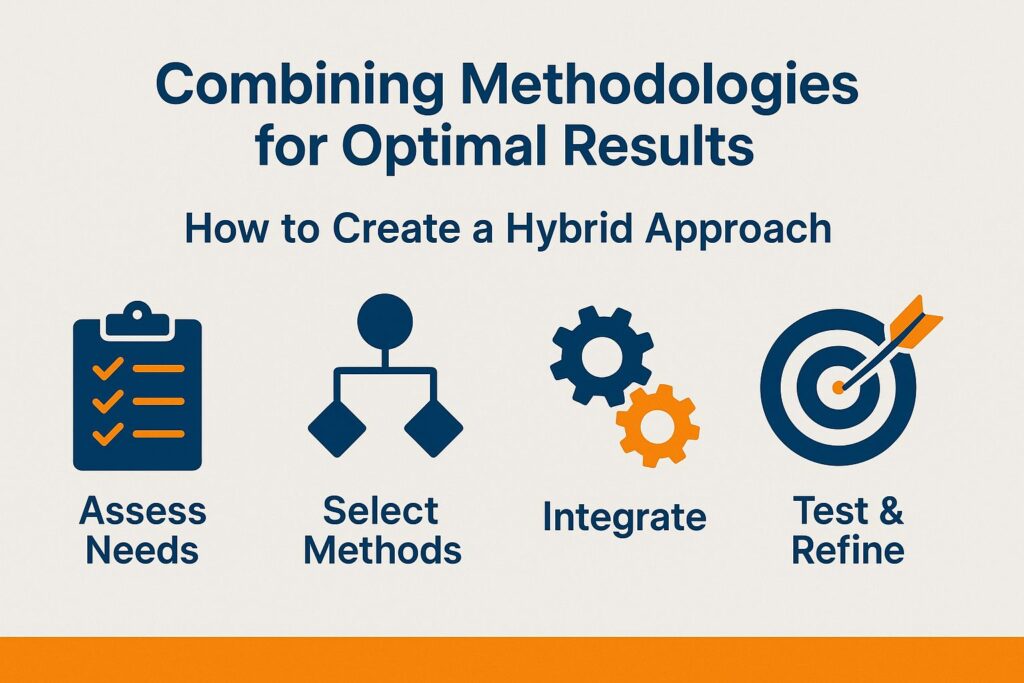
Creating a hybrid approach in project management entails the integration of Agile and Waterfall methodologies to leverage the advantages of both systems, including iterative approach and structured approach. This adaptable strategy is particularly suited for projects that necessitate both flexibility in development cycles and the predictability associated with a structured planning process, such as software development and product launch.
In this innovative development methodology, teams may commence their projects with a comprehensive Waterfall phase, during which requirements and planning are meticulously defined, often utilizing software tools like Berrycast for effective communication. This is then followed by iterative Agile sprints, allowing for continuous feedback, performance tracking, and adaptation throughout the project lifecycle, adhering to principles such as those in the Agile Manifesto.
To effectively integrate these components, it is imperative to maintain open communication among stakeholders and project team members, leveraging work management tools to ensure all parties remain aligned with the project’s objectives and constraints.
Additionally, recognizing and addressing potential challenges, such as scope creep or miscommunication, will significantly enhance the overall success of the hybrid model, a framework endorsed by project leaders like James Scott since 2018.
Ultimately, the balance achieved through this approach not only improves project management practices, including methodologies like Scrum and Lean manufacturing, but also fosters responsiveness to change, ensuring that the final product aligns with quality standards and meets user expectations, facilitated by tools such as Gantt charts and e-books for knowledge sharing.