When it comes to printing technology, selecting between ink cartridges and toner cartridges can be a challenging decision. Each option possesses distinct compositions and functions, influencing various aspects such as quality prints and overall performance. This guide delineates the key differences, aiding individuals in evaluating important factors such as cost and environmental impact. Whether one is a casual printer or a business owner, comprehending these components will facilitate making an informed choice that aligns with specific requirements.
Table of Contents
Key Takeaways:
- Ink cartridges use liquid ink and are ideal for printing photos and color documents, while toner cartridges use powdered toner and are better for black and white printing and high volume jobs.
- When choosing between ink and toner, consider your printing needs, budget, and the environmental impact. Ink tends to be more affordable upfront, but toner can offer long-term savings and is more eco-friendly.
- Ink and toner have different environmental impacts, with toner being more sustainable and easily recyclable. However, both options offer eco-friendly alternatives, such as remanufactured cartridges and cartridge recycling programs.
Explanation of Printing Technologies
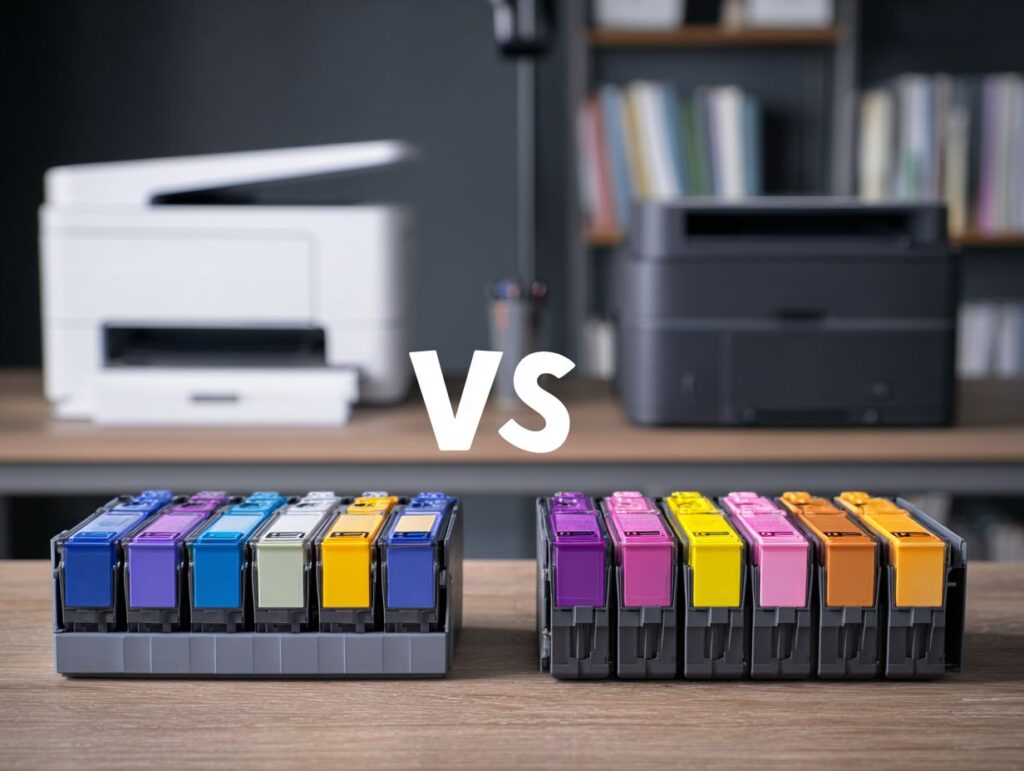
Printing technologies have undergone significant evolution over the years, propelled by advancements in materials and engineering. At present, inkjet and laser printers are the two most prominent technologies available, each offering distinct advantages and disadvantages for both consumers and businesses.
Inkjet printers operate using liquid ink to produce high-resolution prints, making them particularly well-suited for graphic and photo resolution printing. In contrast, laser printers utilize toner cartridges, which contain powdered toner and employ a fuser unit along with a transfer roll mechanism essential for efficient printing speed. This results in efficient printing speeds and enhanced longevity. A comprehensive understanding of these technologies is essential for selecting the appropriate printer supplies, including OEM cartridges and remanufactured cartridges, tailored to specific printing needs.
Inkjet printers are characterized by their unique composition, featuring microscopic nozzles that spray droplets of ink directly onto paper, preventing clogging and preserving the integrity of printing heads. This mechanism allows for detailed color reproduction and smooth gradients.
Conversely, laser printers excel at delivering rapid, high-volume output by employing a laser beam to transfer toner onto a drum, which is subsequently fused to the page through heat, employing polyester polymers for durability.
This fundamental difference in their printing processes often leads to a preference for inkjet models in applications requiring photo-intensive tasks, while laser printers are favored in office environments that demand quick and precise document production.
A careful evaluation of factors such as print quality, operational costs, and maintenance requirements will assist users in making informed decisions based on their specific needs.
Ink Cartridges vs. Toner Cartridges
When evaluating printer supplies, it is crucial to comprehend the distinctions between ink cartridges and toner cartridges to make informed purchasing decisions.
Ink cartridges generally contain liquid ink, which is well-suited for producing vibrant color prints and high-resolution photographs. In contrast, toner cartridges contain powdered toner that is heated and fused onto paper, rendering them more appropriate for high-volume printing.
Each cartridge type presents its own advantages and disadvantages, including cartridge yield, page yield, and replacement costs, all of which can significantly influence the overall printing experience for users.
Composition and Functionality
The composition of ink and toner cartridges plays a crucial role in determining their functionality and the quality of the output they produce, adhering to industry standards.
A comprehensive understanding of the intricate balance of these materials is essential for ensuring optimal performance in printing. Ink typically consists of approximately 80-90% water, which functions as the solvent, facilitating smooth application on various media, aided by drying agents.
The dyes or pigments, responsible for the color and vibrancy of the ink, are augmented by additives, including lubrication and binding agents, that improve stability and drying times. In contrast, toner powder is commonly composed of styrene-acrylate copolymers, which provide high-quality text and image reproduction along with a durable finish.
The uniformity of toner is critical, as irregular particle sizes can result in inconsistent printing quality. By considering these chemical and physical properties, consumers can make informed decisions regarding their printing requirements, thereby ensuring longevity and high-quality results.
Choosing Between Ink and Toner
Selecting between ink and toner for printing needs necessitates a thorough evaluation of various factors that can influence both performance and costs.
Users should assess their primary printing activities, determining whether they require high-quality color prints for graphics or efficient black and white text documents.
Considerations of efficiency and longevity are paramount in identifying the most appropriate option, as inkjet printers typically necessitate more frequent cartridge replacements, whereas laser printers often provide higher page yields per cartridge, enhancing overall satisfaction.
By understanding these variables, consumers can make informed decisions regarding the printer supplies that best align with their specific requirements.
Factors to Consider
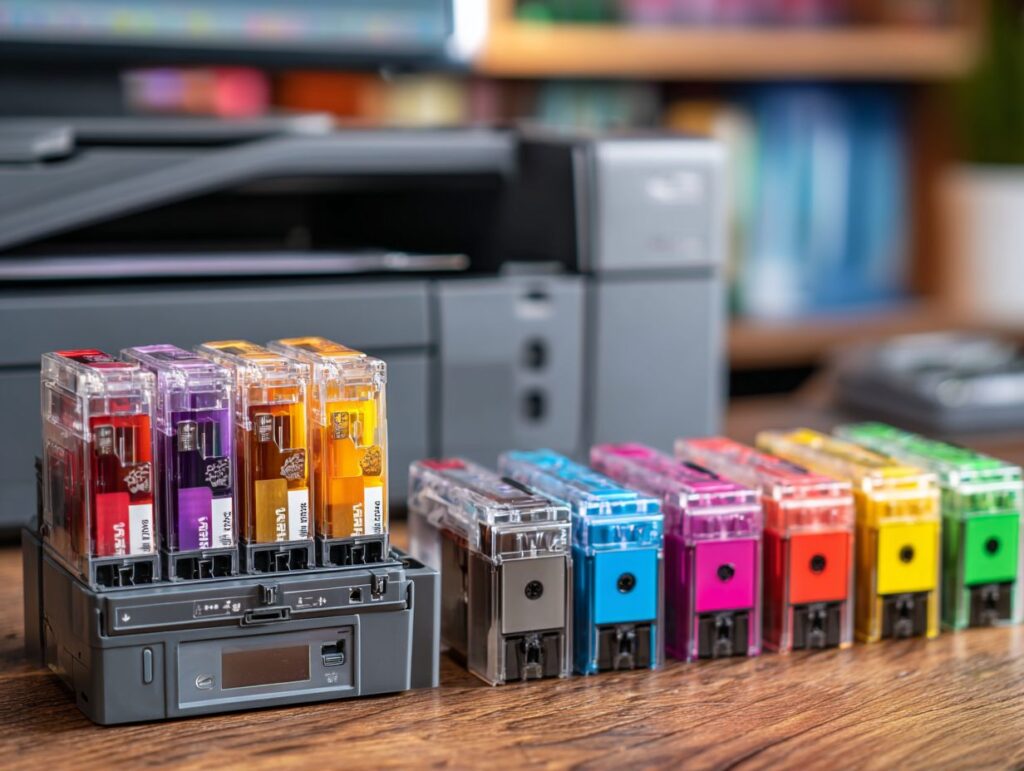
When choosing between ink and toner, several factors must be carefully considered, including printing speed, the quality of graphics in comparison to text, and the maintenance requirements associated with each type of printer. Inkjet printers are typically slower than laser printers; however, they excel in producing high-quality graphics and color documents, making them particularly well-suited for photo printing.
In contrast, laser printers are recognized for their rapid printing speeds and lower maintenance demands. It is also essential for users to assess compatibility with existing hardware and to review the user manual and warranty terms related to their selected printer.
Along with these considerations, the cost of consumables such as Quill Brand products can significantly influence overall expenditures for users. Ink cartridges may require more frequent replacement, especially for high-volume printing tasks, which can accumulate considerable costs over time, impacting long-term expenses.
Conversely, toner cartridges often yield a higher number of pages per refill, potentially rendering them a more economical option for users who require large quantities of printed documents, adhering to MICR standards. Furthermore, the environmental impact of both options should not be underestimated, as certain printing technologies provide recycling programs that contribute to more sustainable practices.
Ultimately, a thorough evaluation of these nuanced factors will enable users to make informed decisions that are aligned with their specific printing needs.
Learn more, The Difference Between Ink and Toner: Which One is Right …
Cost Comparison
The cost comparison between ink and toner cartridges represents a critical consideration in printer ownership, as it significantly impacts long-term expenses and user satisfaction.
Although the initial purchase prices for inkjet printers tend to be lower, users frequently encounter higher ongoing costs due to the need for regular replacement of ink cartridges, which generally possess a lower yield compared to toner cartridges.
Conversely, while laser printers may necessitate a higher upfront investment, their toner cartridges typically have a longer lifespan and can prove to be more cost-effective over time, particularly when taking into account environmentally friendly alternatives.
Long-Term Expenses and Savings
Long-term expenses and savings associated with ink and toner usage can significantly impact consumer satisfaction and decision-making when selecting printing solutions.
Over time, users frequently underestimate the cumulative costs related to their printing habits, resulting in a misalignment between their needs and the products they select. For example, individuals who regularly produce documents in bulk should consider the substantial page yield of toner cartridges, which leads to fewer replacements and reduced overall expenditure.
In contrast, infrequent users may prioritize the vibrant output quality of ink cartridges; however, this focus, while appealing, may result in escalating replacement costs that negate initial savings.
By comprehensively understanding usage patterns and performance characteristics, consumers can make informed decisions that align with their printing frequency, ultimately optimizing both cost savings and output quality.
Environmental Impact
The environmental impact of ink and toner cartridges has become an increasingly significant consideration for consumers seeking eco-friendly printing solutions.
In response to the growing demand for sustainable practices, numerous manufacturers have begun offering recycling options for used cartridges, thereby reducing waste and promoting environmental benefits.
Furthermore, the use of remanufactured cartridges presents a viable alternative, as it contributes to minimizing the environmental footprint associated with the production of new cartridges while still ensuring satisfactory performance and quality prints, offering significant environmental benefits.
Sustainability and Recycling Options
Sustainability in printing encompasses the recycling options available for both ink and toner cartridges, enabling consumers to minimize their environmental impact.
Numerous manufacturers have implemented take-back programs for used cartridges, including OEM cartridges and MICR toner, facilitating proper recycling and aiding in resource conservation while reducing waste. The choice of remanufactured cartridges not only supports environmentally friendly practices but also provides performance comparable to that of original equipment manufacturer (OEM) counterparts, thereby reinforcing the commitment to sustainable printer supplies.
By engaging in these recycling initiatives, individuals and businesses can substantially reduce the carbon footprint associated with printed materials, utilizing high yield cartridges for greater efficiency. The availability of consumer-friendly remanufactured cartridges presents a viable alternative that not only diverts waste from landfills but also contributes to cost savings.
As more brands, including Quill Brand, emphasize sustainable production methods, consumers are offered options that resonate with their environmental values, thereby enhancing the overall appeal of eco-conscious printing.
The utilization of these sustainable supplies, such as carbon black pigment-based toner, promotes a culture of responsible consumption, fostering a shift toward greener practices within the broader printing sector.
Frequently Asked Questions
What is the difference between ink and toner?
Ink and toner are both types of printing materials used in different types of printers. Ink is a liquid substance, while toner is a powder. The main difference between the two lies in the printing process and the type of printer they are used for.
How do I know which one I need for my printer?
The type of printing material you need depends on the type of printer you have. Ink is used in inkjet printers, while toner is used in laser printers. Make sure to check your printer’s manual or specifications to determine which one is compatible.
Can I use ink in a laser printer and vice versa?
No, ink and toner are not interchangeable. Using the wrong type of printing material can damage your printer and produce poor quality prints. Always use the correct type of material recommended for your printer.
Which one is more cost-effective?
Ink and toner vary in cost depending on the brand and type. However, in general, toner tends to be more cost-effective as it can produce more prints per cartridge compared to ink. Additionally, toner cartridges have a longer shelf life, making it a more economical option in the long run.
Is one type better for certain types of printing?
Yes, ink is better for printing photos and color documents, while toner is better for printing text and black and white documents. This is because inkjet printers produce higher quality color prints, while laser printers are more efficient at printing large volumes of text.
Do I need to buy the printing material from the same brand as my printer?
It is not necessary to buy the printing material from the same brand as your printer. However, using compatible and high-quality ink or toner can ensure the best results and preserve the lifespan of your printer. It is always recommended to use the recommended printing material for your specific printer model.