Unlock the transformative power of yoga and Pilates, two practices rooted in ancient India that offer remarkable yoga benefits for strength, flexibility, chronic pain management, and stress relief. Engaging in a regular yoga practice not only boosts body awareness but also enhances your overall well-being. In this article, we’ll explore the top benefits of these complementary disciplines and how they can elevate your physical and mental health, making them essential components of a balanced lifestyle.
Table of Contents
Key Takeaways:
- Incorporating regularly practicing yoga and Pilates can lead to improved strength, flexibility, and stress relief.
- Both practices focus on building core strength, enhancing muscle tone, and improving range of motion for a more balanced body.
- The combination of mindfulness and relaxation techniques in yoga and Pilates can help balance stress hormones and promote overall well-being.
Benefits for Strength
Both yoga and Pilates present distinctive methodologies for strength building that can enhance physical performance and improve overall daily functionality.
Building Core Strength through Pilates and Yoga Asana
Core strength serves as a fundamental element in both yoga and Pilates, providing stability to the body during various movements and poses.
To enhance core strength, it is advisable to incorporate exercises such as the Plank and Boat Pose into one’s routine.
- For the Plank, the individual should maintain the position for 30 seconds, ensuring that the body forms a straight line while actively engaging the core and glutes.
- Following this, one can transition to the Boat Pose, maintaining a V-shape with the body for an additional 30 seconds.
It is recommended to repeat each exercise three times.
To introduce resistance, one may consider utilizing a Pilates ring by placing it between the thighs during these poses to further enhance engagement.
Additionally, it is essential to practice deep breathing throughout each movement to optimize the benefits derived from the exercises.
Enhancing Muscle Tone
To achieve muscle tone, engaging in specific sequences of yoga and Pilates can yield significant results over time. It is advisable to incorporate a weekly routine that includes three Pilates sessions, focusing on resistance training with springs and weights.
Targeted exercises such as the Hundred, which effectively engages core muscles, and the Frog, designed to strengthen the legs, should be included in these sessions. Additionally, complementing this regimen with two yoga classes that emphasize strength-building poses is recommended.
Such poses may include:
- Warrior II, which enhances leg stability,
- Downward Dog, which improves overall body strength.
By following this structured approach, individuals can expect to see improvements in posture and muscle tone within just a few weeks.
Benefits for Flexibility
Flexibility is a key advantage of both yoga and Pilates, which enhances the range of motion and aids in injury prevention.
Improving Range of Motion
Incorporating targeted flexibility exercises from yoga styles and Pilates can significantly enhance the range of motion in joints. Two particularly effective exercises in this regard are the Downward Dog and the Spine Stretch.
The Downward Dog pose is beneficial for improving flexibility in the shoulders and hamstrings; it is advisable to hold this position for 60 seconds to effectively engage multiple muscle groups.
The Spine Stretch, commonly practiced in Pilates, emphasizes vertebral mobility. This exercise should be performed with deep breaths for five repetitions, allowing for the thoracic spine to unlock.
Research published in the Journal of Ayurveda and Integrative Medicine supports these methods, highlighting their benefits for joint health and muscle relaxation. Consequently, these exercises are essential components of any flexibility routine.
Reducing Muscle Tension
Both yoga and Pilates are effective methods for reducing muscle tension through specific movements, breath work, and pranayama. To enhance one’s practice, it is advisable to commence with five minutes of pranayama, concentrating on deep, controlled breaths to center the mind.
Following this initial phase, practitioners may engage in targeted poses such as:
- Child’s Pose to alleviate tension in the lower back
- The Saw to stretch the spine and hamstrings
To maintain a state of relaxation, it is essential to focus on the breath while ensuring that the body remains properly aligned. Furthermore, creating a calming environment with soft music or dim lighting can significantly enhance mindfulness throughout the session.
Benefits for Stress Relief
Yoga and Pilates contribute not only to the enhancement of physical strength but also offer significant advantages for stress relief, spiritual growth, and mental health.
Mindfulness and Relaxation Techniques in Yoga Nidra
Practices such as yoga nidra can significantly deepen relaxation and enhance mindfulness, ultimately leading to improved stress management.
To engage in a yoga nidra session lasting approximately 20 minutes, one should begin by locating a quiet and comfortable space. Lying down on the back with eyes closed, the individual should focus on their breath.
Utilizing applications such as Insight Timer or Calm can facilitate guided sessions, offering a structured approach along with soothing narration. Typically, the practice encompasses the following components:
- Setting an intention
- Systematically relaxing each part of the body
- Visualizing calming imagery
Research indicates that regular engagement in yoga nidra can substantially reduce anxiety and stress, thereby promoting emotional well-being and enhancing sleep quality.
Balancing Stress Hormones and Enhancing Quality of Life
Regular practice of yoga and Pilates has been demonstrated to balance stress hormones, such as cortisol, thereby reducing anxiety levels. Research conducted by the Anxiety and Depression Association of America indicates that incorporating exercises such as Cat-Cow and Spine Twist into one’s routine can effectively decrease cortisol levels. These specific poses promote spinal mobility and relaxation, aiding in the calming of the nervous system.
For a comprehensive approach, it is advisable to combine these yoga poses with Pilates exercises like the Hundred and the Roll Up. These targeted movements not only enhance physical strength but also encourage mindful breathing, which further contributes to hormonal balance and overall well-being.
Combining Yoga and Pilates
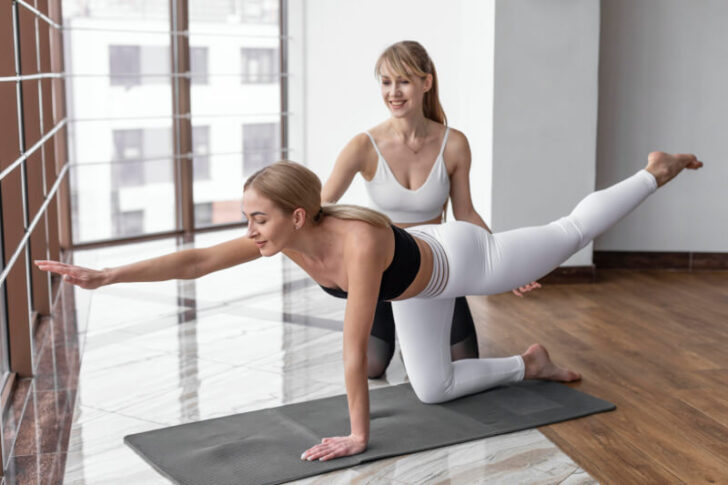
Integrating yoga and Pilates can create a well-rounded fitness regimen that enhances both flexibility and strength. To maximize the benefits of these practices, it is advisable to adopt a weekly schedule that includes two sessions of each discipline.
For example, yoga sessions can be scheduled on Tuesdays and Thursdays to promote relaxation and mindfulness, while Pilates can be reserved for Mondays and Fridays to focus on core strength. Each session should ideally last approximately 60 minutes, allowing adequate time for both warm-ups and cool-downs.
Individuals may enhance their workouts by utilizing tools such as:
- A yoga mat for added comfort,
- Resistance bands for Pilates,
- Applications like Down Dog or Pilates Anytime for guided routines.
This combination not only improves physical health but also reduces stress, thereby enhancing overall well-being and subjective health.
Learn more, Yoga and Pilates: A Powerful Combination
Frequently Asked Questions
What are the top benefits of practicing yoga and Pilates for strength?
Yoga and Pilates both focus on building strength through controlled movements and poses, resulting in improved muscle tone and overall physical strength.
How does yoga and Pilates help with flexibility?
Yoga and Pilates both use stretching exercises and poses to increase flexibility, which can improve range of motion, reduce the risk of injury, and improve posture.
Can yoga and Pilates help with stress relief?
Yes, both practices incorporate breathing techniques and mindfulness, which can help reduce stress and promote relaxation. This can also lead to improved mental clarity and overall well-being.
What are some other benefits of yoga and Pilates?
In addition to strength, flexibility, and stress relief, yoga and Pilates can also improve balance, coordination, and body awareness. They can also help with weight management and promote a healthier lifestyle.
Do I need to be flexible or strong to practice yoga and Pilates?
No, both practices can be modified to accommodate all levels of fitness and flexibility. Practicing regularly can help improve both strength and flexibility over time.
Are there any age restrictions for practicing yoga and Pilates according to the American Psychological Association?
No, people of all ages can benefit from yoga and Pilates. However, it is always important to listen to your body and modify or avoid any exercises that may be too challenging or uncomfortable.