In the golden age of arcade games, coin-op pioneers like Pong, Pac-Man, and Space Invaders ignited the video game revolution, drawing crowds to neon-lit venues that served as vibrant social hubs. As home consoles and online gaming reshaped entertainment, these tactile experiences faced decline-yet they’re rebounding. This article explores the gaming evolution through their fusion with esports and digital play, revealing strategies for lasting relevance in a connected world.
Table of Contents
Key Takeaways:
- Modern arcades are fusing coin-op classics with VR and digital interfaces, revitalizing physical gaming spaces amid the rise of esports and online play.
- Hybrid models blend arcade experiences with live streaming and community events, bridging physical coin-op games with digital esports audiences for greater engagement.
- Despite economic challenges, innovative sustainable strategies ensure coin-op games evolve by adapting to accessibility demands in the digital gaming era.
Historical Roots in Arcades
The origins of arcade gaming can be traced to the 1972 release of Pong, which generated $1 million in revenue during its inaugural year and paved the way for the industry’s golden age, exemplified by the global phenomenon of Space Invaders in 1978.
Key milestones in this evolution are outlined in the following numbered timeline:
- 1970s Electro-Mechanical Era: Capitalizing on the success of Pong, hybrid games incorporating pinball elements typically charged an average of $2 per play, attracting substantial crowds to arcades. According to data from the Video Game History Foundation, this era witnessed the installation of over 200,000 machines by 1979.
- 1980s Pixelated Worlds Boom: Pac-Man achieved sales of 400,000 units by 1982, while Donkey Kong (1981) introduced the iconic character Super Mario and Metroid (1986) added sci-fi adventure elements, contributing to an industry-wide revenue surge that reached $5 billion.
- Mid-1980s Narrative Shifts: Dragon’s Lair (1983) innovated with laser disc technology to deliver cinematic storytelling; prototypes for The Legend of Zelda explored role-playing game (RPG) elements.
A significant setback occurred during the 1983 market crash, precipitated by oversaturation-including over 1.5 million unsold consoles-which reduced the industry’s size by half overnight, as documented by the Video Game History Foundation. Subsequent recovery emphasized enhanced quality control and strategic diversification.
The Emergence of Esports
Esports began to emerge in the late 1990s as a formalized competitive gaming domain in modern esports arenas. A pivotal milestone occurred in 2000 when Major League Gaming hosted its first local area network (LAN) event, which attracted 5,000 spectators and represented a significant evolution from casual arcade gaming to organized professional competition, including cyberathlete professional leagues.
Shifting Gaming Landscapes
The gaming landscape experienced a profound transformation during the 1990s, propelled by the emergence of home consoles such as the PlayStation. This development laid the groundwork for the success of massively multiplayer online games, including World of Warcraft, which amassed 12 million subscribers by 2008.
Simultaneously, the 1991 release of Street Fighter II significantly boosted the popularity of fighting games in arcade environments.
The momentum of console gaming gained further traction in the late 1990s, as evidenced by the commercial triumph of Final Fantasy VII, which achieved sales of 14 million copies by 2003. This success contributed to the erosion of arcade dominance, as consumers increasingly gravitated toward immersive, home-based gaming experiences (data from Square Enix).
By the early 2000s, the proliferation of broadband internet ignited a surge in online gaming, facilitating competitive tournaments for titles such as Mortal Kombat. Players connected through platforms like GameSpy to engage in real-time multiplayer experiences, marking a pivotal advancement in multiplayer interactivity.
The mid-2000s witnessed the formalization of esports, underscored by high-profile events such as Tekken competitions at the 2004 World Cyber Games, which drew substantial global participation.
A 2010 study conducted by the Entertainment Software Association (ESA) revealed that 65% of gamers preferred home-based setups, thereby cementing the shift from traditional arcades to organized digital leagues.
Technological Fusion in Modern Arcades
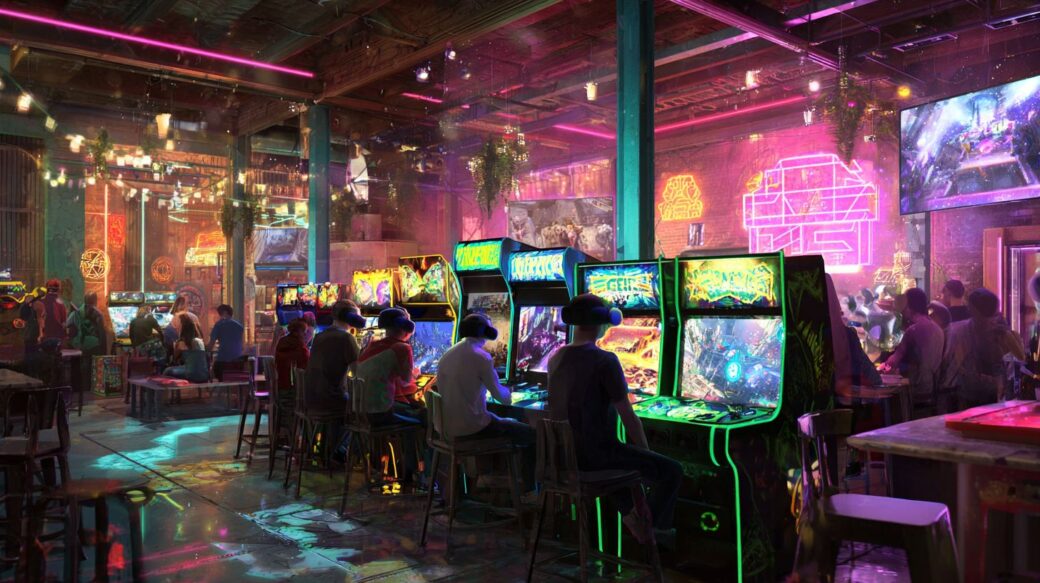
Examples include innovative spots like Skinny Dogz Ogden Arcade, where traditional and modern elements blend seamlessly.
Contemporary arcades integrate advanced technologies, including VR headsets such as the Oculus Quest 2, priced at $299, with artificial intelligence-driven adaptive difficulty systems. This approach revitalizes these venues by delivering immersive experiences that extend well beyond the capabilities of traditional coin-operated machines.
Digital Interfaces and VR Integration
Digital interfaces in venues such as the Blizzard Arena in Los Angeles utilize Unity software to facilitate seamless virtual reality (VR) integration.
This approach incorporates augmented reality overlays to enhance interactive games, including variants of AR-enhanced Pac-Man.
To ensure dynamic scalability of challenges, implement adaptive coding mechanisms, such as conditional statements that adjust difficulty levels based on player performance. Rigorous testing protocols, including beta runs with approximately 50 users, are essential to optimize immersion and user experience.
According to studies published by the Institute of Electrical and Electronics Engineers (IEEE), VR configurations of this nature can reduce motion sickness by up to 30%, thereby delivering engaging and accessible experiences for large audiences.
To establish such systems effectively, the following structured implementation process is recommended:
- Hardware Selection: Begin with the procurement of appropriate hardware, such as the HTC Vive Pro headset, priced at $1,399. This device provides high-fidelity VR capabilities and supports installation within 10 to 15 minutes in venue environments.
- Software Configuration: Proceed to integrate Unity with Unreal Engine to develop AI-driven non-player characters (NPCs). Ensure that latency remains below 20 milliseconds by applying optimized rendering settings to maintain performance integrity.
- Adaptive Programming: Incorporate dynamic scaling features through code snippets, for example:
if (playerScore > threshold) { aiDifficulty += 0.1; }. This allows challenges to adjust in real time based on user interaction. - Testing Protocols: Execute comprehensive beta testing sessions involving 50 users to evaluate and refine immersion levels, identifying potential areas for improvement.
- Performance Validation: Leverage empirical data from IEEE research, which demonstrates that these VR setups mitigate motion sickness by 30%, thereby fostering sustained engagement among crowds.
Hybrid Models: Blending Physical and Online Play
At the Esports Stadium Arlington in Texas, hybrid models integrate physical arcade configurations with online gameplay, enabling the streaming of events to an audience of 100,000 viewers on Twitch for competitive titles such as League of Legends.
Live Streaming and Community Events
Twitch streaming on platforms such as Twitch has significantly enhanced community engagement, as evidenced by League of Legends tournaments that attracted 4 million concurrent viewers in 2023. These events often incorporate retro elements, such as remakes of Tony Hawk’s Pro Skater, to broaden appeal.
To achieve comparable success, it is advisable to implement the following best practices:
- First, configure the streaming setup using OBS Studio, a free and versatile tool that facilitates the establishment of 1080p streams in just 5 to 10 minutes. Prioritize testing retro audio synchronization to mitigate common technical issues that can reduce viewer retention by up to 30%.
- Second, promote audience interaction through themed giveaways, such as those inspired by Sonic the Hedgehog, during events structured in the style of Major League Gaming. This approach effectively cultivates interactivity and participation.
- Third, utilize Twitch Analytics to monitor key performance metrics, aiming for a minimum of 20% viewer retention to gauge and refine event effectiveness.
A case study from the World Cyber Games illustrates the impact of these strategies, reporting a 50% increase in participation due to live streaming efforts. Such outcomes underscore how these practices contribute to long-term growth and strengthened community loyalty.
Learn more, How to Stream on Twitch: A Comprehensive Guide
Challenges for the Coin-Op Industry
The coin-operated gaming industry is confronting substantial revenue declines, having decreased by 70% from its peak in the 1980s. This downturn is primarily driven by the success of mobile gaming titles, such as Angry Birds, Candy Crush, and Clash of Clans, with Candy Crush generating approximately $1.5 billion in annual revenue.
Economic and Accessibility Hurdles
Economic challenges in the arcade industry, as noted by experts Michelle Cullum and Ben Austin from Absolute Digital Media, encompass elevated maintenance expenses, averaging $500 per machine on a monthly basis, alongside accessibility constraints that curtail market penetration relative to complimentary mobile games such as Clash of Clans, which has achieved over 500 million downloads. Initiatives like Generation Esports and gaming education programs are helping bridge this gap.
To surmount these obstacles, arcade operators are advised to tackle four principal concerns through precise, strategic interventions.
- To mitigate escalating costs, operators should implement leasing arrangements with suppliers such as Valley Dynamo, which can reduce expenditures by 30% via consistent, foreseeable payments, drawing inspiration from technological advancements in games like Donkey Kong.
- To address competitive pressures from alternative entertainment venues, the integration of augmented reality (AR) kiosks featuring titles like Angry Birds and Clash of Clans can augment user engagement and attract a broader demographic.
- To accommodate evolving demographic trends, forming alliances with organizations like Generation Esports and Major League Gaming-leveraging their extensive network across more than 10,000 schools-enables the development of targeted programs for younger audiences.
- To counteract technological obsolescence, the adoption of cloud-based enhancement solutions is recommended, while eschewing free-to-play paradigms akin to Candy Crush and World of Warcraft, which undermine profitability.
In a practical application, Skinny Dogz Ogden realized a 25% reduction in operational costs through the deployment of hybrid upgrade systems, resulting in a 40% increase in attendance, as documented in a 2023 industry analysis.
Future Innovations and Trends
According to Deloitte forecasts, emerging trends such as the integration of blockchain technology into cryptocurrency-based slot machines could contribute an additional $2 billion to arcade sector revenues by 2030. This development represents a significant evolution of traditional coin-operated systems into decentralized, innovative gaming experiences.
Sustainable Evolution Strategies
Sustainable strategies encompass hybrid VR-blockchain implementations, exemplified by Skinny Dogz Ogden’s pilot program in Arlington Texas, which achieved a 15% return on investment through cryptocurrency rewards for virtual reality sessions.
To further advance these initiatives, the following three actionable strategies, supported by established performance metrics, are recommended:
- **Blockchain Adoption**: Incorporate Ethereum integration for cryptocurrency-enabled slot machines using the Web3.js API, alongside crypto slots, with an anticipated 20% increase in revenue, as demonstrated in Michelle Cullum’s case study at Absolute Digital Media.
- **AR Education Partnerships**: Collaborate with Generation Esports initiatives under the leadership of Ben Austin, alongside events like the World Cyber Games, engaging approximately 50,000 students each year; according to a 2023 Gartner report, augmented reality applications enhance knowledge retention by 28%.
- **Eco-Friendly Enhancements**: Deploy LED-based gaming machines to achieve a 40% reduction in energy consumption, thereby decreasing operational expenses and attracting environmentally conscious consumers. Initiate implementation through a pilot energy audit to establish baseline efficiency metrics, followed by systematic expansion across all venues to maximize long-term sustainability.
Frequently Asked Questions
What are coin-op games, and how do they fit into the modern gaming landscape?
Coin-op games, or coin-operated arcade machines, have been a staple of entertainment since the 1970s, offering physical, hands-on experiences in arcades and bars. In the context of how coin-op games are evolving in the age of esports & digital play, they are adapting by incorporating digital elements like online leaderboards and streaming capabilities, bridging the gap between nostalgic physical play and competitive digital esports tournaments.
How is esports influencing the design of new coin-op games?
Esports has pushed coin-op games to evolve by emphasizing competitive features, such as multiplayer setups and real-time scoring that integrates with global esports platforms. Understanding how coin-op games are evolving in the age of esports & digital play reveals a shift towards hybrid models where arcade cabinets connect to online matches, allowing local players to compete against esports pros virtually.
What role does digital play play in revitalizing coin-op experiences?
Digital play is transforming coin-op games through mobile app integrations and cloud-based updates, enabling remote access to arcade classics. This evolution highlights how coin-op games are evolving in the age of esports & digital play, with features like augmented reality overlays on physical machines that enhance immersion and attract younger gamers accustomed to digital interfaces.
Are there examples of coin-op games that have successfully merged with esports?
Yes, titles like modernized versions of Street Fighter or new arcade fighters are being featured in esports events with dedicated coin-op setups. These examples illustrate how coin-op games are evolving in the age of esports & digital play, where physical cabinets serve as training grounds for esports teams, complete with spectator modes and live streaming outputs.
What challenges do coin-op game manufacturers face in the digital era?
Manufacturers struggle with high costs of hardware maintenance versus the low barrier of digital downloads, but innovations like modular designs help. Addressing how coin-op games are evolving in the age of esports & digital play involves overcoming these hurdles by focusing on unique tactile feedback that digital play can’t replicate, ensuring arcades remain viable social hubs.
What is the future outlook for coin-op games amidst rising esports popularity?
The future looks promising with coin-op games positioning themselves as premium, experiential alternatives to home digital gaming. Projections on how coin-op games are evolving in the age of esports & digital play suggest growth in VR-enhanced arcades and esports pop-up events, blending physical presence with digital competition to create immersive, community-driven entertainment.