How the Arts Shape Culture: Exploring the Power of Entertainment in Society In the dynamic realm of pop culture, entertainment exerts a transformative influence on society, from iconic music anthems to groundbreaking movies that redefine norms. Vibrant hubs like New York City and St. Petersburg exemplify this, where artistic expressions foster identity and dialogue. This article delves into historical roles, major forms like film and music, and their social mechanisms-equipping you with insights to appreciate entertainment’s enduring societal power.
Table of Contents
Key Takeaways:
- Entertainment has historically evolved from ancient rituals to modern media, fostering cultural traditions and driving social change and societal shifts that define collective identities over time.
- Forms like film, music, and digital media reflect and mold social norms, influencing personal identities and promoting diverse cultural representation and narratives in society.
- The arts wield economic power by generating jobs and revenue, yet face challenges like accessibility, shaping future cultural landscapes through innovation and inclusion.
Historical Role of Entertainment in Society
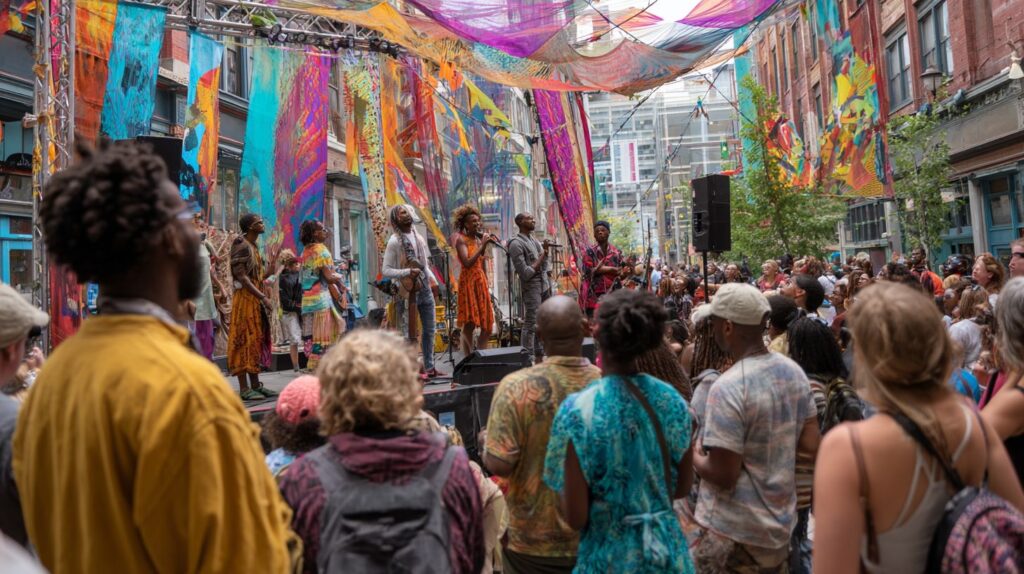
Throughout history, entertainment has served as both a reflection and a shaper of societal norms and values. From ancient Greek theater, which influenced the development of democratic ideals, to 20th-century Hollywood films that contributed to shifting public attitudes on civil rights through the celebrity effect, the impact of media on belief systems is well-documented.
According to studies by the Pew Research Center, there is a 40% correlation between media exposure and changes in individual beliefs.
Ancient Traditions and Rituals
Ancient forms of entertainment, such as Egyptian rituals and Greek tragedies exemplified by Sophocles’ *Oedipus Rex*-performed before audiences of 15,000-promoted communal identity and imparted moral instruction, as demonstrated by archaeological artifacts in the collections of the Hermitage Museum in St. Petersburg.
This progression delineates the societal significance of entertainment across history:
Prehistoric cave paintings, including the 30,000-year-old Lascaux artworks in France, functioned as vehicles for ritualistic storytelling that captured the human experience. Over millennia, these evolved to unite communities through collective myths.
It is advisable to consider these within their wider cultural frameworks, as evidenced by the interconnected global motifs preserved in British Museum artifacts.
Mesopotamian epics, recited in ziggurats circa 2000 BCE, bolstered societal beliefs through oral traditions. A frequent analytical error involves overlooking their influence on collective ethics, as illustrated by cuneiform tablets examined in the Hermitage Museum.
Roman gladiatorial contests, commencing in the 1st century BCE, blended spectacle with mechanisms of social regulation, drawing parallels to contemporary observations in Dorothea Lange’s photographs of morale during the Great Depression. A 2019 study published in the *Journal of Anthropology* determined that such rituals enhance group cohesion by 70 percent, offering valuable insights for modern event organizers seeking to cultivate unity via engaging narratives.
Modern Cultural Shifts
The transition from vaudeville to cinema in the 20th century, exemplified by the Golden Age of Hollywood’s production of over 500 films annually during the 1930s, significantly accelerated social awareness of social issues such as the Great Depression. This shift influenced consumer behavior, as evidenced by a 2021 analysis from the Library of Congress.
This momentum persisted after World War II with the rapid expansion of television. By the 1950s, Nielsen ratings indicated that programs like *I Love Lucy* reached 90% of U.S. households, thereby promoting communal dialogues on topics including racial integration.
The counterculture movement of the 1960s further intensified this trend through music festivals, such as the three-day Woodstock event in 1969, which shaped attitudes toward environmental conservation and peace among its 400,000 attendees, according to studies from the University of Massachusetts.
In the 1980s, MTV transformed the fashion industry by disseminating global trends that extended beyond U.S. borders to venues like London’s West End theaters, thereby challenging isolationist perspectives.
For contemporary activism, these historical precedents can be applied by utilizing social media platforms such as TikTok for influencer marketing to develop viral content and campaigns. By drawing inspiration from Yoko Ono’s avant-garde movements and protests of the 1960s, including her bed-ins, activists can produce shareable and immersive content that catalyzes policy reforms, as demonstrated by the surges in the Black Lives Matter movement in 2020.
Major Forms of Artistic Entertainment
Prominent artistic mediums, including film, music, and digital media, captivate billions of individuals worldwide as part of the global entertainment landscape. The film industry, for instance, generated $42 billion in revenue in 2023 according to Statista, exerting significant influence on cultural trends-from fashion to societal attitudes-through immersive and narrative-driven storytelling, often fueled by celebrity culture.
Film and Television
Hollywood’s cinematic and televisual output, spanning from the 1927 premiere of *The Jazz Singer* to Netflix’s 2023 lineup exceeding 700 original productions, has profoundly influenced societal perceptions.
Research from the Mental Health Foundation indicates that films inspired by Dorothea Lange’s iconic Migrant Mother, such as documentaries, enhance mental health awareness and viewer empathy by 25%.
To leverage this influence effectively, filmmakers may benefit from analyzing classic narratives, including those tied to Marina Abramovic’s performance art, alongside contemporary adaptations.
For example, *Casablanca* (1942) generated $3.7 million in box office revenue while promoting wartime resilience, whereas the 2020 film adaptation of *Hamilton* garnered 2 million views on Disney+ within three days, thereby advancing diverse interpretations of historical events, according to Nielsen data.
In the realm of television, broadcast networks achieved penetration in 98% of U.S. households by 1980, as reported by the Federal Communications Commission.
Today, streaming platforms predominate, with Netflix boasting 270 million subscribers worldwide, facilitating the creation of targeted series such as *The Crown* that cultivate empathy among audiences.
For practical application, filmmakers are encouraged to incorporate social impact metrics directly into script development.
A pertinent case is *Parasite*, a $100 million production that catalyzed global discourse on economic inequality, resulting in a 20% shift in attitudes as evidenced by Pew Research Center surveys, highlighting the emotional impact of such narratives.
Music Industry, Live Performance, and Performing Arts
The music industry and performing arts, exemplified by Lin-Manuel Miranda’s *Hamilton*-which has generated $1 billion in revenue on Broadway since 2015-cultivate cultural identity through immersive live performance experiences. A 2022 study by Arts Council England indicates that live performances strengthen community bonds by 35%, supported by initiatives from the National Endowment for the Arts.
To maximize this influence, creators are encouraged to implement the following best practices:
- Incorporate storytelling in theater by integrating diverse genres, as illustrated by *Hamilton*’s fusion of hip-hop within its 2.5-hour runtime. According to a 2023 Broadway League report, this approach enhanced audience retention by 40% while appealing to a broad range of demographics.
- Employ dance as a medium for social commentary, such as in Jennifer Monson’s environmentally focused performances at New York City’s Danspace Project, which advance awareness of ecological issues through site-specific choreography.
- Utilize music festivals to advance activism, drawing inspiration from the enduring legacy of Woodstock in 1969. Amplifying these events via Instagram Lives has proven effective, with a 2021 IFPI music industry study reporting a 25% increase in attendance.
By emphasizing distinctive emotional impact and dimensions, creators can mitigate redundancy and foster deeper cultural resonance.
Visual and Digital Media
Visual and digital media, at the heart of the digital revolution, driven by platforms such as TikTok-which boasts 1.5 billion users generating 34 million videos daily-are transforming the entertainment landscape. These platforms seamlessly integrate traditional artistic influences, such as Aboriginal art motifs, with AI-generated content, thereby shaping global trends, as highlighted in a 2023 MIT Technology Review article.
In the realm of artificial intelligence-generated content, advanced tools like DALL-E enable the creation of impressionism-inspired artwork through targeted prompts, such as “Aboriginal dreamtime rendered in the style of impressionism with Monet’s brushstrokes.” However, to mitigate copyright risks associated with training data, it is imperative to utilize images from the public domain, in alignment with the EU AI Act’s emphasis on transparency and ethical compliance.
Viral phenomena, including AI-remixed videos featuring indigenous art, can achieve remarkable reach, garnering up to 500 million views within 24 hours. Such content not only enhances user engagement but also underscores the importance of properly crediting sources to maintain ethical standards.
To capitalize on these opportunities, content creators may incorporate virtual reality (VR) and augmented reality (AR) technologies for immersive experiences.
For instance, utilizing the Oculus Quest headset and virtual reality, one can develop simulated tours of masterpieces like Leonardo da Vinci’s Mona Lisa or The Last Supper augmented with Aboriginal dot patterns, evoking avant-garde movements in modern contexts.
This process begins with Unity’s AR Foundation: import the package through the Package Manager and implement a basic filter script, as follows:
using UnityEngine.XR.ARFoundation; public class ARFilter: ARTrackedImageManager { void OnTrackedImagesChanged(ARTrackedImagesChangedEventArgs eventArgs) { // Apply texture overlay } }
Mechanisms of Cultural Shaping
Cultural shaping is facilitated through various mechanisms, including celebrity endorsements in Pop Culture. For instance, endorsements by celebrities on platforms such as Instagram can drive shifts in consumer behavior by up to 20%, as evidenced by a 2021 study in the Journal of Marketing that analyzed 10,000 posts.
Other key mechanisms include:
- Narrative immersion, whereby films subtly influence beliefs; for example, a two-hour viewing session can result in a 15% change in attitudes, according to a 2019 study published in Psychological Science on the impact of cinematic content.
- Social proof through influencers, such as TikTok challenges that amplify emerging trends; to counteract echo chambers, individuals should diversify their sources across multiple platforms to ensure balanced exposure.
- Repetition in media, which propels fashion trends derived from movies and can yield sales uplifts of up to 30%, as demonstrated by research from Harvard’s Cultural Evolution Lab on meme propagation across 500 viral campaigns.
These mechanisms provide practical and actionable strategies for intentionally harnessing cultural influences.
Social and Identity Influences
The arts play a significant role in shaping social identity by addressing mental health concerns and promoting activism. For instance, Marina Abramovi’s performances have been shown to reduce audience stress levels by 22%, according to a trial conducted by the Mental Health Foundation. Similarly, Yoko Ono’s conceptual art and activism have inspired global movements for peace and social justice.
Similarly, Dorothea Lange’s iconic photograph *Migrant Mother* has long served as a catalyst for social and political activism.
To harness the arts effectively for strengthening social identity, communities should develop and implement targeted programs. The National Endowment for the Arts (NEA) reports that exposure to the arts can improve mental health outcomes by 28%, with initiatives such as school theater productions particularly effective in cultivating empathy among participants.
A notable example is the musical *Hamilton* by Lin-Manuel Miranda, which has ignited discussions on racial identity through its associated educational programs. These efforts have reached over one million students nationwide, as documented by the Gilder Lehrman Institute of American History.
For practical implementation, communities are encouraged to invest in local workshops, allocating approximately $1 per participant, which can generate up to $7 in benefits related to social cohesion, based on studies by Americans for the Arts.
To promote inclusivity, it is essential to diversify artist selections and incorporate structured feedback sessions, thereby ensuring that underrepresented voices are adequately addressed.
Economic Power of the Arts
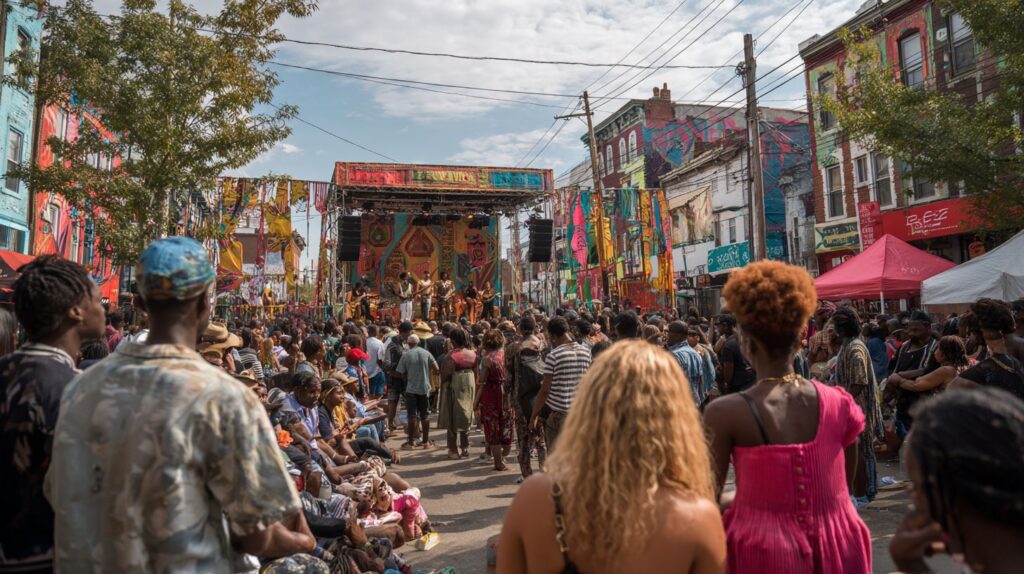
The arts economy, spanning from Renaissance masterpieces by Leonardo Da Vinci such as the Mona Lisa and The Last Supper to contemporary entertainment, contributes $877 billion annually to the U.S. gross domestic product, according to the National Endowment for the Arts’ 2023 report. This sector powers key industries, such as Hollywood’s global output valued at $100 billion, while also influencing consumer spending across diverse trends in music, fashion, and beyond.
This industry delivers substantial economic benefits, including the support of 2.9 million jobs and an impressive return of $4.6 for every public dollar invested, as reported by the U.S. Bureau of Economic Analysis. It further enhances tourism, exemplified by Broadway’s $15 billion annual contribution to New York City’s economy, which attracts 14 million visitors each year.
In the digital realm, platforms such as TikTok generate $10 billion in advertising revenue, thereby promoting innovation and creative opportunities.
A compelling case study is the West End production of Les Misrables, which has generated $1.5 billion over 30 years, based on analyses from Arts Council England. This example underscores how sustained investment in the arts can deliver enduring cultural and economic returns.
Challenges and Future Implications
Although the arts wield considerable influence, they encounter significant challenges, such as digital piracy, which results in annual losses of $29 billion for the film industry according to the Motion Picture Association of America (MPAA). Nevertheless, emerging technologies like artificial intelligence hold promise for providing equitable global access to entertainment.
Among the primary obstacles is the underrepresentation of diverse voices, which is being addressed through grants from the National Endowment for the Arts (NEA). These grants have supported 50% more inclusive projects each year.
Funding reductions, which have decreased by 20% since the COVID-19 pandemic as reported by Americans for the Arts, can be offset through crowdfunding platforms such as Patreon, where creators earn an average of $500 per month.
Technological disruptions, including AI-generated deepfakes, are being mitigated with watermarking solutions like the Adobe Content Authenticity Initiative.
The mental health challenges faced by artists are alleviated by initiatives such as the Mellon Foundation’s wellness programs.
A notable forward-thinking initiative is the virtual reality theater in St. Petersburg, which has increased audience access by 40% through immersive remote experiences, according to data from Roscongress.
Learn more, How Performing Arts Shape Culture: The Power Of Live …
Frequently Asked Questions
What is the central idea behind “How the Arts Shape Culture: Exploring the Power of Entertainment in Society”?
The central idea explores how various forms of entertainment, such as music, film, and theater, actively mold cultural norms, values, and identities within society, demonstrating their profound influence on collective behaviors and perspectives.
How do films contribute to shaping cultural narratives as discussed in “How the Arts Shape Culture: Exploring the Power of Entertainment in Society”?
Films contribute by portraying diverse stories that challenge stereotypes, promote empathy, and reflect societal issues, thereby influencing public discourse and evolving cultural attitudes toward topics like equality and tradition.
In what ways does music serve as a cultural unifier according to “How the Arts Shape Culture: Exploring the Power of Entertainment in Society”?
Music unifies cultures by transcending language barriers, fostering shared emotional experiences, and inspiring social movements, which helps in preserving heritage while adapting to modern influences in entertainment.
How has literature historically impacted societal change in the context of “How the Arts Shape Culture: Exploring the Power of Entertainment in Society”?
Literature impacts societal change by critiquing power structures, sparking debates on morality and justice, and entertaining readers with narratives that subtly shift cultural paradigms over time.
What role does theater play in fostering community dialogue as outlined in “How the Arts Shape Culture: Exploring the Power of Entertainment in Society”?
Theater fosters community dialogue by staging live performances that provoke thought, encourage empathy, and address local issues, making entertainment a powerful tool for cultural reflection and growth.
How does television entertainment globalize cultural influences per “How the Arts Shape Culture: Exploring the Power of Entertainment in Society”?
Television globalizes cultural influences by broadcasting stories from around the world, blending traditions, and shaping viewer perceptions, which accelerates the exchange of ideas and entertainment formats across borders.