Choosing the right agricultural equipment is essential for boosting your farm’s efficiency and yields. In Iowa’s diverse landscapes, where terrain and crop types vary widely, selecting machinery like tillage tools demands careful consideration of costs and performance. Drawing on insights from economist William Edwards at Iowa State University (ISU), this guide helps you assess needs, evaluate options, and budget wisely for long-term success.
Table of Contents
Key Takeaways:
- Assess your farm’s size, terrain, and crop or livestock type to identify essential equipment categories like tractors, tillage tools, and harvesters that match your operations.
- Evaluate key specifications such as power capacity and efficiency to ensure equipment meets performance needs without over-investing in unnecessary features.
- Consider budget, research reliable brands via user reviews, and factor in maintenance support and testing options before final purchase.
Assessing Your Farm’s Needs

The assessment of a farm’s requirements commences with an evaluation of its operational scale. For instance, in a 500-acre corn and soybean operation with 400 crop acres situated in Iowa, key factors such as labor supply and prevailing weather patterns exert a significant influence on equipment selection.
Farm Size and Terrain
To determine the appropriate number of suitable field days for a 1,000-acre farm situated in the rolling terrain of Iowa, utilize USDA data from January 2017 on Fieldwork Days in Iowa, which estimates approximately 150 workable days per year to align with equipment capacity.
Adhere to the following numbered steps for estimating field days and a precise evaluation:
- Determine the total crop acreage and divide it by the field’s capacity. Apply the AgDM formula for field capacity: Field Capacity (acres/hour) = (Implement Width in feet x Speed in mph x Efficiency percentage) / 8.25. For instance, with a tractor achieving 10 acres per hour, divide 1,000 acres by 10 to yield 100 hours; incorporate an additional hour estimated via Google Earth for mapping purposes.
- Examine the terrain using soil maps from Iowa State University (ISU), ensuring that slopes exceeding 8% are avoided for wheeled machinery to mitigate erosion risks, in accordance with Natural Resources Conservation Service (NRCS) guidelines.
- Incorporate weather patterns based on 30-year averages from the National Oceanic and Atmospheric Administration (NOAA). A frequent error is overestimating field days, which can result in timeliness constraints; according to USDA’s 2017 data, Iowa’s variable spring conditions often limit workable days to fewer than 150.
Crop or Livestock Type
A crop mix comprising 60% corn and 40% soybeans across 800 crop acres necessitates the use of specialized planters configured for 30-inch row spacing, considering optimal planting dates. Any mismatch in equipment can adversely affect yields by up to 10%.
For the 480 acres dedicated to corn, it is recommended to employ deep tillage implements with appropriate tillage practices, such as the John Deere 2730 chisel plow, to adequately prepare heavy soils. This should be followed by a 12-row planter, for instance, the Precision Planting system, to facilitate timely planting around April 20, in accordance with USDA data for Midwest regions.
Planting delays beyond recommended planting dates like May 10 may result in yield reductions of 5-7%.
In comparison, the 320 acres allocated to soybeans benefit from no-till practices utilizing a drill such as the Great Plains 3P1006NT, with planting completed by May 15 to mitigate weed pressure.
Corn harvesting should commence by optimal harvesting dates like October 1 using combines equipped with 30-inch headers to sustain yields exceeding 200 bushels per acre. For soybeans, transition to specialized headers for harvesting starting September 20.
This customized strategy enhances operational efficiency while circumventing the drawbacks of generic equipment, which can compromise timeliness and profitability by 10-15%.
Identifying Essential Equipment Categories
Essential categories of farm equipment, including ownership options like buying or leasing, constitute the foundational elements of agricultural operations, encompassing tractors for tillage and combines for efficient harvesting, all designed to accommodate the diverse and variable soil conditions in Iowa. Alternatives such as custom hiring can also be considered for specific tasks.
Tractors and Power Tools
Tractors such as the John Deere 8R Series, which provide 200 to 400 tractor power in horsepower, function as the primary power source for towing implements across 500 acres, while maintaining a fuel efficiency of 0.4 gallons per acre.
To select the appropriate model, the following options should be compared:
| Model | Horsepower | Price | Fuel Use | Best For |
|---|---|---|---|---|
| John Deere 8R | 300 HP | $250,000 | 15 gal/hour | Large fields |
| Case IH Magnum | 250 HP | $200,000 | 12 gal/hour | Mid-size farms |
| Kubota M7 | 200 HP | $150,000 | 10 gal/hour | Versatile tasks |
| New Holland T7 | 220 HP | $180,000 | 11 gal/hour | Row crops |
It is crucial to align tractor horsepower with implement size to achieve optimal performance; for example, the University of Nebraska Extension guidelines recommend a minimum of 100 horsepower for a 6-foot plow. Assess soil conditions and determine return on investment (ROI) through tools such as John Deere’s online tractor selector or dealers like Farm Shop MFG and South Shore Tractor to obtain precise recommendations from experts like Fielding.
Tillage and Planting Equipment

Tillage implements, such as the John Deere 2720 disk harrow, are essential for preparing seedbeds prior to planting, while furrow row closers on Kinze 4905 models optimize soil conditions to promote effective corn emergence.
When evaluating tillage equipment, plows designed for heavy clay soils, priced at approximately $15,000, provide deep soil disruption to enhance drainage.
In contrast, disk harrows like the John Deere 2720, costing around $8,000, are more suitable for lighter soils, as they facilitate even incorporation of crop residue.
For planting operations, eight-row planters such as the Kinze 4905, at $40,000, perform exceptionally well with soybeans by ensuring precise seed placement. Air seeders, priced at $25,000, are preferable for seeding pasture grasses across expansive areas.
To select appropriate equipment, adhere to the following structured process:
- Conduct soil assessments using Natural Resources Conservation Service (NRCS) tests to evaluate texture and erosion potential;
- Determine operational capacity requirements, such as processing 200 acres per day, based on field dimensions.
Research from Iowa State University indicates that adopting reduced tillage practices can decrease soil erosion by 20%, thereby improving crop yields.
Harvesting and Handling Machinery
Combine harvesters, such as the Case IH Axial-Flow 7120, are capable of processing up to 20 acres per hour, thereby minimizing timeliness losses during October harvest operations in high-yield corn fields.
To enhance operational efficiency, it is advisable to integrate high-capacity grain carts, such as the Brent 1000 (priced at $30,000 with a 1,000-bushel capacity). These carts facilitate rapid unloading without halting the harvester, potentially reducing downtime by as much as 20%.
For operations involving diverse crops, the New Holland CR8.90 (priced at $450,000, featuring a 12.9L engine and capable of processing 25 acres per hour in soybeans) provides comparable efficiency. According to a University of Iowa study, farms employing such configurations achieved a 15% increase in corn yields through precise timing of October harvests.
It is essential to avoid undersized headers, which can result in 5-10% crop losses due to uneven cutting. Instead, ensure that header width is appropriately matched to the field size to achieve optimal performance.
Evaluating Key Specifications
The performance of agricultural equipment is primarily determined by key specifications, including horsepower and field capacity. For example, according to AgDM calculations, a 250 horsepower tractor can achieve a coverage rate of 12 acres per hour in flat fields.
Power Capacity and Efficiency
The tractor power capacity of a tractor, measured in horsepower (HP), must be appropriately aligned with the demands of field operations.
For example, a 150 HP tractor is generally sufficient for managing 400 acres, though efficiency adjustments may be necessary to accommodate the available field days.
To optimize performance, calculate the Power Take-Off (PTO) horsepower using the formula: Drawbar HP x 1.15.
For a tractor with 150 HP at the drawbar, the resulting PTO output is 172.5 HP. This computation can be executed in Excel using the formula =A1*1.15, where A1 denotes the drawbar power.
- Assess operational requirements using Iowa State University’s AgDM worksheet, which requires approximately 30 minutes to estimate based on soil type and crop specifications;
- Verify efficiency through USDA dynamometer tests, targeting an 85-90% transmission efficiency (accounting for 10-15% loss).
It is essential to avoid the common error of selecting a tractor with 20% excess power capacity, as this can increase fuel costs by 15%, according to data from the Iowa Farm Bureau.
Proper alignment ensures timely planting within the annual window of 200 field days.
Budgeting and Cost Analysis
Effective budgeting for a 600-acre farm requires considering ownership costs, with an initial investment of $300,000 including depreciation and interest, and annual operating expenses amounting to $25,000, encompassing fuel and repairs, according to estimates from the United States Department of Agriculture (USDA).
A detailed breakdown of ownership costs reveals that a $200,000 tractor experiences annual depreciation of 10-15%, resulting in a loss of $20,000-$30,000. Operating expenses further include fuel costs at $4 per gallon, with consumption at 15 gallons per hour, equating to $60 per hour of use, especially for fieldwork like plowing and harrowing.
Regarding equipment return on investment (ROI), leasing a combine harvester for $50,000 per year yields a 20% savings over a 7-year period compared to purchasing with 5% interest financing, as analyzed by Ag Decision Maker (AgDM) resources from Iowa State University, authored by economist William Edwards.
When evaluating options, custom hiring at $20 per acre offers greater flexibility, whereas ownership provides enhanced timeliness. Custom hiring is particularly advantageous for variable crop operations such as corn and soybeans, while ownership ensures optimal control during peak harvest periods.
To facilitate customized projections, utilize the free budget spreadsheets provided by AgDM.
Researching Brands and Reliability
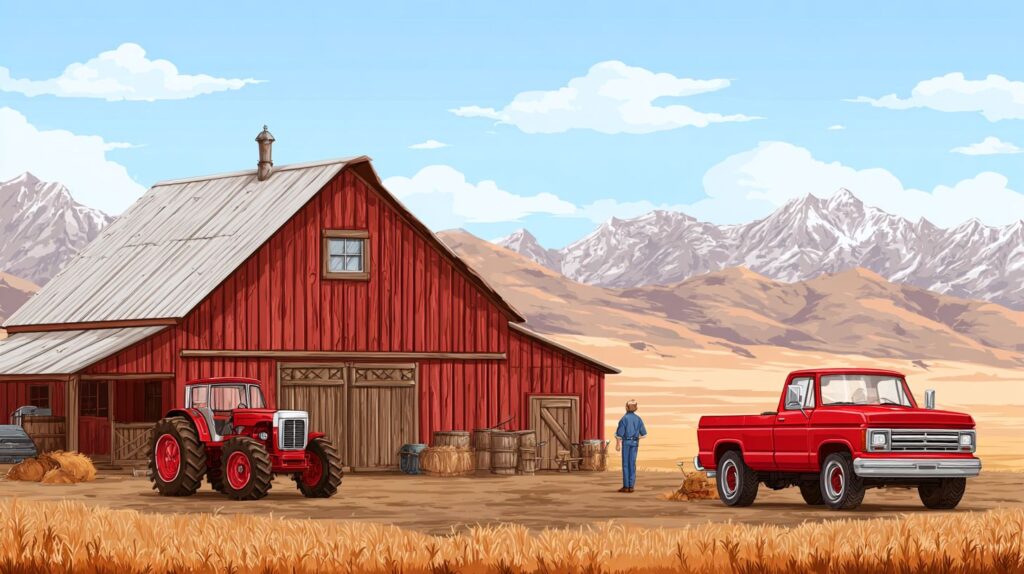
When researching agricultural equipment brands such as John Deere, Case IH, and Farm Shop MFG, a key aspect involves evaluating and comparing their reliability ratings. According to reports from South Shore Tractor dealers, modern models demonstrate an impressive 95% uptime performance.
User Reviews and Ratings
User reviews on TractorHouse.com assign an average rating of 4.7 out of 5 to the John Deere 8R tractor for its durability, based on more than 500 feedback submissions from Iowa farmers in areas like Fielding that underscore its low maintenance requirements.
Comparative analyses with competing models highlight significant differences. The following table provides a summary derived from TractorHouse and AgWeb data:
| Brand | Average Rating (out of 5) | Common Praise | Frequent Complaints | Sample Review |
|---|---|---|---|---|
| John Deere 8R | 4.7 | Reliability | High costs | ‘Saved 10% fuel on 1,000 acres’ – Iowa user |
| Case IH | 4.5 | Power | Parts delays | ‘Handles heavy tillage effortlessly but waits for spares’ – Nebraska farmer |
| New Holland | 4.4 | Affordability | Noise | ‘Great value for mid-size ops, though cabin vibration noted’ – Kansas reviewer |
Recommendations for further evaluation: Consult the Ag Decision Maker (AgDM) forums from Iowa State University for objective insights, including resources on Fieldwork Days in Iowa; exercise caution with dealer reviews, which a 2022 Farm Journal study found to inflate ratings by 20%.
Maintenance and Support Factors
Implementing structured maintenance schedules for tractors, such as oil changes every 500 hours, can reduce downtime by 30%, thereby ensuring operational timeliness even amid weather-related disruptions on large-scale 700-acre farms, as detailed in the January 2017 AgDM report.
To optimize these maintenance schedules, it is advisable to adopt the following best practices:
- Conduct daily inspections utilizing checklists provided by the Iowa State University (ISU) Extension, updated as of May 10. These checks, which require only 15 minutes, involve examining fluids and belts to identify potential issues early.
- For seasonal storage, protect tractors by covering them with heavy-duty tarps. This measure safeguards against moisture and ultraviolet (UV) damage, thereby preventing corrosion and extending equipment longevity.
- Collaborate with reputable local service providers, such as South Shore Tractor, for repairs. Services typically cost approximately $100 per hour and enable prompt resolution of mechanical problems, minimizing operational interruptions.
According to studies by the United States Department of Agriculture (USDA), diligent maintenance practices can lower repair costs by 25%. It is particularly important to avoid neglecting air filters, as failure to do so may result in engine delays and subsequent yield losses of up to 20%.
Purchasing and Testing Options
Purchasing alternatives encompass leasing a 200 HP tractor at an annual rate of $20,000 or engaging custom hiring services at $15 per acre for tasks like planting with a planter or seeder. These options should be evaluated through 10-hour field demonstrations to confirm operational capacity.
To make an informed decision, adhere to the following structured process:
- Employ the Ag Decision Maker (AgDM) calculator developed by Iowa State University to analyze comparative costs. According to their 2022 study, leasing typically delivers a 15% superior return on investment for operations spanning less than five years.
- Perform terrain-specific evaluations, such as a 50-acre assessment conducted over two days, while monitoring fuel efficiency (targeting consumption below 2 gallons per acre).
- Engage in negotiations with authorized dealers, including John Deere and Case IH, to secure bundled discount opportunities.
A 2023 USDA case study examining Midwest agricultural operations demonstrated that leasing resulted in annual savings of $50,000, accompanied by a 40% enhancement in labor efficiency, rendering it particularly suitable for fluctuating workloads.
Learn more, Types of Farm Equipment and Their Uses.
Frequently Asked Questions
How to Choose the Right Agricultural Equipment for Your Farm?

Choosing the right agricultural equipment for your farm involves evaluating your farm’s size, crop types, budget, and operational needs. Start by assessing the terrain and soil conditions, then research equipment specifications from reputable brands, including tools like the furrow row closer. Consider factors like fuel efficiency, durability, and maintenance costs to ensure long-term productivity and cost-effectiveness.
What key factors influence how to choose the right agricultural equipment for your farm?
Key factors include farm size, type of crops or livestock, soil type, and budget constraints. Evaluate the equipment’s compatibility with your daily tasks, such as plowing with a plow, harrowing with a harrow, or planting. Also, consider environmental impact, ease of use, and after-sales support to make an informed decision that enhances farm efficiency.
How does farm size affect how to choose the right agricultural equipment for your farm?
Farm size directly impacts equipment scale; smaller farms may opt for compact tractors or manual tools, while larger operations require heavy-duty machinery like large combines or automated irrigation systems. Assess your acreage and workflow to avoid over-investing in oversized equipment or under-equipping for growth.
What role does budget play in how to choose the right agricultural equipment for your farm?
Budget is crucial in balancing initial costs with long-term savings. Prioritize equipment with high return on investment, such as fuel-efficient models that reduce operational expenses. Explore financing options, used equipment, or subsidies to acquire quality tools without straining finances.
How can technology help in how to choose the right agricultural equipment for your farm?
Modern technology like GPS-guided tractors and precision farming tools can optimize resource use and increase yields. When choosing, look for smart features that integrate with farm management software, ensuring scalability and data-driven decisions for improved sustainability and productivity.
What maintenance considerations are important when learning how to choose the right agricultural equipment for your farm?
Maintenance is essential for longevity; select equipment with readily available parts, simple servicing, and strong warranty coverage. Research user reviews on reliability and factor in local service availability to minimize downtime and keep your farm operations running smoothly.