In the ever-evolving landscape of logistics, choosing between rail freight and truck freight can significantly impact your supply chain management strategy. As Canada gears up for 2025, understanding the strengths and weaknesses of each shipping method is crucial for optimizing efficiency and cost-effectiveness. This article will provide an in-depth comparison of rail and truck freight, helping you make informed decisions tailored to your business needs.
Table of Contents
Key Takeaways:
- Rail freight offers cost savings and environmental benefits, but is limited in speed and accessibility.
- Truck freight provides flexibility and faster delivery, but at a higher cost and with a larger carbon footprint.
- Consider the specific needs and characteristics of your business to determine the best shipping method for your supply chain.
Overview of Rail Freight
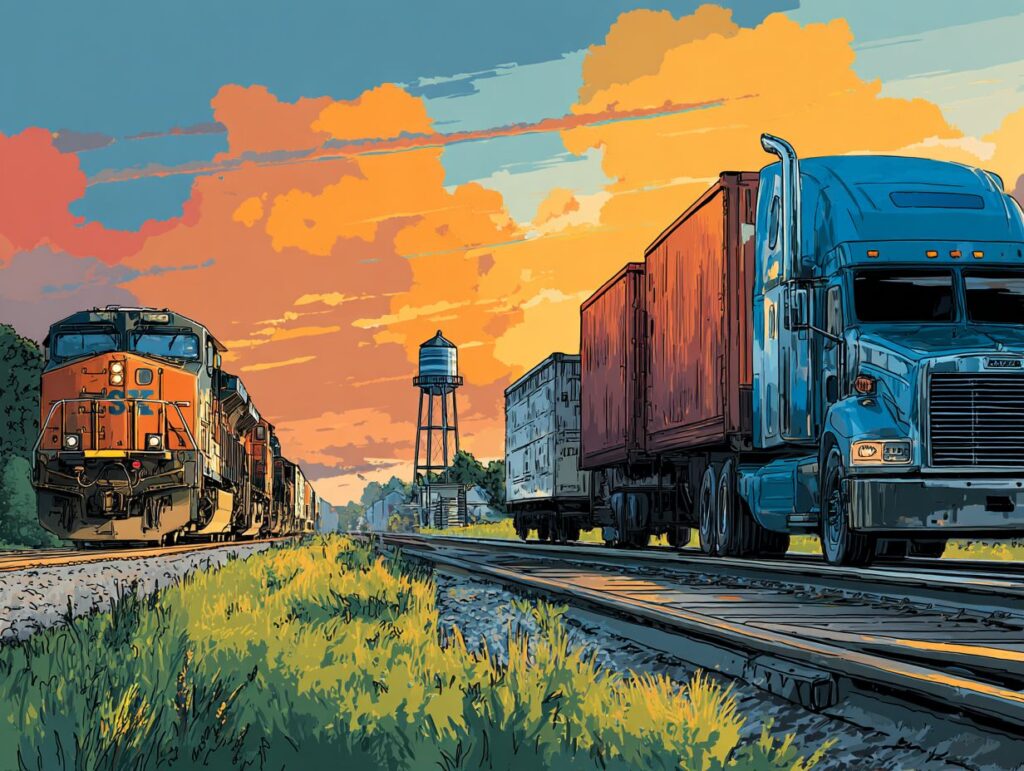
Rail freight represents an efficient means of transporting bulk commodities like automobiles and petroleum products, providing cost-effective solutions for logistics and ensuring reliable delivery of goods.
Advantages of Rail Freight
Rail freight offers significant advantages, including reduced transportation costs, enhanced economies of scale, and a more sustainable alternative to road transport.
For example, rail transport can decrease costs by as much as 50% per ton-mile compared to trucking. This cost efficiency is attributed to the capability of moving larger loads over extended distances. The operational model of rail facilitates considerable economies of scale, as longer trains contribute to a lower cost per unit transported.
Furthermore, from an environmental standpoint, rail transport emits 45% less greenhouse gas per ton-mile than trucks, positioning it as a more sustainable option for businesses striving to minimize their carbon footprint.
Companies such as BNSF and Union Pacific serve as prime examples of these benefits in practice.
Disadvantages of Rail Freight
Despite its advantages, rail freight presents certain disadvantages, including limited flexibility, shortages of drivers, and, in some instances, longer transit times. To address these challenges, businesses can implement a range of strategies.
- To counteract limited flexibility, organizations may consider integrating multiple transportation modes, such as trucking, to facilitate access to more remote locations.
- If there is driver shortages, establishing partnerships with logistics companies can augment workforce resources.
- To mitigate longer transit times, optimizing shipping schedules and employing predictive analytics can streamline operations, ensuring that goods are prioritized according to demand fluctuations.
By implementing these strategies, businesses can improve overall efficiency and reliability in rail freight logistics.
Overview of Truck Freight
Truck freight is extensively utilized due to its flexibility and capability to transport goods directly to their intended destinations, such as perishable goods, thereby serving as a fundamental component of contemporary logistics.
Advantages of Truck Freight
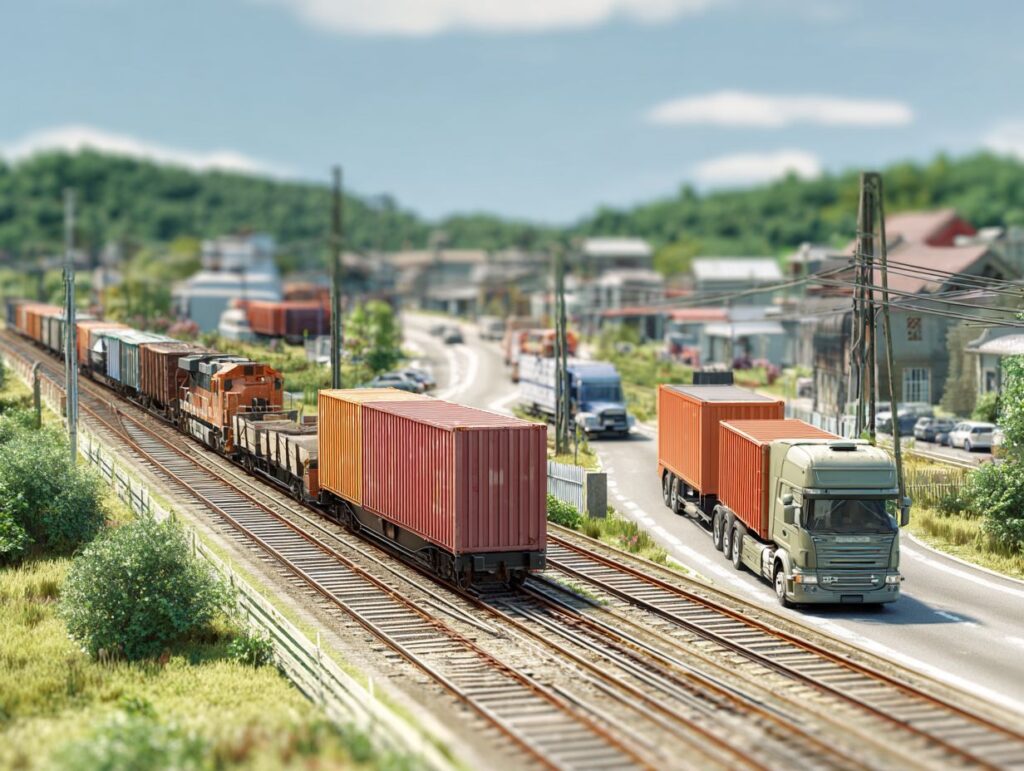
Truck freight provides exceptional flexibility, reliable delivery, and the capability to access remote locations that may not be serviced by rail transportation.
Utilizing trucking services allows companies to swiftly adjust routes in response to delivery requirements or traffic conditions, thereby ensuring timely arrival of goods. For example, logistics software such as Route4Me or OptimoRoute enables optimized route planning that conserves both time and fuel.
With over 70% of freight movement in the United States conducted by trucks, businesses increasingly rely on this mode for rapid response times.
This flexibility not only enhances customer satisfaction but also improves access to difficult-to-reach areas that are often overlooked by other forms of transportation.
Disadvantages of Truck Freight
Truck freight presents several challenges, including a higher environmental impact, increased transportation costs, and a persistent shortage of drivers. For instance, trucks generate significantly greater greenhouse gas emissions compared to rail transport, raising concerns regarding environmental sustainability.
Moreover, the cost of transporting goods by truck can be up to 20% higher than utilizing rail, particularly for bulk shipments. In response to these challenges, companies are investing in eco-friendly fleets and exploring alternative fuels to mitigate their environmental footprint.
To combat the issue of driver shortages, the industry is implementing improved working conditions and offering higher wages, with the objective of attracting new talent. These strategies are essential for reconciling the demand for trucking services with the significant operational challenges currently faced by the sector.
Learn more, Rail Transport vs. Truck Transport: Pros and Cons
Cost Comparison
A comprehensive cost comparison between rail and truck freight reveals significant disparities that are essential for businesses seeking to optimize their logistics expenses.
Rail freight generally averages between $0.03 and $0.05 per ton-mile, positioning it as a cost-effective option for transporting bulk commodities such as coal or grain, with typical transit times ranging from 2 to 10 days. In contrast, trucking costs approximately $0.15 to $0.20 per ton-mile, while providing faster transit times of 1 to 3 days, making it particularly suitable for smaller, time-sensitive shipments.
A case study of a regional manufacturing company illustrates that transitioning from truck to rail for the transport of bulk materials resulted in a 30% reduction in logistics costs, thereby enhancing the overall profit margins of the business.
Speed and Efficiency
In terms of speed and efficiency, truck freight typically outperforms rail freight; however, effective strategies within the freight industry can significantly enhance rail performance.
Logistics companies can improve rail efficiency by implementing better scheduling practices, thereby optimizing train timetables to align with peak demand periods. Additionally, the utilization of intermodal systems facilitates seamless cargo transfers between rail and truck transportation, considerably accelerating last-mile deliveries.
For example, companies such as CSX and Union Pacific have established partnerships with regional trucking firms to streamline their operations, resulting in transit time reductions of up to 20%. By concentrating on strategic partnerships and innovative scheduling methods, businesses can capitalize on the strengths of both rail and truck transport, thereby achieving a balanced and efficient supply chain.
Environmental Impact
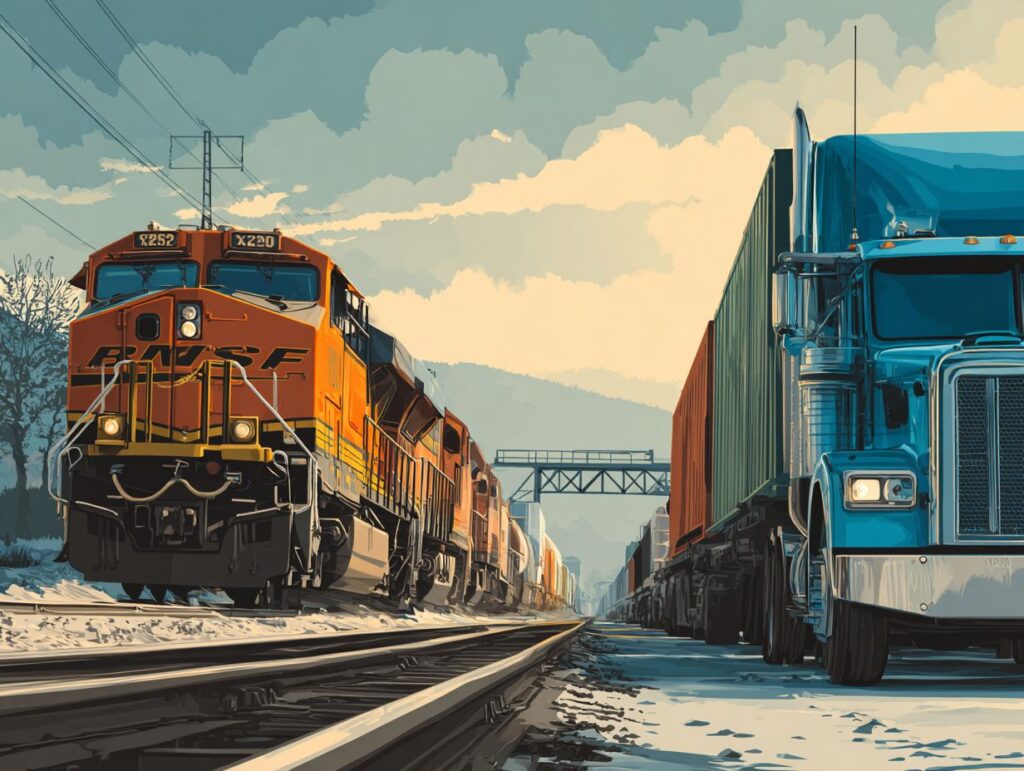
The environmental impact of freight transportation methods is an increasingly pressing concern, with rail freight frequently recognized as the more sustainable option due to its lower greenhouse gas emissions. Rail freight generates approximately 0.5 tons of CO2 per 1,000 ton-miles, whereas trucking produces about 1.5 tons, positioning rail as a significantly more environmentally friendly choice.
Organizations can enhance their sustainability efforts further by adopting intermodal shipping, which integrates both rail and trucking to optimize efficiency. For example, logistics companies such as CSX have successfully reduced their overall carbon footprint by optimizing loads and utilizing dedicated rail lines for the transportation of goods.
Implementing eco-friendly practices not only contributes positively to environmental preservation but also resonates with the growing demographic of eco-conscious consumers.
Choosing the Right Method for Your Business
Selecting the optimal freight method necessitates a thorough assessment of several factors, including cost, speed, and environmental impact, all of which are pertinent to the shipping strategy in question.
Factors to Consider
When selecting a freight method, it is essential to consider several key factors, including logistics planning, transportation networks, cost efficiency, and sustainability objectives.
Evaluating shipping volume is critical in determining whether to utilize full truckload (FTL) for bulk shipments or less-than-truckload (LTL) for smaller loads. For instance, companies such as Amazon effectively employ LTL to facilitate flexible delivery schedules, thereby optimizing costs while maintaining a balance between speed and efficiency.
Moreover, organizations should take into account the environmental impact of their transportation choices. Businesses like IKEA prioritize rail transport to minimize their carbon footprint.
It is also important to assess infrastructure availability in the relevant area; regions with robust rail networks may benefit from rail transport, while those that rely predominantly on road networks might prefer trucking.
By thoroughly analyzing these factors, companies can develop an informed and effective freight strategy.
Frequently Asked Questions
What is the difference between rail and truck freight?
Rail freight involves transporting goods by train on a network of rails, while truck freight involves transporting goods on a highway by truck.
Which shipping method is more cost-effective for my supply chain?
It ultimately depends on the distance and weight of your shipment. Rail freight is generally more cost-effective for long-distance and heavy shipments, while truck freight is better for short distances and lighter shipments.
Is rail freight more environmentally friendly compared to truck freight?
Yes, rail freight is considered to be a more sustainable option as it produces lower emissions and requires less fuel per ton of freight compared to truck freight, contributing to lower carbon footprints and enhanced environmental stewardship.
Can I track my shipment with both rail and truck freight?
Yes, both rail and truck freight offer tracking options for shipments. However, rail freight may have more limited tracking capabilities compared to truck freight, but it often offers more predictable pricing.
Which shipping method is faster – rail or truck freight?
Truck freight is generally faster than rail freight, as trucks can take a more direct route and have fewer limitations compared to trains, making it a preferred choice for transporting consumer goods when time is critical.
How do I determine which shipping method is best for my supply chain?
Consider the distance, weight, cost, and time constraints of your shipment to determine which method is best for your supply chain. Intermodal shipping, combining both rail and truck freight, may also be the most efficient option for certain shipments. Companies like RailGateway and DIDADI Logistics offer solutions that span across Canada to optimize your transportation needs.