Jewish holidays possess profound significance, serving as important occasions for reflection, celebration, and community bonding. Each festival encompasses unique traditions and customs that link individuals to their heritage and faith. This article provides an exploration of seven major Jewish holidays: Rosh Hashanah, Yom Kippur, Sukkot, Hanukkah, Purim, Passover, and Shavuot. From the solemn observance of Yom Kippur to the joyous celebrations of Hanukkah, these holidays enrich Jewish culture and foster a sense of belonging within diverse communities around the world.
Table of Contents
Explanation of the Importance of Holidays in Jewish Culture and Their Cultural Significance
Jewish holidays hold a significant position within the intricate framework of Jewish culture, serving as essential touchpoints that link generations and cultivate a sense of community among family and friends, while also highlighting their cultural significance.
Each holiday is characterized by distinct traditions and customs that reflect the historical experiences of the Jewish people, thereby enhancing their cultural importance through rituals and communal gatherings. From the contemplative observance of Yom Kippur to the celebratory nature of Hanukkah, these sacred occasions present opportunities for spiritual practices, familial cohesion, and the commemoration of historical events that define Jewish identity.
The observance of Passover, for example, transcends the symbolic elements of Seder plates and matzah; it encourages families to recount their shared narrative of liberation, fostering deeper connections and a sense of collective memory. Likewise, the Festival of Lights not only commemorates triumph over oppression but also reinforces community bonds through the lighting of menorahs, uniting neighbors in a spirit of camaraderie.
These observances are not merely rituals; they represent vibrant expressions of identity in which storytelling, music, and communal meals intertwine lives, affirming the continuity of tradition amidst the complexities of contemporary society.
Rosh Hashanah: The Jewish New Year
Rosh Hashanah, the Jewish New Year, signifies the commencement of the High Holy Days and serves as a period for reflection, renewal, and celebration within the Jewish community.
This holiday is distinguished by its rich traditions and customs, which include the sounding of the shofar, festive meals, and significant prayers that encourage spiritual introspection, foster community connections, and emphasize the importance of synagogue attendance.
As families convene to usher in the New Year, they engage in rituals that underscore the importance of unity, joy, and the establishment of intentions for personal growth in the upcoming year.
Traditions and Customs of the Jewish New Year: A Time for Family Gatherings and Reflection
The traditions and customs of Rosh Hashanah significantly enhance the observance of the Jewish New Year, emphasizing themes of renewal and reflection. During this time, families convene to partake in festive meals that feature symbolic foods, such as apples and honey, which represent the aspiration for a sweet New Year.
The prayers recited during the holiday underscore the significance of community service and charitable acts, promoting a spirit of kindness and unity as families and friends engage in shared rituals.
The custom of consuming round challah bread symbolizes the cyclical nature of the year, thereby reinforcing themes of continuity and togetherness. These gatherings frequently include the recitation of the Tashlich prayer, wherein families collectively cast away their sins by tossing breadcrumbs into flowing water, signifying purification and new beginnings.
Each moment shared during these meals and prayers serves to strengthen the bonds that unite families, fostering a sense of belonging and community as they embark on another year filled with hope and promise.
Yom Kippur: The Day of Atonement
Yom Kippur, referred to as the Day of Atonement, is of great significance in Jewish tradition, serving as a day devoted to repentance, reflection, and spiritual renewal. This solemn holiday is observed through fasting and intensive prayer, offering individuals an opportunity to seek forgiveness, reconcile relationships, and engage in profound spiritual practices.
The communal aspect of Yom Kippur fosters unity among families and communities within synagogues, creating a powerful environment of collective introspection as participants honor the importance of atonement, moral development, and the communal prayers that reinforce their faith.
The Day of Atonement and its Significance: A Time for Prayer Services and Fasting
The Day of Atonement, or Yom Kippur, constitutes a profoundly significant observance within Jewish life, characterized by fasting, prayer, and spiritual reflection. On this sacred day, individuals engage in deep introspection, aiming to atone for past transgressions while reinforcing their connection to both faith and community.
The communal prayers play a vital role in strengthening Jewish identity and fostering a sense of belonging among participants, highlighting the holiday’s importance as a period for reconciliation and spiritual renewal.
As the sun sets, the atmosphere transitions into one of solemnity and reverence. Fasting, which is an essential component of Yom Kippur, signifies not only physical deprivation but also enhances the spiritual experience, enabling individuals to concentrate on repentance and moral integrity.
Each prayer, recited in unison, resonates with the collective hopes and aspirations of the community, nurturing bonds that extend beyond individual experiences.
This distinctive combination of reflection, communal support, and the aspiration for forgiveness enriches the day’s significance, transforming it into a powerful catalyst for personal growth and communal harmony.
Sukkot: The Feast of Tabernacles
Sukkot, commonly known as the Feast of Tabernacles, is a significant harvest festival that underscores gratitude for the earth’s abundance, enhances community events, and fosters community cohesion.
Throughout this week-long observance, families construct and adorn a sukkah, a temporary structure that symbolizes the protective presence of God. This holiday is steeped in tradition, featuring festive meals, prayers, and rituals that not only reinforce community ties but also highlight the importance of family gatherings in promoting unity and joy.
Building and Celebrating in the Sukkah: A Joyous Occasion of Community and Unity
Building and celebrating in the sukkah represents a fundamental practice during Sukkot, where families unite to honor the harvest and foster a joyous atmosphere. The sukkah, embellished with fruits and decorations, serves as a communal space for sharing festive meals and engaging in meaningful discussions.
This practice not only reinforces family traditions but also enhances community spirit as individuals come together to celebrate the blessings of the season.
As the sukkah becomes the centerpiece of the holiday, it encourages families to reflect on the importance of hospitality and generosity, extending invitations to friends and neighbors to participate in the festivities.
Each meal shared within its confines nurtures deeper connections, allowing families to pass down cherished stories and recipes that have been preserved through generations. The lively atmosphere, filled with laughter, song, and joy, transforms these gatherings into treasured memories that resonate long after the holiday concludes.
By actively participating in the construction and decoration of the sukkah, individuals experience a sense of ownership and pride, reinforcing the values of cooperation and unity within both the household and the broader community.
Hanukkah: The Festival of Lights
Hanukkah, referred to as the Festival of Lights, is a significant holiday that commemorates the miracle of the oil that endured for eight days in the Second Temple, symbolizing resilience and faith.
The importance of Hanukkah is evident in its rich traditions, which encompass the lighting of the menorah, the exchange of gifts, and participation in joyful family gatherings.
This festive period strengthens community connections and fosters a spirit of joy, gratitude, and remembrance within Jewish households.
The Festival of Lights and its Symbolism: Lighting of the Menorah and Candle Lighting Traditions
The Festival of Lights, known as Hanukkah, embodies significant symbolism through its traditions, most notably illustrated by the lighting of the menorah. Each evening, an additional candle is lit to commemorate the miracles of the past and the victory of light over darkness. This practice serves as a reminder of Jewish perseverance and encourages families to unite in celebration, thereby strengthening communal spirit and reinforcing cultural identity.
The menorah functions as a symbol of hope, representing the resilience of a people who have endured adversity throughout history. As families convene around the menorah, they share stories and engage in traditions that transmit values from one generation to the next. These gatherings cultivate an environment where both the young and the elderly can connect, fostering a sense of belonging that extends beyond individual households.
Participation in rituals such as playing dreidel and enjoying traditional foods further enriches shared experiences, thereby enhancing the bonds within communities. Ultimately, the illumination of each candle signifies a collective affirmation of faith and unity that transcends time.
Learn more, Hanukkah, the Festival of Lights.
Purim: A Celebration of Joy and Survival
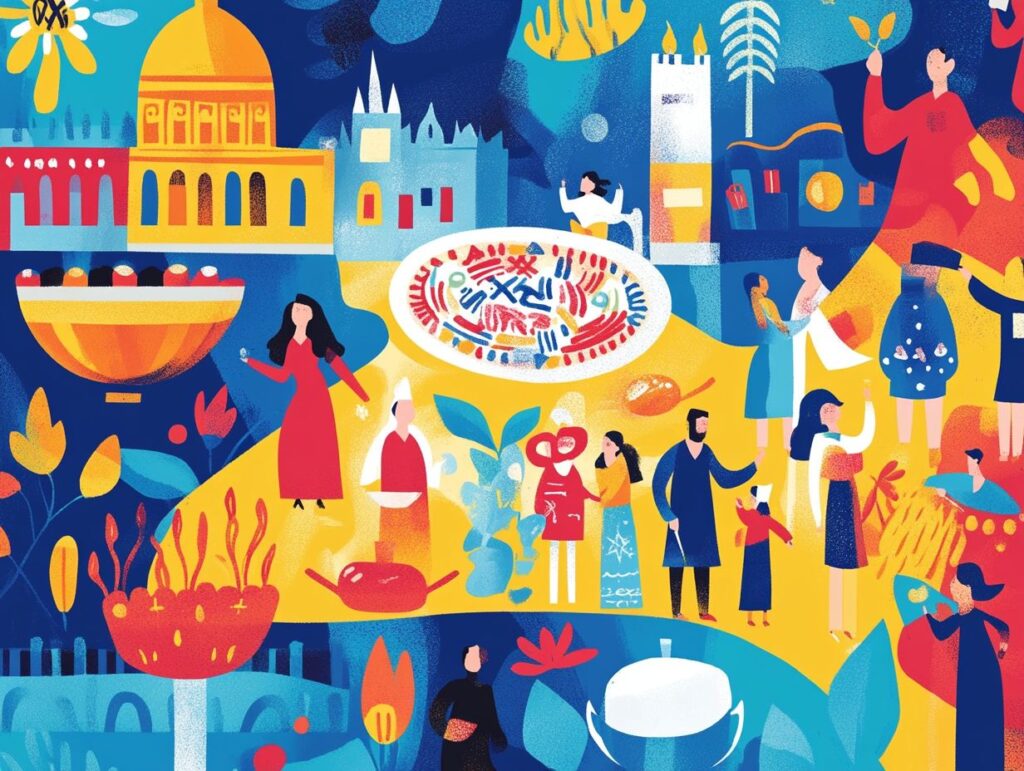
Purim is a significant celebration that commemorates the salvation of the Jewish people as recounted in the Book of Esther. It is a time marked by joy, storytelling, and communal unity.
The holiday is distinguished by vibrant customs, including the wearing of costumes, the exchange of gifts, and the enjoyment of festive meals.
Purim serves as both a reminder of Jewish resilience and an opportunity for families to convene and engage in joyful celebrations that enhance community ties.
Commemorating the Salvation of the Jewish People
Purim, one of the prominent Jewish holidays, commemorates the salvation of the Jewish people and serves as a testament to the triumph of good over evil, as documented in the Book of Esther. This celebration underscores the significance of remembering historical events that have shaped Jewish identity and resilience.
Various traditions, including the reading of the Megillah and the sharing of festive meals, promote a sense of community and collective joy, enabling participants to reflect on their heritage and the importance of their survival.
Originating from the ancient Persian Empire, the story of Purim exemplifies courage and faith, illustrating how unity can surmount adversity. During this festive occasion, individuals gather to listen to the Megillah, a spirited recounting of Esther’s bravery and the deliverance of the Jewish people from impending destruction.
The reading is accompanied by the sound of noise-makers, known as graggers, which are used to drown out the name of Haman, the adversary, enhancing the experience of joy and thanksgiving.
The celebrations often involve dressing in colorful costumes that reflect the joyous spirit of the day. Families and friends come together to partake in a lavish feast featuring traditional foods, thereby creating an atmosphere of camaraderie and festivity.
This reinforces the themes of hope and gratitude that resonate profoundly within Jewish culture, promoting love and community through shared celebrations.
Passover and its Historical Context
Passover, also known as Pesach, is an important Jewish holiday that commemorates the Exodus from Egypt and imparts significant lessons regarding freedom and faith, embodying deep spiritual meaning for the Jewish people.
At the heart of this celebration is the Seder, a ritual meal that encompasses storytelling, prayers, and the consumption of matzah, which symbolizes the urgency with which the Jewish people departed from Egypt.
This holiday promotes family gatherings and community connections, underscoring the importance of remembrance, gratitude, and the collective experience of liberation, fostering global celebrations and unity.
The Seder and its Rituals
The Seder serves as the central element of Passover celebrations, encompassing a series of rituals and traditions that unite families and communities in the commemoration of the Exodus. This ceremonial meal features storytelling, the recitation of the Haggadah, and the consumption of symbolic foods that embody themes of freedom and resilience.
Through these rituals, participants engage in a significant experience that promotes unity, gratitude, and a deeper connection to their cultural heritage, including customs and practices from diverse Jewish traditions.
Each component of the Seder is designed to foster a sense of identity and belonging among attendees. The Haggadah, which is a principal text detailing the order of the Seder, functions not only as a guide but also as an influential resource for Jewish education. It intricately weaves the narrative of the Israelites’ liberation into a broader framework of lessons concerning justice and hope.
Symbolic foods such as matzah, bitter herbs, and charoset contribute to a sensory experience that evokes emotions and memories. As families convene around the table, the act of storytelling elevates tradition into a substantial exchange of experiences and values, serving as a poignant reminder of the importance of resilience in the face of adversity.
Shavuot: The Feast of Weeks
Shavuot, recognized as the Giving of the Torah, is a significant holiday that commemorates the divine bestowal of the Torah to the Jewish people while emphasizing themes of agricultural abundance and communal unity.
This holiday is marked by specific traditions, such as the reading of the Ten Commandments and the consumption of dairy foods, which symbolize the sweetness of the Torah.
Shavuot promotes family gatherings and community involvement, cultivating a sense of gratitude and appreciation for spiritual teachings.
The Giving of the Torah and its Observances
The Giving of the Torah during Shavuot represents a foundational aspect of Jewish identity and religious observance, embodying the covenant between God and the Jewish people. The observance of this holiday includes all-night study sessions and the reading of the Torah, which allows participants to deepen their understanding of sacred texts.
Shavuot not only underscores the significance of the Torah but also strengthens community bonds through shared traditions and family gatherings.
The practice of engaging in Tikkun Leyl Shavuot, an all-night study session, encourages individuals to immerse themselves in the teachings of the Torah while fostering a sense of camaraderie among participants. This collective learning experience reinforces the value of the sacred texts and cultivates friendships, thereby enriching community life.
During this period, discussions surrounding the ethical and moral lessons found within the Torah can facilitate personal growth and foster a deeper appreciation for the transformative power of these ancient teachings, promoting educational programs and religious education within the community. Additionally, sharing festive meals comprised of dairy delicacies creates a warm atmosphere that allows families and friends to celebrate unity while reflecting on the profound impact of the Torah in their daily lives.