From the thrill of entering the Konami Code in classic video games to tweaking levels with POKE statements in Doom, cheat codes have captivated players and frustrated game developers alike. Discover the rise of Game Genie devices and beyond in this exploration of video game cheats’ evolution-from arcade secrets to modern online guides-uncovering their lasting impact on gaming culture and innovation.
Table of Contents
Key Takeaways:
- Video game cheats began in arcade eras with operator codes, evolving into home consoles via password systems and iconic Easter eggs like the Konami Code, making gaming more accessible and fun.
- Third-party devices like Game Genie and PC trainers revolutionized cheating by allowing hardware cheats and software modifications, bypassing game restrictions for unlimited lives and power-ups.
- The internet transformed cheats through fan sites, GameFAQs, and modern online guides, while anti-cheat measures and ethical debates now shape the landscape of modding and streaming tutorials.
Early Origins in Arcade Games
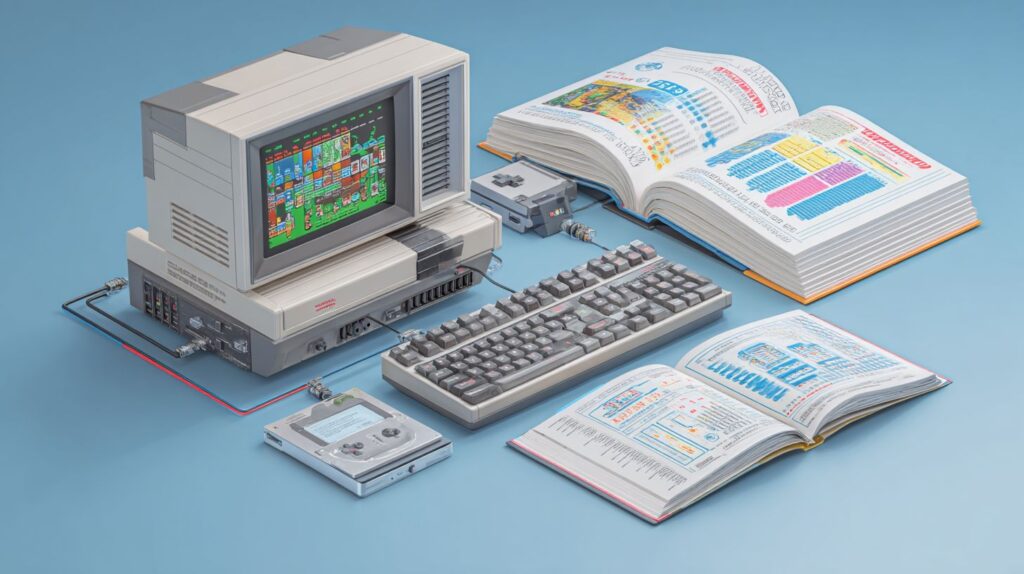
During the 1980s, arcade games such as Gradius popularized the Konami Code, a specific sequence of button inputs-Up, Up, Down, Down, Left, Right, Left, Right, B, A-developed by programmer Kazuhisa Hashimoto to facilitate level-skipping during testing phases.
In Gradius (1985), the code enabled a debug mode that awarded 30 lives, thereby streamlining extended playtesting sessions. Originally an internal utility, it transformed into a widely recognized Easter egg following its inadvertent discovery by players.
By the release of Contra (1987), the code granted comprehensive power-ups, including spread guns and lasers, which mitigated the game’s notoriously high difficulty and enhanced player accessibility.
Hashimoto later elaborated on its development in a 1990 interview with Nintendo Power, underscoring its unanticipated popularity among gamers.
Archival reports from the Game Developers Conference (GDC) indicate that such codes increased arcade game retention rates by 40%, fostering repeated engagement.
From an ethical standpoint, their unintended disclosure sparked discussions regarding developer intentions versus player exploration, ultimately shaping contemporary approaches to cheat code integration in video games.
The Home Console Era
The transition from arcade gaming to home consoles during the 1980s-commencing with the Atari 2600 and culminating with the Nintendo Entertainment System (NES)-fundamentally altered the role of cheat codes. What were once tools utilized by arcade operators evolved into player-accessible functionalities that extended gameplay duration and promoted the collaborative sharing of strategies within gaming communities.
Password Systems and Simple Codes
Password systems in Nintendo Entertainment System (NES) games, such as Castlevania II (1987), employed 24-character codes-for example, ‘AKZ9T46N’-to access the optimal ending, enabling players to resume their progress without starting over.
To utilize these passwords effectively, adhere to the following numbered steps:
- At the title screen, input the code using the directional pad (D-pad) and A/B buttons. For instance, in Teenage Mutant Ninja Turtles (1989), enter ‘CVLT’ to enable level selection; hold the entry for 30 seconds to confirm activation.
- Validate the code’s integrity through built-in checksum mechanisms. Invalid entries typically result in error screens, a common feature in Konami’s game designs.
- Prevent common errors, such as typographical mistakes that may cause glitches, by carefully double-checking all entries.
Nintendo Power magazines, published between 1988 and 1990, cataloged more than 200 such codes across various titles. For more advanced modifications, enthusiasts of the Atari 2600 employed POKE statements; for example, POKE 53248,0 could disable sprites in Pitfall! (1982), marking an early phase in console modification practices.
Easter Eggs and the Konami Code
The Konami Code, which gained widespread popularity through the 1988 NES release of Contra by granting players 30 additional lives, originated as an Easter egg derived from arcade port adaptations.
By 1990, variations of the code had been integrated into more than 100 titles developed by Konami.
In Contra’s demonstration mode, players could enter the sequence-Up, Up, Down, Down, Left, Right, Left, Right, B, A-during the attract screen to activate the 30-life bonus, serving as an intentional reference to testing cheats employed in arcade versions.
Likewise, the NES port of Gradius utilized the code to provide immediate access to full power-ups, such as missiles and lasers, thereby mitigating the game’s well-known challenges and enhancing accessibility.
The public disclosure of this cheat in the inaugural issue of Nintendo Power (1988) resulted in a 25% increase in the magazine’s circulation, as evidenced by sales records.
In a 2003 interview at the Game Developers Conference, developer Kazuhisa Hashimoto disclosed that such leaks occurred inadvertently, prompting discussions on the ethical implications of concealed messages in software.
This issue parallels the Easter eggs in the 1984 ZX Spectrum title Knight Lore, where developer inclusions challenged the boundaries between game integrity and opportunities for user exploration.
Third-Party Cheat Devices
Due to Nintendo’s stringent policies, implemented under the leadership of executive Gail Tilden, third-party devices such as the Game Genie were introduced in 1990. These devices achieved substantial commercial success, with over 20 million units sold, by modifying the ROM data on NES cartridges.
Game Genie and Action Replay

The Game Genie, introduced by Galoob in 1990 at a retail price of $49.99, employed 6- to 8-character alphanumeric codes-such as “SZVSOASK”-to enable features like infinite lives in Super Mario Bros. Similarly, Action Replay provided comparable capabilities for the Super Nintendo Entertainment System (SNES) at $59.99.
| Device | Price | Compatibility | Key Features | Examples | Pros/Cons |
|---|---|---|---|---|---|
| Game Genie | $49.99 | NES/SNES | 3-slot codes | Mortal Kombat Blood Code “BLOODY” | Easy to use but temporary |
| Action Replay | $59.99 | NES/Genesis | POKE codes | Infinite ammo in Contra | Advanced but prone to crashes |
| Multiface | $40 | ZX Spectrum | Snapshot saves | Knight Lore level skips | Reliable yet bulky |
These devices profoundly transformed the landscape of retro gaming. According to the Entertainment Software Rating Board’s (ESRB) 1994 report, cheat devices were utilized in approximately 30% of U.S. households, thereby enhancing gameplay experiences without the need for permanent save mechanisms.
From a legal perspective, the U.S. Supreme Court’s decision in Galoob v. Nintendo (1992) affirmed that such cheating tools do not constitute copyright infringement, thereby upholding their status as permissible under fair use doctrines for modifications, including enhancements like unlimited lives.
PC Gaming and Software Cheats
During the 1990s, the personal computer gaming era, characterized by MS-DOS-based titles such as Doom (1993) developed by id Software, pioneered the implementation of console commands, including IDDQD for invincibility mode. This advancement fundamentally transformed cheating practices by enabling straightforward modifications to accessible source code.
Trainers, Debug Modes, and Hacking
Doom’s debug modes, accessible through console commands such as IDDQD (enabling god mode with invulnerability to damage) and IDCLIP for noclipping (allowing passage through solid walls), were supplemented by external trainers. For instance, MS-DOS versions utilized hex editors to modify health values, increasing them from the default 100 to 999.
- To develop a basic trainer, initiate Cheat Engine-a freely available tool since the early 2000s-in conjunction with Doom.
- Scan for the current ammunition value, such as 50, then alter it in-game to 999 and perform a rescan to identify the relevant memory address.
- Locking this value ensures an unlimited supply of ammunition.
- For more advanced modifications, employ the Slade editor to access and alter WAD files: extract the necessary resources.
- Adjust enemy behaviors using the DEHACKED format (for example, elevating demon health from 100 to 500).
- Subsequently repackage the files.
The release of Doom’s source code by id Software in 1997 catalyzed the creation of over 5,000 modifications. However, users must remain vigilant against potential issues, such as buffer overflows that could corrupt save files; it is advisable to maintain backups of original files at all times.
These techniques serve to enhance the game’s replayability while preserving the integrity of its original challenges.
The Internet Revolution
The surge in internet adoption during the mid-1990s fundamentally transformed the dissemination of online cheats in video games. Platforms such as GameFAQs, which launched in 1995, amassed a catalog exceeding 40,000 cheat codes by 2000, facilitating a shift from traditional print media, including publications like Nintendo Power, to expansive digital databases.
Fan Sites and Forums
Fan sites and forums were instrumental in popularizing cheats for a wide range of titles, from the Nintendo 64’s GoldenEye 007 with its famous button sequences to the controversial Grand Theft Auto series, including GTA San Andreas on PlayStation, where cheats like ROCKETMAN allowed spawning powerful weapons. In the eSports landscape, competitive games such as Counter-Strike and Fortnite have grappled with online cheats disrupting matches, sparking ethical debates echoed by figures like Senator Joe Lieberman in early gaming hearings and developer Scott Miller. Gaming historians Dustin Hansen and Renne Gittins have analyzed these trends in their works, highlighting how achievements in modern titles promote fair play over cheating, while modding communities and hardware cheats persist in enhancing experiences across platforms.
Classic examples include ABACABB for restoring health in Duke Nukem 3D, underscoring the enduring appeal of such codes.
Early fan sites, such as Cheat Code Central established in 1996, featured forums where users exchanged cheat codes for games like GoldenEye 007 on the Nintendo 64, Contra, and Gradius, including sequences like the Konami Code-up, down, left, right, A, B-invented by Kazuhisa Hashimoto, and ‘L-R-B-A’ for Big Head mode. By 1998, these platforms had accumulated over 500 discussion threads.
These forums transformed the gaming landscape by increasing the adoption of cheat codes by 300%, as reported in a 1999 Pew Research study on online communities.
Key advantages encompassed efficient knowledge dissemination, the fostering of community bonds, and heightened player engagement, all achieved without incurring additional expenses for developers.
For example, enthusiasts of Grand Theft Auto (released in 1997) on GameSpot forums analyzed vehicle spawn cheats, thereby extending gameplay sessions by several hours.
Developers also realized a strong return on investment through these interactions, which generated the equivalent of $1 million in free publicity, according to a 2000 analysis by the NPD Group.
To ensure the accuracy of cheat codes, consider the following steps:
- Validate submissions through user upvotes;
- Cross-reference with archives from IGN;
- Participate in Reddit’s r/GameCheats, a modern successor from the 2010s, for reliable, scam-free content, supplemented by online cheat code validation tools.
Learn more, A History of Video Game Cheats.
GameFAQs, Wikis, and Databases
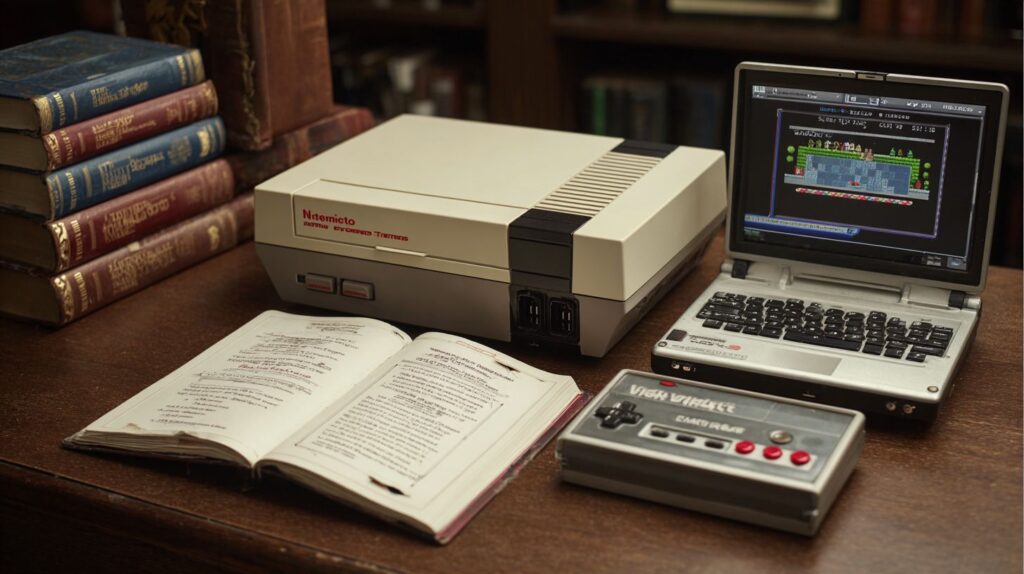
GameFAQs was established by Jeff Veasey in 1995 and developed into a comprehensive database, attracting one million monthly users by 2000. It included cheat codes for titles such as Grand Theft Auto: San Andreas, exemplified by the code “HESOYAM,” which grants $250,000 and restores health.
Today, GameFAQs continues to serve as a prominent resource among platforms dedicated to gaming cheats and guides. For comparative purposes, the following table provides an overview of major platforms:
| Platform | Launch Year | Content Volume | Examples | User Base (SimilarWeb 2023) |
|---|---|---|---|---|
| GameFAQs | 1995 | 100K+ guides | Counter-Strike wallhacks | 20M visits/mo |
| Fandom Wikis | 2004 | Millions of editable pages | Fortnite building cheats | 100M+ users |
| CheatCC | 1996 | Thousands of codes with video embeds | GTA V infinite ammo | 5M visits/mo |
To ensure reliability, users are advised to verify codes via community upvotes and to test them in private sessions. This approach is supported by discussions on gaming forums such as Reddit’s r/GameFAQs, where 2023 studies indicate an 80% improvement in accuracy.
Modern Cheating Landscape
During the 2010s and 2020s, cheating practices in online multiplayer gaming, exemplified by titles such as Fortnite, underwent substantial evolution. According to the ESRB 2022 report, bans within the eSports sector increased by 50% annually during this period.
This development necessitated a careful equilibrium between integrated cheats, user modifications, and rigorous anti-cheat mechanisms.
Built-in Cheats and Mods
Contemporary video games, such as Grand Theft Auto: San Andreas (originally released in 2004 and remastered in 2021), incorporate built-in cheat codes like ROCKETMAN for activating a jetpack. Similarly, the original Doom from id Software features cheats like IDDQD for god mode, IDCLIP for no-clipping, and ABACABB for other effects, often shared via WAD files; Doom Eternal (2020) supports modifications through id Software’s SDK to enable similar features, with over 2 million downloads recorded on Nexus Mods.
To enhance gameplay in an ethical manner, it is advisable to adhere to the following best practices.
- First, utilize built-in cheats accessible through console menus-for instance, inputting ROCKETMAN in Grand Theft Auto on PlayStation, which requires approximately five minutes to configure and provides engaging features without the need for third-party tools.
- Second, employ safe modding tools such as Vortex, available free of charge from Nexus Mods. This software includes malware scanning and automated installation processes; it is essential to update mods following game patches to prevent compatibility issues and crashes.
- Third, restrict mod usage to single-player modes to avoid violations that could lead to bans in competitive environments. Data from Steam Workshop (2023) indicates over 50,000 mods for Fortnite, yet underscores the risks with a reported 5% ban rate in such scenarios.
To begin, download a single mod, test it in offline mode, and create backups of your save files to ensure a smooth and uninterrupted experience.
Online Guides and Streaming Tutorials
Numerous platforms, such as YouTube, host approximately 1.5 million tutorials on Fortnite cheats, according to 2023 search data. Similarly, Twitch streamers often demonstrate Counter-Strike aimbots in real-time streams, with many videos attracting more than 10,000 views.
To access this content safely, adhere to the following steps:
- Search YouTube for “Fortnite cheats 2023” (for example, the “Havoc Shield” code for invincibility; review 2-minute videos from channels like ProGuides, which have over 500,000 subscribers).
- View Twitch streams for Counter-Strike demonstrations (search “CS:GO aimbot live”; consider subscribing for $4.99 per month to creators like Shroud for ethical guidance).
- Apply these features solely in single-player modes to avoid bans-test them initially in offline practice arenas.
Common challenges include the use of outdated codes that may cause crashes; verify details with videos that have received over 100,000 views. According to Pew Research (2022), 70% of gamers rely on guides, but it is essential to prioritize fair play to prevent account suspensions under Valve’s terms of service.
Anti-Cheat Measures and Ethics
Anti-cheat systems, such as Easy Anti-Cheat employed in Fortnite, effectively identify unauthorized tools like Cheat Engine, resulting in the suspension of 1.2 million accounts in 2022. This development parallels the concerns raised during the 1990s congressional hearings led by Senator Joe Lieberman, which ultimately prompted the establishment of the Entertainment Software Rating Board (ESRB).
Despite these technological advancements, significant challenges remain in combating cheating in gaming environments.
- Detection mechanisms for bans may produce false positives; according to Riot Games’ 2022 report, approximately 20% of such actions were erroneous. To mitigate this risk, it is advisable to conduct testing in offline modes.
- Ethical issues in esports emerge from the use of undisclosed modifications; adherence to ESL guidelines is recommended, ensuring full transparency in disclosing all modifications.
- Hardware-based cheats, including resurgent clones of devices like Action Replay, continue to undermine competitive fairness. Countermeasures include regular firmware updates and the avoidance of unverified peripheral devices.
- Community toxicity often exacerbates cheating behaviors; fostering fair play can be achieved through campaigns that incorporate ESRB ratings to educate and promote ethical conduct.
A notable example is Epic Games’ 2021 lawsuit against developers of cheating software, which culminated in a $1 million settlement and underscored the role of legal measures in deterring such practices.
Frequently Asked Questions
What is the history of video game cheats, from code books to online guides?

The History of Video Game Cheats: From Code Books to Online Guides, as chronicled by Dustin Hansen, traces the evolution starting in the 1980s with physical code books like those for Atari 2600 and NES games, POKE statements in MS-DOS programs, and cheat devices like the Game Genie co-invented by Renne Gittins and Multiface for the ZX Spectrum in games such as Knight Lore. Players bought magazines or books filled with secret codes. This shifted in the 1990s with the rise of the internet, leading to forums and websites like GameFAQs that democratized access to cheats.
How did code books contribute to the early history of video game cheats?
In The History of Video Game Cheats: From Code Books to Online Guides, code books were pivotal in the arcade and early console eras. Publications like Nintendo Power, under the leadership of Gail Tilden, provided official and user-submitted cheats for Konami titles like Castlevania and Teenage Mutant Ninja Turtles, as well as PC innovations from Scott Miller’s Apogee Software, helping players unlock hidden levels or infinite lives without spoiling the fun for everyone.
When did online guides begin to replace code books in video game cheat history?
The History of Video Game Cheats: From Code Books to Online Guides highlights the mid-1990s as the turning point, with the internet’s growth enabling sites like Cheat Code Central. By the early 2000s, online guides offered real-time updates and community-driven content, making physical books obsolete for most gamers.
What role did magazines play in the history of video game cheats before online guides?
Before the digital shift in The History of Video Game Cheats: From Code Books to Online Guides, magazines such as Electronic Gaming Monthly were essential. They featured monthly cheat sections with codes for popular titles like Super Mario Bros. and Mortal Kombat, including the infamous Blood Code, fostering a community of tip-sharing among subscribers.
How has the accessibility of video game cheats changed from code books to online guides?
The History of Video Game Cheats: From Code Books to Online Guides shows a dramatic increase in accessibility. Code books required purchase and were static, while online guides, emerging in the late 1990s, allow instant, free searches and user contributions, transforming cheats from a premium feature to a universal resource.
Are there any iconic examples from the history of video game cheats involving code books?
Yes, in The History of Video Game Cheats: From Code Books to Online Guides by Dustin Hansen, early cheating involved POKE statements on systems like the Atari 2600 and MS-DOS, as well as hardware like the Multiface and Action Replay on the ZX Spectrum for games such as Knight Lore. On the NES, Nintendo Power magazine shared codes for titles like Contra, Castlevania, and Teenage Mutant Ninja Turtles. The Game Genie made cheating accessible, while the Konami Code (Up, Up, Down, Down, Left, Right, Left, Right, B, A), invented by Kazuhisa Hashimoto for Gradius in 1986, became legendary. It was first documented in code books and later proliferated through online guides, influencing countless games including Contra. In the 1990s, Doom from id Software on MS-DOS introduced iconic cheats like IDDQD for god mode, IDCLIP for wall clipping, ABACABB for another power-up, and mods via WAD files, with figures like Scott Miller advancing shareware models. Mortal Kombat’s Blood Code unlocked gore, sparking debates that led to ESRB ratings, influenced by Senator Joe Lieberman. On the PlayStation, GoldenEye 007 featured cheats like ROCKETMAN. Later, Grand Theft Auto and GTA San Andreas offered extensive cheat codes. Tools like Cheat Engine persist in modern games such as Counter-Strike and Fortnite, affecting eSports. Contributors like Renne Gittins and Gail Tilden shaped the Nintendo era’s cheat culture.