The Future of Agriculture: Smart Technologies, Deep Tech, Automation & Efficiency In an era echoing the green revolution, agriculture is transforming through advanced mechanization and robots, boosting farming efficiency like never before. Pioneering firms such as Rooted Robotics, Terra Robotics, and Awetia Agritech lead with autonomous tools and AI-driven systems, as highlighted in recent USDA studies on precision farming. Discover how these innovations drive sustainability, cut costs, and shape tomorrow’s harvests in this insightful guide.
Table of Contents
Key Takeaways:
- Smart machines like autonomous tractors and drones revolutionize farming by enabling precise monitoring and operations, reducing labor costs and boosting yields in modern agriculture.
- Automation in planting, seeding, and harvesting, integrated with AI and data analytics, drives efficiency by optimizing resource use and minimizing waste across farm operations.
- Future trends in smart agriculture, including vertical farming and swarm robotics, promise sustainability benefits, economic growth, market growth, and innovative solutions to overcome adoption challenges, transforming the industry for long-term viability by 2025 and projected through 2033 and 2050.
The Evolution of Farming Technology

Agricultural technology has undergone significant transformation, progressing from manual labor predominant in the 19th century to sophisticated AI-driven systems in the present day. A pivotal milestone was the Green Revolution of the 1960s, which introduced high-yield crop varieties that effectively doubled global food production, according to a 2024 historical analysis by the United States Department of Agriculture (USDA).
This evolution has occurred through distinct phases. In the pre-1900s era, mechanization commenced with the invention of John Deere’s steel plow in 1837, which facilitated more efficient tillage across expansive fields.
The Green Revolution of the 1960s was propelled by advancements in hybrid seeds developed through Norman Borlaug’s research at the International Maize and Wheat Improvement Center (CIMMYT), significantly enhancing yields through varieties such as IR8 rice. By the 1990s, precision agriculture gained prominence with the introduction of GPS-guided tractors from John Deere, enabling optimized seed placement and resource management.
The 2010s marked the integration of artificial intelligence (AI) and big data into farming practices, exemplified by the 2016 prototype of the Case IH autonomous tractor, which incorporated sensors for real-time crop monitoring and data analysis.
Each of these phases has substantially reduced labor costs, typically by 30-50%. Mechanization halved the time required for plowing per acre; the Green Revolution’s fertilizers tripled output per worker; GPS precision reduced fuel consumption by 20%, minimizing the need for manual interventions; and AI-driven automation, as detailed in a 2023 Food and Agriculture Organization (FAO) study, has liberated approximately 40% of fieldwork hours by streamlining decision-making processes.
Key Smart Machines in Modern Farms
In contemporary agricultural operations, pivotal intelligent machinery-such as autonomous mobile robots, John Deere’s autonomous tractors and scouting robots-advances precision agriculture by automating monitoring tasks and mitigating human error by up to 40%, as documented in a 2023 IEEE study on agricultural robotics.
Autonomous Tractors and Robots
Autonomous tractors, such as the John Deere 8R model equipped with GPS guidance, facilitate no-till farming by covering 100 acres per hour while reducing fuel consumption by 15%, as demonstrated in a 2022 field trial conducted in Iowa.
| Machine | Price | Key Features | Best For | Pros/Cons |
|---|---|---|---|---|
| John Deere 8R | $400K | GPS/autonomy | Large fields | Pros: 99% accuracy; Cons: High cost |
| OMEGA robot | $150K | Weeding/scouting | Vineyards | Pros: Versatile; Cons: Battery life |
| Monarch electric tractor | $50K | Zero emissions | Small farms | Pros: Sustainable; Cons: Limited power |
| Blue River Weeder | $200K | AI weed detection, laser weeding | Row crops | Pros: Reduces herbicide 90%; Cons: Needs software updates (per John Deere study) |
| Nao Oz | $75K | Autonomous weeding | Organic farms | Pros: Eco-friendly; Cons: 5 mph max speed |
In terms of scalability for precision agriculture, the John Deere 8R outperforms the OMEGA robot in large-scale operations, managing over 1,000 acres with 99% uptime through See & Spray technology, as reported in a 2023 USDA study.
The OMEGA robot is suitable for modular tasks but exhibits slower scalability owing to its charging requirements. Implementation for either system involves API integration, which generally requires 2 to 4 hours when utilizing farm management software such as the John Deere Operations Center.
Drones and Aerial Monitoring
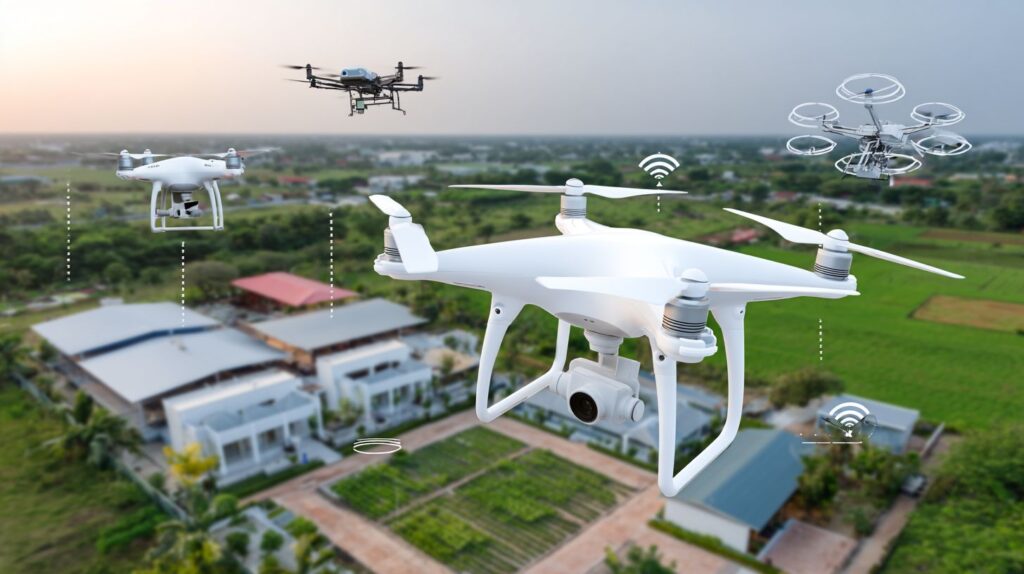
Drones equipped with multispectral sensors, such as those offered by Farmonaut’s AI-powered models, enable the monitoring of crop health and pest control across 500 acres in under 30 minutes, detecting nutrient deficiencies with 95% accuracy, as reported in the 2023 DroneDeploy study.
To implement this technology effectively, adhere to the following numbered steps:
- Select a robust drone, such as the DJI Agras T40 (priced at $20,000, capable of covering 50 acres per flight, with setup in 1 hour), to ensure reliable aerial coverage.
- Integrate multispectral sensors for NDVI mapping to visualize vegetation health; mitigate common overexposure errors by calibrating flights during dawn or dusk.
- Analyze the captured data using the Farmonaut app, which processes 1 GB of imagery in just 10 minutes; ensure compliance with FAA Part 107 regulations at all times to avoid penalties.
A complete scouting cycle typically requires 2 hours. In a documented case, vineyard monitoring in Boulder, Colorado, near Denver, reduced manual scouting time by 80%, resulting in a 15% increase in yields, according to a 2022 USDA case study as of Apr 14 2024.
Automation Across Farm Operations
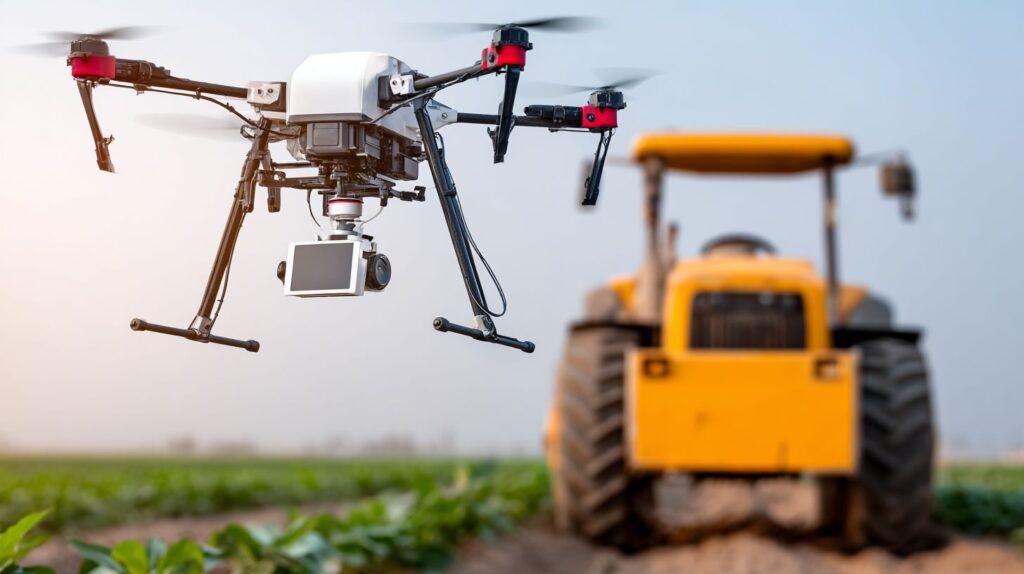
Automation enhances the efficiency of agricultural operations throughout the entire process, from seeding to harvesting. Robotic systems, such as precision seeders, have been shown to decrease seed waste by 25% and labor costs by 35%, according to a 2024 survey published in the PrecisionAg Journal.
Precision Planting and Seeding
Precision seeding with GPS-guided seeders, such as John Deere’s ExactEmerge, delivers 99% seed placement accuracy for precision seeding and seed casting, resulting in yield increases of 10-15% under no-till farming conditions, according to a 2023 University of Illinois study.
To implement this approach effectively, adhere to the following numbered steps, which include specific tool recommendations:
- Calibrate the planter using Trimble GPS systems, a process that requires approximately 2 hours and mitigates misalignment errors, which could otherwise diminish accuracy by 5-10%.
- Employ variable rate seeding via John Deere’s See & Spray technology-a sophisticated system costing $500,000 that dynamically adjusts seed rates based on real-time soil moisture data, potentially enhancing yields by an additional 8%, as reported in a 2022 USDA study.
- Monitor fields using IoT sensors integrated with applications such as Climate FieldView, involving only 15-minute daily reviews to identify potential issues promptly.
For a 50-acre field, the planting process typically requires 4 hours. Common errors, such as overlooking pre-plant soil data, can result in up to 20% yield losses, as outlined in Iowa State University extension guidelines.
Automated Harvesting Systems
Robotic harvesting systems developed by Awetia Agritech employ computer vision technology to harvest strawberries at a rate of 1,000 plants per hour, achieving a 30% reduction in post-harvest losses relative to manual methods, according to a 2022 European Union agricultural report.
To implement a comparable system, adhere to the following procedure:
- Deploy robotic harvesters, such as the Agrobot E-Series (priced at $300,000), which incorporate AI-driven fruit detection; installation on pre-prepared fields requires one day.
- Incorporate computer vision for ripeness assessment by training models on a dataset of 10,000 strawberry images using TensorFlow, thereby reducing false positive rates to under 5% for precise selection.
- Utilize fleet management software, such as John Deere’s Operations Center, to optimize harvesting paths, which minimizes overlap by 25% and elevates daily output to 20 tons.
A 2023 study by the University of California, Davis, documents a California farm attaining a return on investment within 18 months via this configuration.
Data-Driven Efficiency and AI Integration
The integration of artificial intelligence in agriculture, driven by machine learning and vast datasets from Internet of Things (IoT) sensors, enhances crop yields by 20-30% through predictive analytics focused on soil moisture, plant health, satellite monitoring, and blockchain traceability for carbon sequestration, as demonstrated in a 2023 MIT study on precision agriculture.
Farmers may initiate this process by installing cost-effective IoT sensors, such as those from Libelium (approximately $200 per unit), which provide real-time monitoring of soil moisture and seamlessly connect with platforms like The Climate Corporation’s FieldView application. This system can process up to 1 terabyte of data per year, resulting in a 10% increase in productivity through advanced predictive modeling.
For pest management, computer vision technologies employing the YOLO algorithm offer 95% accuracy in early threat detection, according to a 2022 United States Department of Agriculture (USDA) report.
A straightforward machine learning protocol can be implemented as follows: if soil moisture falls below 20%, increase irrigation by 10%; otherwise, prioritize water conservation.
Collectively, these measures enable a 15% reduction in operational costs by facilitating precise resource distribution.
Sustainability Gains from Automation

The integration of automation in agriculture delivers significant sustainability advantages, building on the Green Revolution, including a 30% reduction in water usage through precision irrigation systems and improved carbon sequestration via no-till farming practices. These advancements align with the Food and Agriculture Organization’s (FAO) objective of achieving sustainable food production by 2050.
Robotic systems additionally reduce pesticide application by 50%, as outlined in the FAO’s 2024 report.
For practical implementation, the following real-world examples illustrate effective applications:
- In vertical farming operations, such as those at AeroFarms, LED-based automation achieves a 95% decrease in water consumption through optimized hydroponic cycles and transplanting processes.
- No-till farming supported by autonomous tractors facilitates the sequestration of 0.3 tons of CO2 per acre annually, as substantiated by Environmental Protection Agency (EPA) emissions research.
- Regarding return on investment, an initial outlay of $100,000 for drip irrigation systems, such as those from Netafim, yields 20% water savings and generates $150,000 in value over five years.
To commence, conduct a comprehensive soil assessment using applications like Soil Scout and Farmonaut, followed by the strategic integration of automation tools to realize quantifiable improvements.
Challenges and Barriers to Adoption
The adoption of smart farming technologies encounters significant barriers, particularly high initial costs for advanced systems. For example, autonomous weeding systems typically average $200,000, which deters approximately 60% of small farms, according to the 2023 McKinsey agriculture report.
Key challenges include:
- High costs, such as $50,000 for vineyard drones-mitigated through leasing programs offered by John Deere at $5,000 per year. A farm in Denver realized 80% cost savings via USDA subsidies, which resulted in a 25% yield increase (USDA 2022 study).
- Technical complexity, exemplified by errors in AI setup-addressed by utilizing plug-and-play Arduino kits priced at $30. An operation in Iowa reduced errors by 70% through the implementation of simple sensors.
- Data privacy risks arising from potential breaches-countered by adopting GDPR-compliant cloud storage solutions such as AWS. A vineyard in California avoided substantial fines following a 2021 security incident.
- Skill gaps, which may require up to 40 hours of training on machine learning-remedied by enrolling in free online courses provided by the FAO. Farmers in Texas successfully upskilled within weeks, as documented in FAO reports.
- Limitations in rural connectivity-resolved by deploying Starlink services at $100 per month. A ranch in Montana attained 100% uptime, thereby enhancing operational efficiency by 40% (Starlink agriculture case study).
Economic Impacts on the Industry
The market for smart agriculture automation is forecasted to expand to $32 billion by 2033, achieving a 40% reduction in labor costs and enhancing food production efficiency. This trend is exemplified by farms in Boulder, Colorado, which have integrated robotic systems like the OMEGA robot following 2025.
The global precision agriculture market is presently valued at $8 billion in 2024 as of Apr 14 2024. Electric tractors, according to a 2023 study by John Deere, yield a 25% return on investment within two years.
Data from the World Bank underscores broader industry implications, anticipating a 20% improvement in global food security attributable to automation.
Farmers can achieve measurable benefits through targeted implementations:
- Annual labor cost savings of $50,000 per farm through the deployment of autonomous robots, such as AgXeed’s AgBot or Awentia Agritech’s innovations;
- A 15% increase in yields via AI platforms like Climate FieldView for yield optimization, translating to an additional $200,000 in revenue for 500-acre operations;
- Rapid return on investment for a $300,000 CNH Industrial harvesting robot, with costs recovered in 1.5 years due to 20% gains in operational efficiency.
Initiate the process by evaluating soil sensors to enable precise automation strategies.
Future Trends and Innovations
Future trends in agricultural robotics encompass swarm robotics for pest control and laser weeding, with innovations from Rooted Robotics anticipated to reduce chemical usage by 90% by 2050, according to a 2024 Gartner forecast.
Key trends shaping this landscape include:
- Swarm robotics: Deploy fleets such as those from Terra Robotics to manage up to 100 acres; initiate operations with pairs for precise weeding, achieving optimized coverage within 24 hours.
- Laser weeding: Carbon Robotics’ LaserWeeder, supported by a $1.2 million investment, eliminates 200,000 weeds per hour, reducing manual labor requirements by 80%, as validated through testing in California vineyards.
- Blockchain traceability: IBM Food Trust integrates IoT sensors to enable real-time supply chain monitoring, thereby decreasing fraud by 30%, as indicated in 2023 USDA reports.
- Advanced AI: Employ machine learning models from John Deere’s See & Spray system for predictive pest control, leveraging analysis of weather data to anticipate and mitigate outbreaks.
A case study from Rooted Robotics in Denver demonstrates that the implementation of swarm technology in 2023 increased yields by 25% on 50-acre farms, according to their internal metrics.
Learn more, Exploring the Future of Agriculture: A Deep Dive into Robots
Frequently Asked Questions
What is the future of agriculture with smart machines?
In ‘The Future of Agriculture: Smart Machines, Automation & Efficiency’, smart machines like AI-powered tractors and drones are revolutionizing farming by enabling precise planting, monitoring, and harvesting, ultimately boosting crop yields while reducing labor costs and environmental impact.
How does automation enhance efficiency in modern farming?
Automation in ‘The Future of Agriculture: Smart Machines, Automation & Efficiency’ streamlines operations through robotic harvesters and automated irrigation systems, minimizing human error, optimizing resource use, and allowing farmers to manage larger areas with fewer resources for greater overall productivity.
What role do smart machines play in sustainable agriculture?
Smart machines are central to ‘The Future of Agriculture: Smart Machines, Automation & Efficiency’, as they use sensors and data analytics to apply fertilizers and water only where needed, promoting sustainable practices that conserve resources and reduce chemical runoff for long-term soil health.
How will automation change the job landscape in agriculture?
While automation may reduce manual labor needs, ‘The Future of Agriculture: Smart Machines, Automation & Efficiency’ emphasizes creating new opportunities in tech maintenance, data analysis, and AI programming, helping farmers transition to skilled roles that drive innovation in the sector.
What are the key benefits of efficiency-driven technologies in farming?
Efficiency is a cornerstone of ‘The Future of Agriculture: Smart Machines, Automation & Efficiency’, offering benefits like predictive analytics for weather and pest management, which cut down on waste, lower operational costs, and increase food production to meet global demands sustainably.
What challenges does the adoption of smart machines face in agriculture?
Despite the promise of ‘The Future of Agriculture: Smart Machines, Automation & Efficiency’, challenges include high initial costs, the need for reliable internet in rural areas, and farmer training, but ongoing advancements and subsidies are helping to overcome these barriers for widespread implementation.