In today’s competitive job market, the importance of academic conferences and publications for career growth cannot be overstated. For both employers and employees, these platforms serve as vital avenues for professional development and mentoring programs, enabling individuals to acquire new skills and expand their networks. This article will explore how engaging in these opportunities not only enhances continuing education but also significantly impacts career training, paving the way for advancement and new job prospects, enhancing talent management and employee retention.
Table of Contents
Key Takeaways:
- Attending academic conferences allows for networking opportunities and exposure to new research, helping to stay updated and connected in the field, thereby boosting employee productivity and job satisfaction.
- Publishing academic work establishes credibility and enhances visibility, making it a crucial aspect of career growth in academia.
- Active participation in conferences and publications can lead to job opportunities, and consideration for promotions and tenure, making it a valuable investment in one’s career.
Definition and Purpose
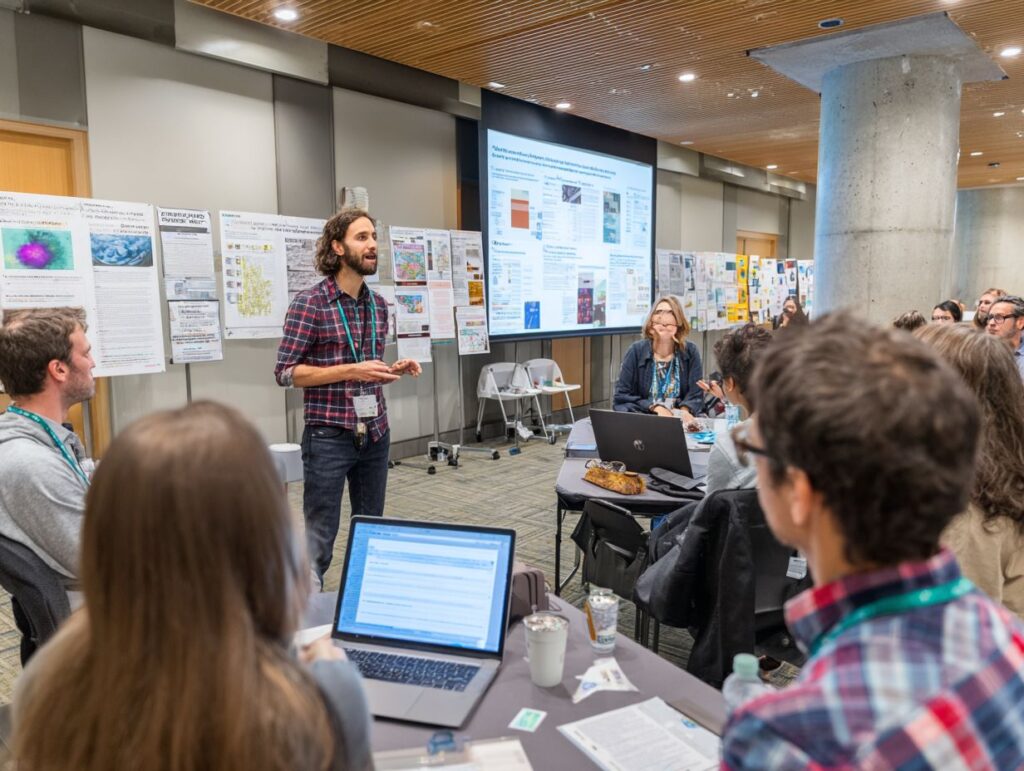
An academic conference is a formal event where experts gather to present their research, engage in discussions, and collaborate on advancements in science, promoting scientific impact and research collaboration. These conferences primarily serve three key purposes.
- They foster the generation of new ideas through a variety of presentations. For instance, the American Association for the Advancement of Science (AAAS) Annual Meeting features thousands of speakers and interactive sessions that encourage innovation and knowledge sharing.
- They facilitate discussions that enable researchers to debate their findings and methodologies, often resulting in valuable feedback and opportunities for collaboration.
- Conferences play a crucial role in building professional networks, allowing attendees to connect with thought leaders and peers. This networking can lead to potential partnerships or job opportunities in the future.
Types of Academic Conferences
There are various types of academic conferences, including symposiums, workshops, and annual meetings, each serving distinct functions within the academic community.
Symposiums typically facilitate scientific research and knowledge production, focused discussions among experts in a particular field, often culminating in publications or collaborative efforts that advance knowledge in that area.
Workshops, in contrast, are designed to enhance skill development and emotional intelligence, providing participants with hands-on experience in specific techniques or methodologies, such as data analysis or grant writing.
Annual meetings serve as comprehensive platforms for knowledge dissemination across disciplines, attracting a diverse array of participants, including scholars, practitioners, and students.
For example, the American Psychological Association’s Annual Meeting draws thousands of attendees, offering a multitude of presentations, networking opportunities, and avenues for professional development and learning processes.
Benefits of Attending Conferences
Participation in academic conferences provides a multitude of advantages, including independent learning and leadership skills, including valuable networking opportunities that can facilitate career advancement and access to groundbreaking research and scientific knowledge that ensures professionals remain informed and updated in their respective fields.
Networking Opportunities
Conferences offer exceptional networking opportunities and communication processes that can lead to the establishment of meaningful professional relationships and potential job prospects.
To optimize networking potential, it is advisable to attend social events and breakout sessions, as informal interactions in these settings often foster genuine connections.
Utilizing professional networking tools such as LinkedIn can facilitate connections with other attendees both prior to and following the event. It is also beneficial to leverage relevant hashtags associated with the conference to enhance visibility.
Additionally, platforms like Whova can aid in networking by providing attendee lists and facilitating social exchange and enabling in-app messaging features. A follow-up email or message after the event will reinforce connections and help maintain ongoing conversations.
Exposure to New Research
Attendees gain access to the latest research findings and methodologies, thereby enhancing their knowledge base and inspiring new ideas for their projects, thus enhancing career relevance. Conferences such as Neuroscience 2023 have showcased groundbreaking innovations, including advances in neuroimaging techniques that allow researchers to visualize brain activity with unprecedented clarity.
Workshops at these events often explore emerging trends, such as the application of artificial intelligence in behavioral studies, providing attendees with practical insights. Furthermore, networking opportunities at these gatherings facilitate collaboration, enabling professionals to share their findings and discuss potential applications.
Engaging with poster presentations in informal contexts can also inspire new ideas for one’s research, as they highlight unique approaches and methodologies that may not be extensively published.
Importance of Academic Publications
Academic publications play a vital role in establishing an individual’s professional identity and enhancing visibility within their respective field of study.
Establishing Credibility
Publishing research in reputable journals significantly enhances an academic’s credibility among peers, contributing to their professional identity and institutions. To maximize this credibility, it is advisable to target high-impact journals within one’s field.
Begin by identifying journals with rigorous peer review processes, such as Nature, Science, or The Lancet, which are renowned for their high citation rates.
Engaging actively in the peer review process by offering your expertise helps improve publications and fosters the development of professional networks. Consistently publishing findings is essential, as regular contributions can lead to increased visibility within the academic community.
Additionally, utilizing platforms such as Google Scholar to track citations will allow you to adapt your research focus based on emerging trends, thereby ensuring that your work remains relevant and impactful.
Enhancing Visibility in the Field
Regularly publishing in reputable venues enhances visibility and may lead to invitations for collaboration and speaking engagements. For instance, scholars such as John P. Kotter and Judith M. Bardwick have consistently contributed to top-tier journals, thereby establishing themselves as authorities in the field of leadership studies.
This increased visibility has not only expanded their academic networks but has also resulted in multiple keynote invitations at significant conferences.
To further enhance one’s exposure, it is advisable to utilize platforms such as Google Scholar and ResearchGate for showcasing research work and engaging with peers. Additionally, joining professional organizations like the Academy of Management can provide valuable networking opportunities and access to exclusive conferences.
Impact on Career Advancement
Participation in academic conferences can have a substantial impact on career advancement by providing avenues for job opportunities, training conditions, and considerations for promotions.
Job Opportunities
Numerous job opportunities often emerge directly from connections established at academic conferences, particularly for emerging scholars and doctoral candidates.
To enhance job prospects at these conferences, it is advisable to actively engage in career fairs and workshops where employers are present. Approaching company representatives with well-prepared, tailored questions regarding their initiatives and job openings can be beneficial, as it allows individuals to highlight their skills and interests effectively.
Additionally, utilizing platforms such as Handshake to search for job listings specific to the conference’s network can be advantageous. For example, a recent PhD candidate successfully secured a research position by interacting with a recruiter at the American Psychological Association conference, effectively demonstrating both her research and interpersonal skills during a networking event.
Promotion and Tenure Considerations
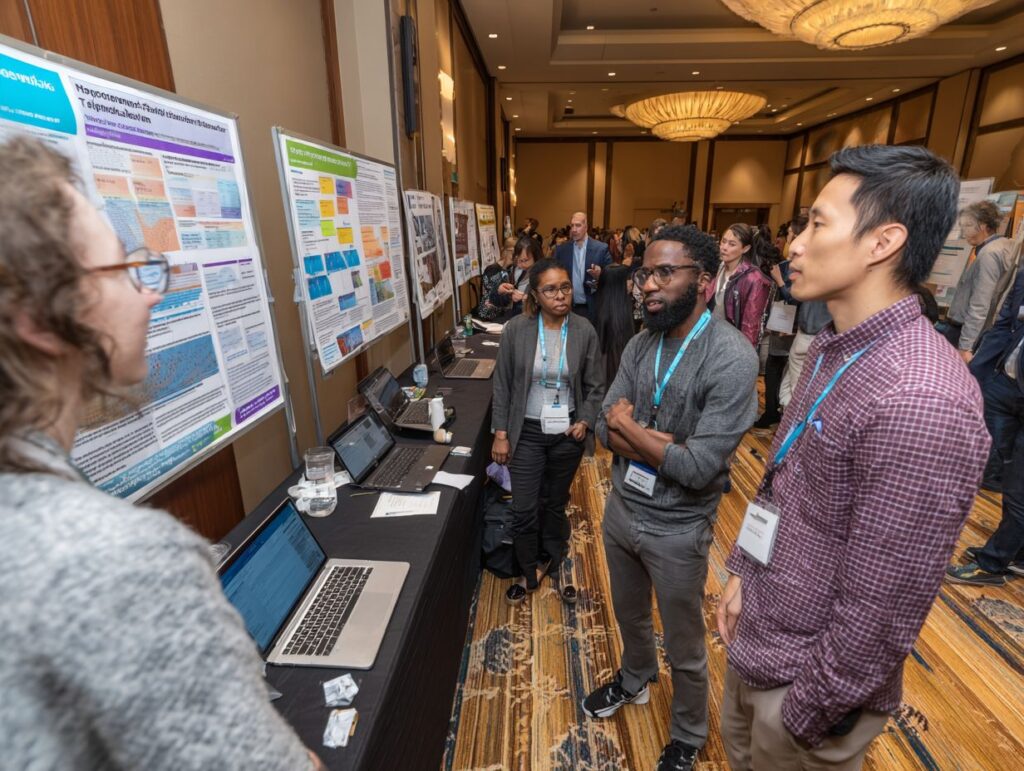
Active involvement in academic conferences is often a critical factor in tenure and promotion decisions, as it demonstrates a commitment to one’s field.
Participating in conferences provides substantial advantages for tenure applications. Presenting original research allows individuals to showcase their expertise and dedication to their discipline, while publications resulting from conference proceedings further bolster their academic profile.
Engaging with peers at these events can facilitate collaborative projects, which exemplify leadership and teamwork-key criteria frequently emphasized by institutions such as the American Association of University Professors.
It is advisable to attend at least one major conference annually and to present at least every other year in order to effectively strengthen the case for tenure, emphasizing one’s personal goals.
Strategies for Maximizing Conference Participation
To maximize the benefits gained from academic conferences, attendees should implement targeted strategies that enhance their engagement and visibility within social networks.
Preparing Effective Presentations
Effective presentations are crucial for effectively conveying research findings and engaging the audience, necessitating thorough preparation and practice.
Begin by selecting clear visuals that support your main points; utilizing tools such as Canva can facilitate the rapid creation of professional slides and enhance communication processes.
It is advisable to rehearse with peers, as practice enables you to refine your delivery while also obtaining constructive feedback.
During the presentation, engage the audience by encouraging questions and discussions to address any uncertainties.
If feasible, prepare some anticipated questions in advance to bolster your confidence during the Q&A session, an essential aspect of professional development opportunities. This approach not only fosters rapport but also enhances the audience’s understanding of your research.
Engaging with Peers and Experts in Industry
Actively engaging with peers and experts at conferences can facilitate the development of valuable connections and mentorship opportunities. To optimize networking potential, it is advisable to schedule informal discussions during breaks or lunch periods, employing effective networking strategies.
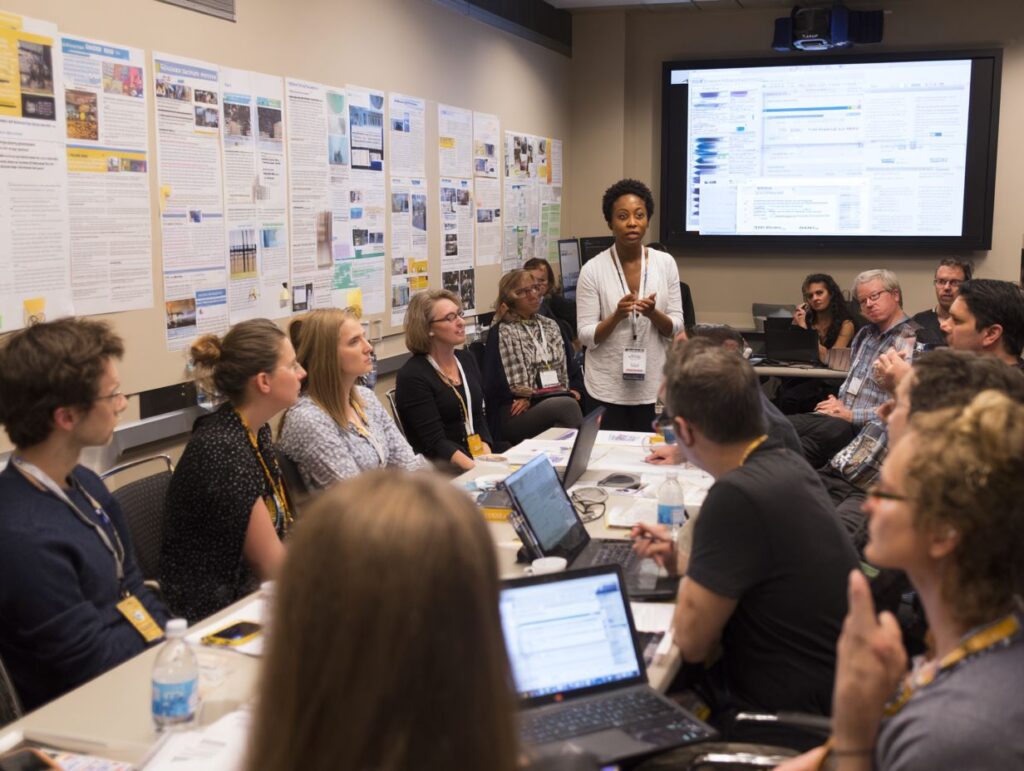
Participation in roundtables that align with one’s interests allows for both contribution and knowledge acquisition, facilitating valuable information exchange. Additionally, utilizing social media platforms such as Twitter to share insights and connect with fellow attendees in real-time, while employing the event’s hashtag for increased visibility, can further enhance engagement, similar to virtual conferencing.
Following the conference, it is essential to arrange follow-up meetings with key contacts to strengthen relationships and explore potential collaborations. These proactive measures can significantly broaden one’s professional network and create avenues for future opportunities, including leadership development.
Learn more, 8 Proven Strategies To Promote Your Conference & Boost …
Frequently Asked Questions
What are academic conferences and why are they important for career growth?
Academic conferences, similar to industry conferences, are events where individuals in a particular field gather to discuss and present their research findings. They are important for career growth as they provide opportunities for networking, learning about new developments in the field, and showcasing your own work to a wider audience, enhancing your academic success.
How can attending academic conferences benefit my career?
Attending academic conferences can benefit your career in several ways. It can help you establish new connections and collaborations, showcase your work and receive feedback, gain insights on the latest research and developments in your field, including insights from scientific events, and improve your presentation and communication skills.
What is the role of publications in career growth and research programs?
Publications, such as journal articles and books, are essential for career growth in academia. They demonstrate your expertise and contribution to your field, and can also lead to professional recognition and advancement opportunities.
Can publishing in top academic journals enhance my career prospects, particularly for doctoral students?
Yes, publishing in top academic journals can significantly enhance your career prospects. These publications are highly regarded and can increase your visibility, credibility, and recognition in the academic community, potentially improving your earning potential.
How can I increase my chances of getting published in top academic journals with support from science funding organizations?
To increase your chances of getting published in top academic journals, you should conduct high-quality research, follow the submission guidelines carefully, seek feedback from colleagues and mentors, and revise and improve your work based on reviewers’ comments.
What are some ways to make the most of academic conferences for career growth and professional connections?
Some ways to make the most of academic conferences for career growth include actively participating in discussions and networking events, presenting your research in a clear and engaging manner, seeking feedback from experts in your field, and following up with new connections after the conference to nurture skilled employees.