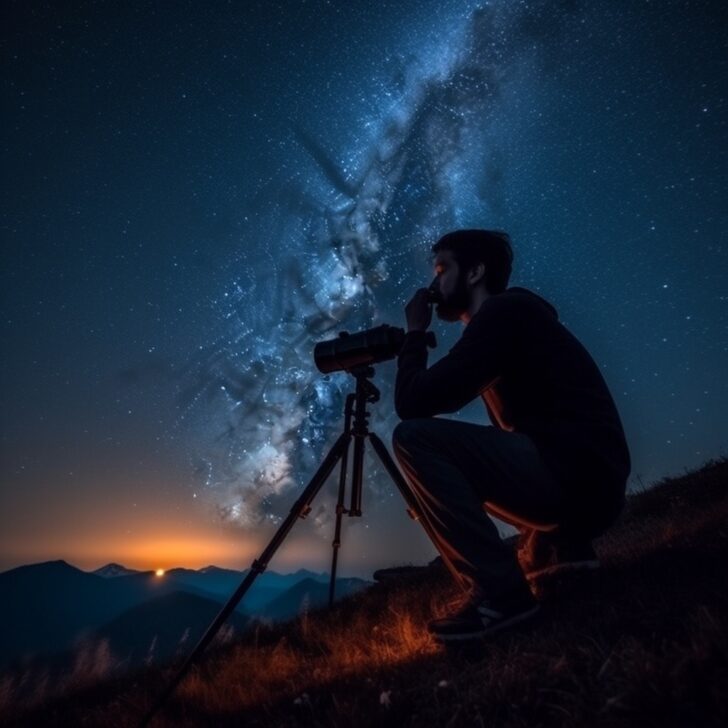
When it comes to exploring the night sky, the choice between binoculars and telescopes can significantly affect your experience in amateur astronomy. Whether you’re considering the smart telescope options like the Seestar S30 or enhancing your astrophotography with a Vega Vision, understanding the strengths of each tool is essential. This article will guide you through the key differences between telescope vs binoculars, exploring the night sky and helping you determine which is right for your celestial adventures.
Table of Contents
Key Takeaways:
- Binoculars are better suited for outdoor activities such as birdwatching and sports events due to their wider field of view and ease of use.
- Telescopes are ideal for astronomy enthusiasts and wildlife observation, providing higher magnification power and better image quality.
- When choosing between binoculars and telescopes, consider the use case, portability, and price to make the best decision for your needs, evaluating the pros and cons of each.
Key Differences Between Binoculars vs Telescopes
The differences between binoculars and telescopes are primarily based on their optical design and magnification capabilities, which affect the manner in which users observe astronomical objects and objects in space.
Optical Design
Binoculars typically employ either Porro prism or roof prism designs, while telescopes are generally categorized into refracting and reflecting types according to their optical structures and focusing magnification.
Porro prism binoculars are well-regarded for their outstanding depth perception, wider field of view, and clearer views, making them particularly suitable for activities such as birdwatching. Conversely, roof prism models, exemplified by the compact and lightweight Swarovski EL, offer enhanced portability but tend to come with a higher price point.
Regarding telescopes, refracting designs, such as the classic 80mm achromatic models, provide sharp images of celestial bodies, while reflecting telescopes, including the widely recognized Dobsonian type, utilize mirrors for superior light gathering capabilities.
Each design serves distinct use cases; therefore, it is essential to make a selection based on individual viewing preferences and budget considerations.
Focusing Magnification Power
Telescopes typically offer higher magnification power, often exceeding 100x, whereas binoculars generally range from 8x to 20x, making each instrument suitable for different observational scenarios.
For stargazing and planetary observation, a smart telescope such as the Seestar S30 provides exceptional clarity with a magnification of 128x, enabling the viewer to discern details such as the moons of Jupiter.
In contrast, binoculars are particularly advantageous for tracking fast-moving subjects, such as birds; for example, the Canon 10×42 L delivers a stable view with outstanding color fidelity.
Additionally, different eyepieces on telescopes can enhance one’s ability to focus sharply, which is especially beneficial when observing faint celestial objects like nebulae.
Understanding these distinctions can significantly improve the viewing experience based on individual interests.
Use Cases for Binoculars
Binoculars are versatile instruments highly regarded for a range of outdoor activities, including birdwatching and sports events.
They offer users a portable and user-friendly solution for enhancing their viewing experience.
Birdwatching Using Both Eyes
For birdwatchers, high-quality binoculars such as the Vega Vision provide exceptional optical performance and focusing capabilities, which are essential for observing birds in their natural habitats, offering better views than the naked eye.
The compact design of the Vega Vision binoculars facilitates easy portability, making them ideal for long excursions and great options for astronomy binoculars.
Their wide field of view is advantageous for spotting elusive birds that may be flying between branches, while the quick focus adjustments allow for seamless tracking of moving subjects.
An enthusiastic birdwatcher, Sarah, relies on her Vega Vision binoculars during her visits to local wetlands and utilizes a lightweight tripod for added stability, allowing for clearer views.
This combination significantly enhances her birdwatching experience, resulting in impressive sightings each season.
Checkout Rangefinder vs Binoculars: Which One to Choose?
Sports Events
High-powered binoculars significantly enhance the experience of attending sports events by enabling fans to observe every detail from a distance.
Models such as the high aperture Celestron Cometron provide exceptionally clear views.
When selecting binoculars for crowded events, it is important to prioritize lightweight options with comfortable grips to facilitate prolonged use without causing strain, choosing binoculars that offer a built-in eyepiece.
The ideal magnification levels may vary depending on the sport; for instance, 8x magnification is well-suited for football, while 10x magnification may be more advantageous for sports like baseball, which involve more unpredictable movements.
It is advisable to consider features such as rubber armor for improved grip and shock resistance. Additionally, waterproof models can offer protection against unexpected weather changes, allowing spectators to fully enjoy every play regardless of the conditions.
Use Cases for Telescopes
Telescopes excel in specialized applications, particularly in the fields of astronomy and astrophotography.
Telescopes can enable the observation of distant celestial phenomena, allowing for detailed exploration of the universe.
Astronomy
In the field of astronomy, telescopes such as the Hubble Space Telescope are instrumental in providing detailed observations of astronomical objects, thereby serving as essential tools for both amateur astronomy and professional astronomers.
For those interested in astrophotography and the observation of deep-sky objects such as galaxies and star clusters, several key types of telescopes should be considered:
- Refractors: These telescopes deliver sharp images and are particularly suited for beginners due to their user-friendly design.
- Reflectors: In contrast, reflectors offer larger apertures, which enable the capture of faint celestial objects; however, they may require more maintenance.
Beginners are advised to start with an 80mm refractor, such as the Orion StarBlast, combined with a sturdy tripod to ensure stability during photography sessions using astronomy gear.
Additionally, researching local astronomy clubs can provide valuable insights and opportunities for hands-on experience in the field.
Wildlife Observation
Telescopes are also employed in wildlife observation, providing exceptional performance for viewing distant animals in their natural habitats, particularly in low-light conditions.
For example, the Celestron AstroMaster 70AZ telescope offers sharp images and is sufficiently portable for field use, making it a great option for observing the night.
Its ease of setup allows observers to quickly focus on wildlife.
Alternatively, the Swarovski ATM 80 HD boasts superior optics and remarkable detail; however, its higher price point reflects its premium quality.
While telescopes can deliver outstanding clarity, they generally require more setup time and may be bulkier than binoculars, which can make them less convenient for spontaneous wildlife observation.
Nevertheless, for those seeking detailed views of elusive species, investing in a quality telescope can significantly enhance the overall observational experience.
Portability and Ease of Use
When selecting between binoculars and telescopes, factors such as portability and comfort level ease of use significantly influence user satisfaction and engagement.
Binoculars, such as the compact Nikon Trailblazer ATB, weigh merely 1.2 pounds and can be conveniently stored in a backpack, making them particularly suitable for hiking and outdoor activities.
In contrast, telescopes like the Celestron AstroMaster 70AZ necessitate a robust mount and can be more cumbersome to transport, which may pose challenges in spontaneous observing situations.
Models such as the Meade 2150 are engineered to be lightweight and relatively easy to carry, achieving a balance between performance and portability.
Ultimately, if convenience is a primary concern, binoculars are the preferred choice; however, if deep-sky visibility is of utmost importance, investing in a portable telescope may be worthwhile, especially for naked eye astronomy.
Price Considerations
Price is a critical consideration when selecting binoculars or telescopes, with options available across a wide spectrum, from budget-friendly models to premium devices that may exceed $1,000.
For binoculars, entry-level options such as the Celestron UpClose G2 are priced at approximately $50, making them suitable for casual use. In contrast, high-end models like the Swarovski EL Range, which retail for around $3,000, provide exceptional optical performance and advanced features.
Telescopes exhibit a similar pricing structure: budget-friendly selections, such as the Celestron AstroMaster Series, begin at approximately $200, while premium alternatives, like the Meade LX600, can surpass $4,000, providing excellent performance.
It is advisable to carefully consider both your intended use and budget to ensure optimal value for your requirements.
Frequently Asked Questions
What are the main differences between binoculars and telescopes?
Binoculars have two light lenses and are designed for viewing objects at a relatively close distance, while telescopes have a larger aperture and are used for viewing objects in the distance.
Telescopes also have the ability to magnify objects more than binoculars.
Can high-powered binoculars be used instead of a telescope?
It depends on what you are trying to view. Binoculars are great for viewing objects closer to you, such as birds or events, while telescopes are better for viewing objects in the distance, such as stars and planets, and provide excellent view capabilities.
Should I choose binoculars or a telescope for stargazing and navigating the skies?
A telescope is the better option for stargazing because of its ability to magnify objects in the distance, offering great learning opportunities and enhancing viewing capacity. Binoculars may also be used, but they will not provide the same level of detail and clarity as a telescope. Portable telescopes, like the Celestron Cometron, are ideal for looking deeper into the Milky Way or observing deep sky objects.
What are the advantages of using binoculars, like the Porro prism design, for bird watching?
Binoculars are a great option for bird watching because they are lightweight, portable, and easy to use. Their compact sizes and beginner-friendly tools make them ideal for learning to navigate different terrains.
They also provide a wider field of view, making it easier to track and spot birds in their natural habitats.
Can I use binoculars or a telescope for both land and sky viewing, including photography using them?
Both binoculars and telescopes can be used for both land and sky viewing, but each has its own advantages. Using a tripod with telescopes enhances stability for viewing and photography. Telescopes need appropriate power sources for optimal performance.
Binoculars are great for viewing objects at a closer distance, while telescopes are better for viewing objects in the distance. Therefore, it is recommended to have both for a more well-rounded viewing experience.
Which one is more affordable, binoculars or telescopes like the Vega Vision or S30?
Generally, binoculars are more affordable than telescopes, making them the cheaper option for beginners.
However, it ultimately depends on the specific features and quality, such as those found in refracting telescopes like the Seestar, or high quality models like the Hubble Space Telescope.
It is important to do research, especially considering the transition from Bortle 3 environments, and compare prices before making a decision.