Martial arts present a diverse array of techniques and philosophies, with Japanese Jiu-Jitsu, Jujutsu, and Brazilian Jiu-Jitsu (BJJ) emerging as prominent styles influenced by samurai warriors and helio gracie. Although both martial arts share a common lineage, they exhibit significant differences in their approaches, techniques, and applications, including technique variations and mental discipline. This discussion will delve into the historical origins of each martial art, their fundamental principles, and the distinctions between their striking and grappling techniques focuses, including arm locks and chokeholds. By the conclusion of this exploration, you will possess a clearer understanding of which style may be the most suitable for your personal journey in martial arts.
Table of Contents
Key Takeaways:
- Jujutsu and Brazilian Jiu-Jitsu have different histories and origins, with Jujutsu being a traditional Japanese martial art and Brazilian Jiu-Jitsu being a more modern style developed from Judo.
- While both styles have similar principles and techniques, Jujutsu places a greater emphasis on strikes and throws, while Brazilian Jiu-Jitsu focuses on ground fighting and submissions.
- When considering which martial art to pursue, it’s important to take into account factors such as personal goals, physical abilities, and desired competition format, as Jujutsu and Brazilian Jiu-Jitsu have different rule sets and formats influenced by the gracie family and traditional jujitsu.
Overview of Jujutsu, Japanese Jiu-Jitsu, and Brazilian Jiu-Jitsu
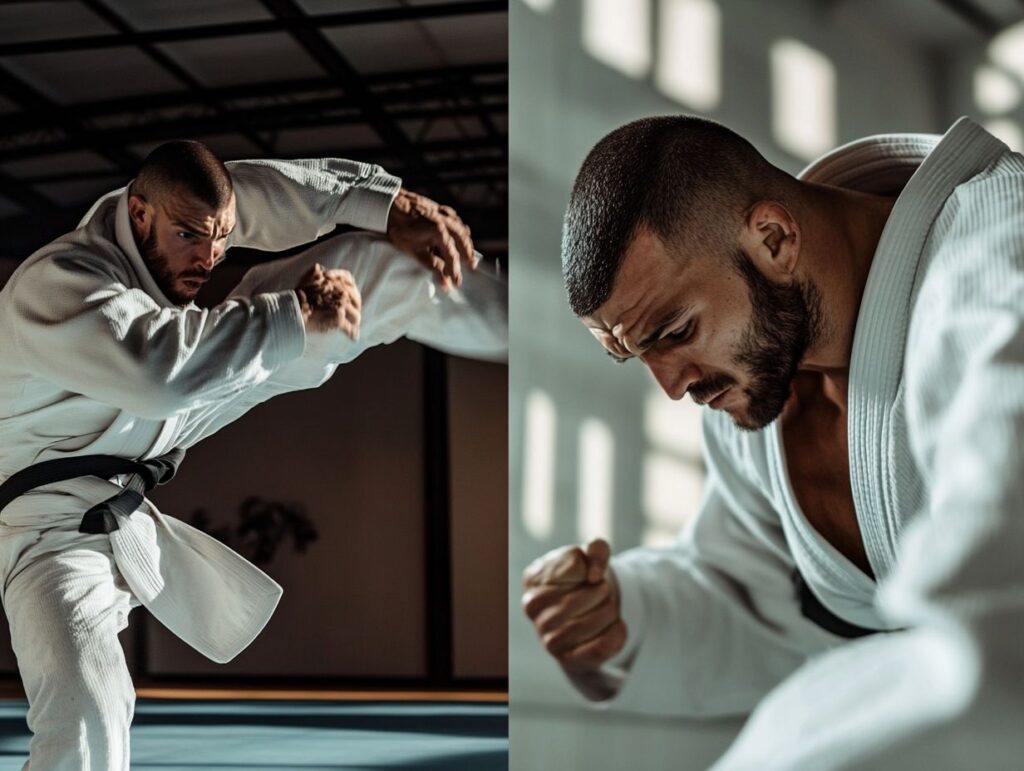
Jujutsu, Japanese Jiu-Jitsu, and Brazilian Jiu-Jitsu (BJJ) are distinct forms of martial arts that emphasize leverage, technique, and strategy, evolving from traditional Japanese jujutsu into the modern combat sport recognized today as BJJ, impacted by Brazilian culture and Japanese culture.
While Jujutsu encompasses a broad spectrum of grappling techniques, including throwing techniques, joint locks, and chokeholds, Brazilian Jiu-Jitsu, which was popularized by the Gracie family, places significant emphasis on ground fighting and submission techniques.
The historical and cultural impact of these martial arts is profound, as they have significantly influenced self-defense methodologies and competitive martial arts practices worldwide, including their role in MMA tournaments and combat sports. This evolution is part of a larger movement within martial arts culture, as discussed by Medium in their exploration of the subculture of martial arts.
History and Origins: The Influence of Jigoro Kano, Carlos Gracie, and Mitsuyo Maeda
The history of Jujutsu can be traced back to the samurai warriors of Japan, where it was developed as a comprehensive self-defense system that focused on throwing techniques, joint locks, and grappling strategies for unarmed combat, evolving through combat techniques and technical training.
The establishment of Japanese Jiu-Jitsu by notable figures such as Jigoro Kano, followed by its adaptation by the Gracie family in Brazil, led to the emergence of Brazilian Jiu-Jitsu as a distinct martial art that emphasizes ground fighting and submission holds. The contributions of the Gracie family have significantly shaped modern BJJ, demonstrating its effectiveness in both combat sports and self-defense scenarios. For those interested in exploring the lives of influential martial artists, sources like Goodreads offer comprehensive lists of the best martial arts biographies.
Both Jujutsu and Brazilian Jiu-Jitsu represent a fusion of tradition and innovation, with Jigoro Kano playing a pivotal role in systematizing the art by introducing principles such as randori, which focuses on utilizing an opponent’s energy against them. This methodology established the foundation for the evolution of grappling techniques.
Mitsuyo Maeda further advanced this lineage by traveling to Brazil, where he shared his knowledge and directly influenced the development of Brazilian Jiu-Jitsu.
Over time, practitioners have begun to adapt traditional techniques to better suit a competitive environment, placing greater emphasis on fluid transitions and strategic submissions. This evolution signifies a cultural shift in martial arts that continues to resonate within today’s combat sports community.
Key Principles and Techniques: Self-Defense and Submission Grappling
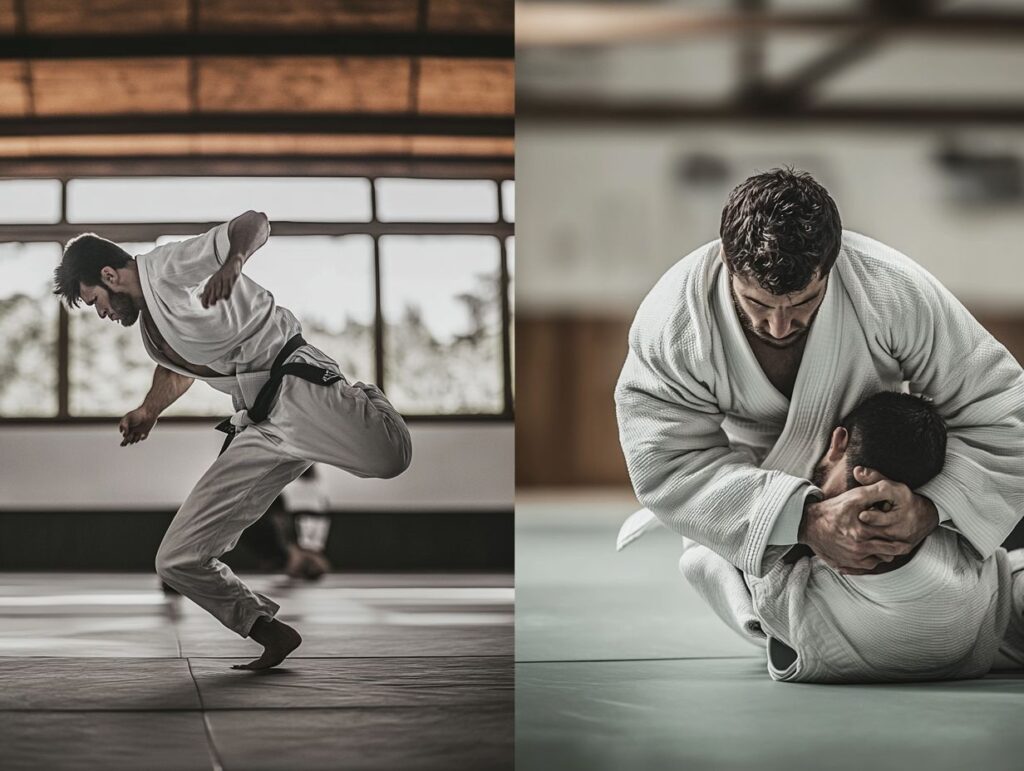
The fundamental principles and techniques in Brazilian Jiu-Jitsu (BJJ) center on the concepts of leverage, control, and the capacity to submit an opponent through a variety of grappling techniques.
Practitioners of BJJ place a strong emphasis on ground fighting and submission methods, integrating traditional elements from Jujutsu while concentrating on practical self-defense strategies and combat strategy. This approach aligns with perspectives shared in a recent examination by Medium on the divergence between submission grappling and other martial arts disciplines.
The training methodology in BJJ typically encompasses a combination of live training, sparring sessions, and structured drills, which not only improve physical skills but also cultivate mental resilience and combat strategy, preparing practitioners for self-defense situations.
Jujutsu Fundamentals
The fundamentals of Jujutsu encompass a range of grappling techniques, including throwing techniques, joint locks, and ground fighting strategies specifically designed for self-defense situations. This traditional martial art emphasizes efficiency and leverage, allowing practitioners to neutralize opponents irrespective of their size or strength.
Jujutsu serves as the foundational framework for many modern martial arts, significantly influencing the development of combat strategies employed in Brazilian Jiu-Jitsu and other grappling disciplines, including submission grappling and arm locks.
At its core, Jujutsu instructs individuals on how to utilize their attacker’s energy against them, making it an effective choice for practitioners of all physical statures. The principles of balance and control are of utmost importance, guiding practitioners in smoothly transitioning between standing and ground techniques.
Engaging in these techniques fosters an understanding of proper distance management and situational awareness-skills that are critical in self-defense scenarios.
The commitment to tradition ensures that the values of respect, discipline, and integrity are upheld, effectively preserving the art’s rich heritage while enhancing the practitioner’s journey in both self-defense and competitive contexts, reflecting the influences of Japanese culture.
Brazilian Jiu-Jitsu Fundamentals: Helio Gracie and Carlos Gracie’s Contributions
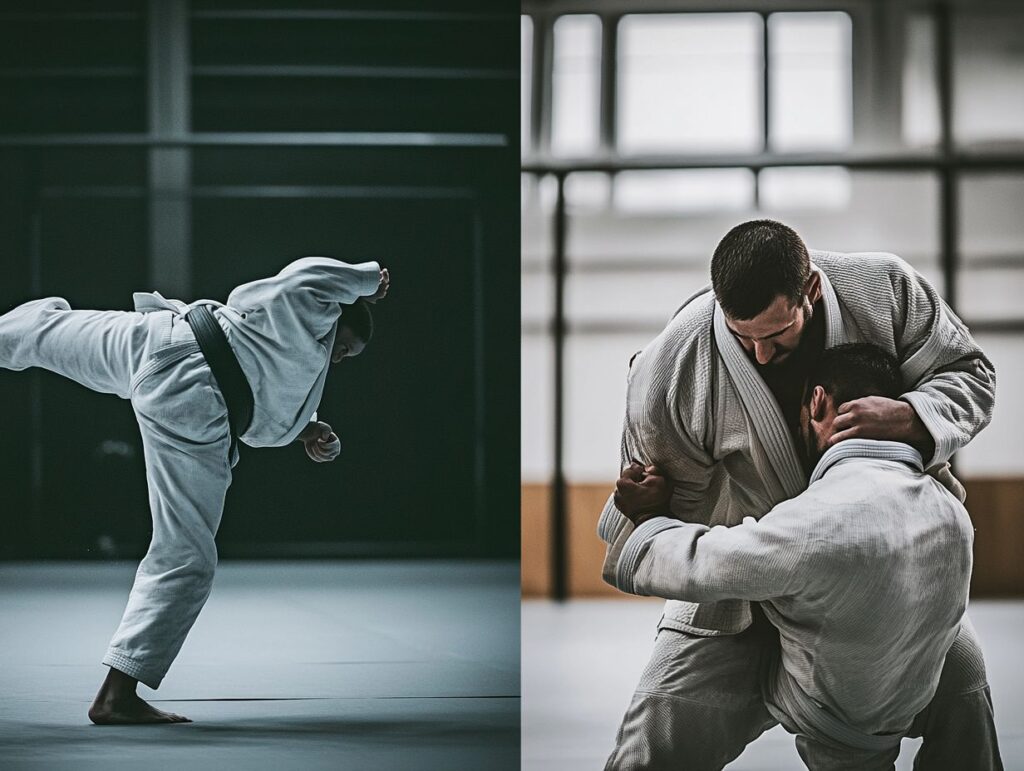
Brazilian Jiu-Jitsu (BJJ) fundamentals are fundamentally centered on ground fighting and submission techniques that enable practitioners to control and submit opponents through leverage and technique, rather than relying on brute strength, with influence from Carlos Gracie and Helio Gracie. The training encompasses various methodologies, including live training and sparring sessions, which cultivate mental fortitude and adaptability within the realm of combat sports.
BJJ promotes a distinctive philosophy asserting that individuals, regardless of size or strength, can effectively defend themselves and achieve success in grappling encounters.
This philosophy is reinforced by a series of essential principles, including the efficacy of positional control, which enables one to dominate an opponent prior to attempting submissions. Techniques such as the rear-naked choke, armbar, and triangle choke exemplify the significance of timing and precision in the execution of submissions.
Sparring methodologies are critical, as they not only enhance technical proficiency but also foster tactical thinking under pressure, aided by pre-arranged drills and mental strength development. Mental discipline constitutes a vital aspect of training, allowing practitioners to maintain composure and adaptability during intense exchanges.
By cultivating a mindset of resilience and creative problem-solving, BJJ give the power tos individuals to successfully navigate and excel in the dynamic environment of ground fighting.
Comparing Jujutsu and Brazilian Jiu-Jitsu
When analyzing the distinctions between Jujutsu and Brazilian Jiu-Jitsu, it is evident that there are significant differences in focus, techniques, and applications within martial arts competitions.
Jujutsu incorporates elements of striking in addition to grappling techniques, whereas Brazilian Jiu-Jitsu is predominantly a grappling-oriented martial art that prioritizes ground fighting and submission holds.
This differentiation not only impacts training methodologies but also establishes the rules and formats observed in various martial arts competitions and combat sports.
Focus on Striking vs. Grappling: Comparing Judo, Jujutsu, and Brazilian Jiu-Jitsu
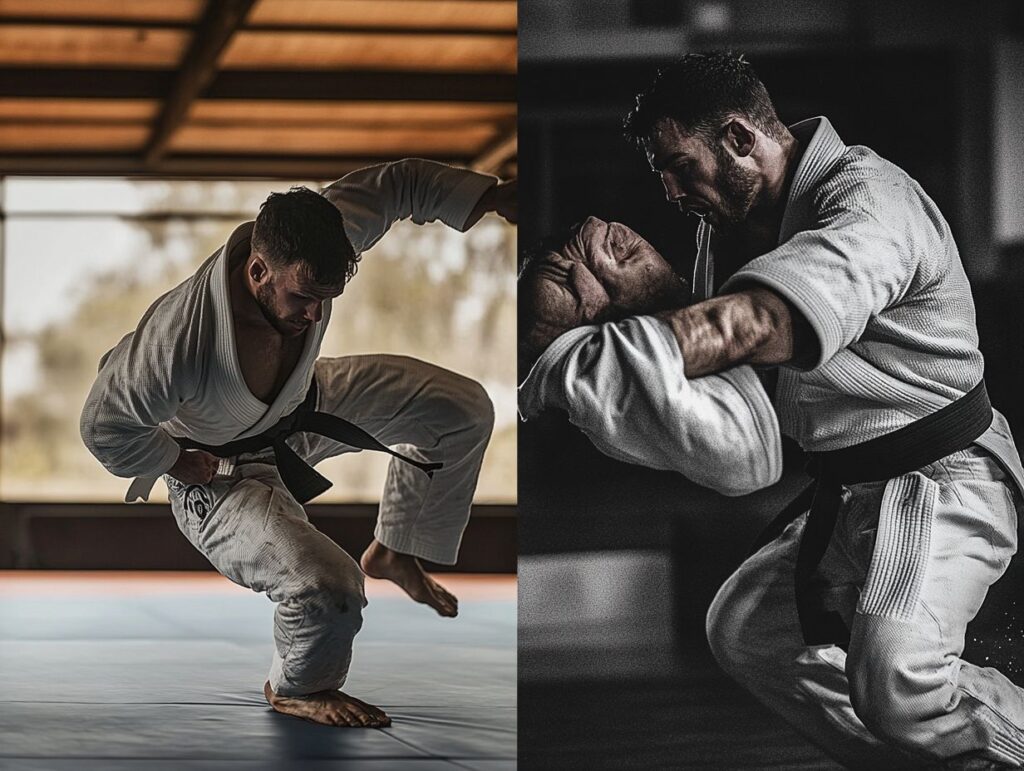
The primary focus of Jujutsu encompasses both striking and grappling techniques, enabling practitioners to adapt their combat strategies to various situations. In contrast, Brazilian Jiu-Jitsu is exclusively centered on grappling, emphasizing ground fighting and submission techniques to establish control over an opponent.
This distinction significantly impacts the training methodologies and competition strategies utilized within these martial arts.
In Jujutsu, practitioners acquire the ability to strike effectively while integrating throws and joint locks, resulting in a versatile skill set that prepares them for unpredictable encounters. Consequently, their training frequently incorporates elements such as stand-up fighting drills, which enhance reaction times and adaptability during a duel.
Conversely, Brazilian Jiu-Jitsu places a strong emphasis on positional control, guard techniques, and effective escapes, leading to a more structured and specialized training regimen focused on matwork, influenced by judo techniques.
In competitive settings, Jujutsu may include point scoring for both strikes and submissions, whereas Brazilian Jiu-Jitsu competitions primarily reward successful grappling techniques and the ability to submit an opponent, thereby showcasing the unique strategic nuances inherent to each discipline.
Rule Sets and Competition Formats: Point System in Martial Arts Competitions
The rule sets and competition formats in Brazilian Jiu-Jitsu (BJJ) and Jujutsu are designed to reflect their fundamental techniques and principles, significantly influencing the approaches practitioners take in martial arts competitions, including the point system and combat sports dynamics.
These distinctions not only impact the strategies employed by competitors but also shape the overall dynamics of matches. In BJJ, points are awarded for achieving dominant positions, such as mount or back control, with explicit guidelines on how to earn and maintain those scores. In contrast, Jujutsu competitions often permit a broader array of techniques, including strikes, resulting in a more diverse range of scoring possibilities.
A comprehensive understanding of these specific scoring systems and the permissible techniques, including techniques evolution and chokeholds, can provide athletes with a competitive advantage, allowing them to tailor their game plans to the unique demands of each discipline and ultimately improve their performance in submission grappling scenarios, similar to strategies used in MMA tournaments.
Choosing the Right Martial Art for You
Selecting the appropriate martial art that aligns with one’s personal goals and interests can be a challenging endeavor, especially when evaluating options such as Brazilian Jiu-Jitsu, developed by Helio Gracie and Carlos Gracie, and Japanese Jiu-Jitsu, which has roots in Japanese culture influenced by Jigoro Kano and Mitsuyo Maeda, each of which presents distinct advantages and training methodologies reflecting Brazilian culture.
Important factors to consider include individual preferences for grappling versus striking techniques, the emphasis on self-defense and real-life combat scenarios, and the type of community or competitive environment one wishes to engage in.
Gaining a comprehensive understanding of the characteristics and principles of each martial art, including influences from the Gracie family in Brazilian Jiu-Jitsu and traditional elements from Japanese culture in Jujutsu, will facilitate making a well-informed decision.
Factors to Consider
When deciding between Brazilian Jiu-Jitsu and Jujutsu, several factors warrant careful consideration, including one’s primary objective-be it self-defense, competition, or physical fitness.
Brazilian Jiu-Jitsu, often referred to as BJJ, is particularly noted for its focus on submission grappling and ground fighting techniques, whereas Jujutsu provides a more traditional framework that incorporates striking elements reminiscent of Judo, created by Jigoro Kano. It is advisable to evaluate the training methodology and the community environment of the martial arts school one intends to attend.
Furthermore, individual fitness levels and prior experience in martial arts may influence this decision. Those seeking a rigorous and physically demanding workout may find Brazilian Jiu-Jitsu more appropriate due to its intensive sparring sessions, which promote strength and endurance.
On the other hand, individuals interested in a wider variety of techniques, including self-defense applications, may prefer Jujutsu, which emphasizes adaptability and striking skills.
Ultimately, the prevailing atmosphere within the dojo or gym should align with one’s training preferences, as a supportive community can significantly enhance the learning experience and overall enjoyment of the practice.
Benefits of Each Style
Both Brazilian Jiu-Jitsu and Jujutsu provide distinct benefits that cater to a variety of needs and objectives, rendering them appealing to a diverse range of practitioners. Brazilian Jiu-Jitsu is especially recognized for its emphasis on ground fighting and submission techniques, which significantly enhance practical self-defense skills and physical fitness.
In contrast, Jujutsu integrates grappling with striking and traditional martial arts elements, offering a comprehensive experience that cultivates mental strength and discipline.
These disciplines give the power to individuals to defend themselves in real-world situations while simultaneously improving overall physical condition through rigorous training regimens.
Practitioners of Brazilian Jiu-Jitsu experience increased flexibility and endurance, benefiting from exercises that promote muscular strength and cardiovascular health. Conversely, Jujutsu places a strong emphasis on coordination and balance, enhancing reflexes that have practical applications beyond the dojo.
Both martial arts foster critical mental attributes, including focus, resilience, and patience. As practitioners advance in their training, they cultivate a heightened sense of self-awareness and confidence, equipping them to confront challenges both on and off the mats.