
The History and Evolution of Rugby: From Amateur Roots to Global Sport In 1823, amid the hallowed halls of Rugby School in England, William Webb Ellis ignited the rugby revolution by daring to run with the ball during a football match-a legendary moment that birthed a new sport. This article traces rugby’s fascinating history from those amateur schoolboy origins through rule codification, the great Union-League split, international growth, and into its professional, global era, revealing the grit and innovation that made it a worldwide phenomenon.
Table of Contents
Key Takeaways:
- Rugby’s origins trace back to 19th-century England, sparked by William Webb Ellis’s legendary act of picking up the ball during a football game, evolving from schoolboy pastimes into structured rules by 1871 with the Rugby Football Union’s formation.
- The 1895 split created Rugby Union and Rugby League, dividing the sport along amateur ideals in the south and working-class professionalism in northern England, fostering international growth through tours and test matches in the amateur era.
- From the 1990s onward, rugby embraced professionalism, boosting athleticism and global appeal, highlighted by the inaugural 1987 Rugby World Cup, transforming it into a major international sport facing modern challenges like inclusivity, expansion, player safety, video referee technology, and adherence to the playing charter.
Origins in 19th-Century England
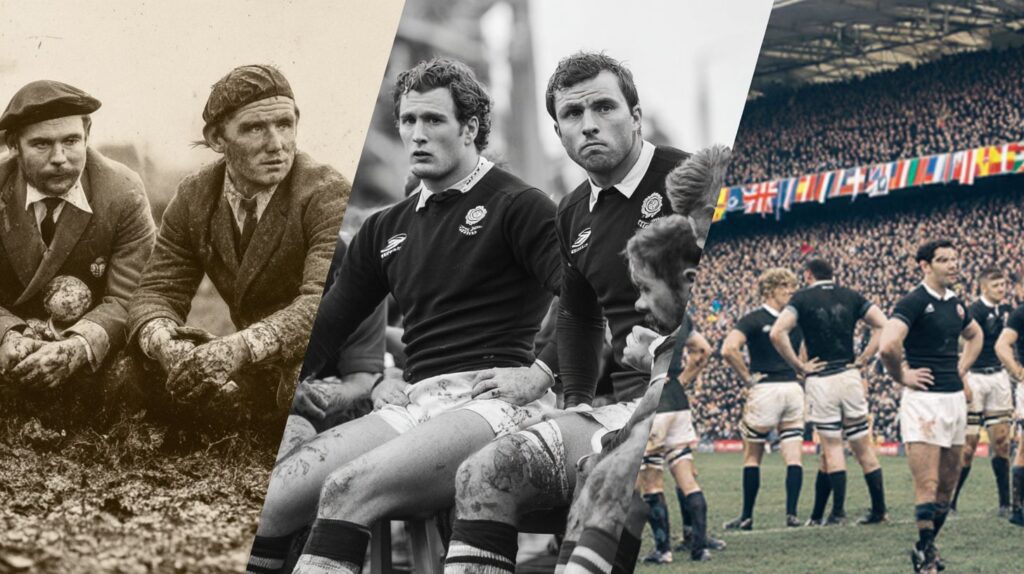
The origins of Rugby date back to 1823 at Rugby School in England, where William Webb Ellis is renowned for picking up the ball and running with it during a football match, thereby giving rise to a distinct variant of the sport.
The Legend of William Webb Ellis
The legend of William Webb Ellis, a 16-year-old student at Rugby School, traces its origins to a 1823 match in which he purportedly defied prevailing conventions by picking up and running with the ball, an event chronicled in the school’s 1897 history authored by Frederick Webb Ellis.
Amid an intense inter-house football match on the Bigside Ground, Ellis reportedly seized the ball during a tumultuous scrum and advanced toward the goal, disregarding the customary rules that permitted only kicking.
As cited in Adrian Tasman’s *Origines of Rugby Football* (1897), “A boy of the name Webb Ellis… with a fine disregard for the rules… caught up the ball and ran with it towards the opposite goal.”
Although this account lacks corroboration from contemporary records, it has profoundly influenced the foundational mythology of rugby, emphasizing themes of individual heroism and innovation. The narrative appears in more than 50 historical publications, thereby shaping the sport’s enduring identity as one characterized by boldness and ingenuity.
In recognition of its significance, World Rugby formalized its legacy in 1986 by naming the World Cup trophy the Webb Ellis Cup.
Early Schoolboy Games
By the 1830s, games at Rugby School involved as many as 75 players per side and operated under minimal rules, having evolved from the mob football traditions prevalent in medieval England. The development of the sport progressed through several distinct phases.
- Ahead of 1823, folk games were characterized by the absence of fixed rules, with entire villages competing against one another in highly chaotic matches that frequently resulted in numerous injuries. These events are documented in medieval records, including manuscripts preserved by the British Library.
- During the 1830s, Rugby School introduced significant adaptations, including the permission to handle the ball, the addition of goalposts, and the division of games into 30-minute halves. These modifications reduced certain aspects of brutality while encouraging the development of strategic play.
- By the 1840s, the game had disseminated to other institutions, such as Eton, where key elements like scrums began to be standardized.
- Thomas Hughes’ novel *Tom Brown’s Schooldays* (1857) offers a vivid depiction of the brutal yet sportsmanlike character of scrums and line-outs.
- A common misconception involves placing undue emphasis on the violence of the era, which overlooks the prevailing values of honor and fair play, as evidenced in the official histories of the Rugby Football Union.
Codification of Rules (1823-1871)
The development of rugby union, from its informal origins at Rugby School in 1823 to the formal establishment of the Rugby Football Union in 1871, involved the codification of rules that standardized the sport and significantly reduced disorder in matches across England.
Formation of the Rugby Football Union
On January 26, 1871, representatives from 21 clubs, including Blackheath Club, Blackheath Football Club, Guying Hospital, and Richmond, convened at the Pall Mall Restaurant in London to establish the Rugby Football Union (RFU), marking the creation of the world’s first official governing body for rugby.
This foundational meeting advanced prior initiatives aimed at standardizing the sport. The key phases in this development encompassed:
- Pre-1871 discussions among clubs, such as the 1863 Cambridge Rules debate, which refined aspects of ball handling and forward play;
- The inaugural session, during which delegates adopted 59 rules, including a prohibition on hacking (shin-kicking) to emphasize player safety;
- Initial enforcement measures, exemplified by the RFU’s 1875 prohibition on forward passes to preserve territorial play dynamics.
These reforms, as documented in the RFU’s original 1871 Laws of the Game, profoundly influenced the evolution of modern rugby.
| Year | Rule Change 1871 | 59 foundational rules adopted | | 1875 | Forward pass banned | | 1876 | Offside rule clarified (three players between) |
The Great Split: Union vs. League (1895)
In 1895, a significant schism emerged within the sport of rugby, resulting in the establishment of two distinct codes: Rugby Union, which prioritized amateur participation, and Rugby League, which permitted professional compensation for players. This division originated from contentious disputes over the remuneration of working-class athletes in northern England.
Northern Hemisphere Divide
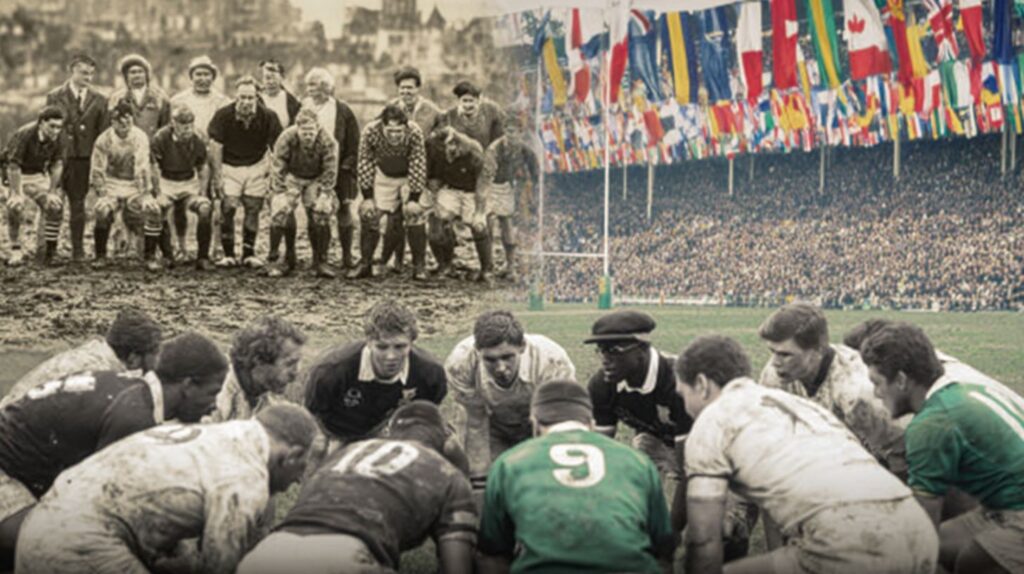
The schism of 1895 marked a pivotal moment in rugby history, as 22 northern clubs, including those from Manchester and Leeds, established the Northern Union. This new entity reduced team sizes from 15 to 13 players and implemented broken-time payments of up to 6 shillings per match.
| Aspect | Rugby Union | Rugby League | Examples |
|---|---|---|---|
| Players | 15 | 13 | Faster, more open play in League |
| Scoring (try) | 3 points | 4 points | Increased attacking incentives in League |
| Professionalism | Amateur until 1995 | Paid from 1895 | Northern working-class support |
This division, as articulated in the 1895 Leeds Manifesto, sought to resolve longstanding grievances regarding the constraints imposed by amateurism on working-class participants.
The professional framework of Rugby League drove substantial expansion, drawing significant support from northern industrial communities.
By the early 1900s, Rugby League fixtures in northern England recorded 20% higher attendance than Rugby Union matches, based on archival data from the Rugby Football League. This trajectory established Rugby League as a distinctive, audience-focused discipline, diverging markedly from the aristocratic, amateur-oriented tradition of Rugby Union.
Amateur Era and International Growth (1900s-1980s)
During the amateur era, which spanned from 1900 to 1984, rugby experienced substantial global expansion, largely driven by tours conducted under the auspices of the British Empire. The International Rugby Board, established in 1886, had by 1950 assumed regulatory authority over ten nations.
Tours and Test Matches
The 1888 British Isles tour to Australia and New Zealand represented the inaugural overseas test series in rugby history, comprising 35 matches with only three defeats, thereby catalyzing the sport’s widespread global adoption.
This landmark achievement laid the foundation for rugby’s international development, which unfolded across several distinct phases.
- In the early 1900s, empire tours focused on colonial expansion, exemplified by the 1906 All Blacks tour, during which New Zealand achieved 34 victories in 35 matches against British teams, thereby establishing robust fanbases throughout the Commonwealth (source: New Zealand Rugby Museum archives).
- The period from the 1920s to the 1950s was characterized by intense rivalries, such as the confrontation between South Africa’s Springboks and the British Lions in a demanding 21-test series in 1955, which attracted an average of 20,000 spectators per match and significantly enhanced national pride.
- By the 1970s, the International Rugby Board (IRB, now known as World Rugby) implemented regulatory oversight, standardizing 15-a-side international matches to promote equitable competition. France’s inclusion in the Five Nations tournament in 1924-which later evolved into the Six Nations Championship-expanded global participation from five nations to 50 by 1980, according to IRB records, driving global expansion through events like the Rugby Championship, Lions Tour, Super Rugby, Premiership Rugby, and Top 14.
As a focused case study from the 1950s, the 1951-52 Springboks tour to New Zealand attracted a total attendance of 150,000, yet it also sparked debates on apartheid, culminating in boycotts during the 1960s that isolated South Africa until its reintegration in 1992.
Path to Professionalism (1990s)
The path to professionalism in the 1990s ended the long-standing amateur status, enabling paid players and elevating the sport’s standards. This period also embraced formats like rugby sevens, which gained prominence by featuring in the Olympics, alongside ongoing international fixtures such as the Lions Tour.
In 1995, the Rugby Football Union (RFU) and the International Rugby Board (now World Rugby) officially opened the sport to professionalism. This decision was prompted by the 1991 Rugby World Cup, which generated $10 million in revenue and underscored the financial limitations of the amateur era.
The landmark 1995 declaration, endorsed by 99% of voters in the RFU referendum, fundamentally reshaped rugby overnight. Under the previous amateur regulations, player salaries were nonexistent; however, by 1999, the average had risen to $100,000. This shift enabled professional clubs, such as England’s Sale Sharks, to establish their first professional player contracts.
Television broadcasting agreements experienced a dramatic 500% increase in value, enhancing return on investment for rugby unions through the expansion of media rights. A 2005 study published in the Sports Lawyers Journal examined these economic transformations, reporting a 300% surge in global sponsorships within five years. Furthermore, the professional model permitted athletes to engage in full-time training, thereby elevating the overall standards of competition.
The Rugby World Cup Era (1987-Present)
Since the inaugural Rugby World Cup in 1987, hosted by New Zealand and Australia and attended by approximately 500,000 spectators, the tournament has expanded significantly to include 20 teams competing for the Webb Ellis Cup. the Springboks’ victory in 1995, under the leadership of Nelson Mandela, served as a powerful symbol of national unity.
| Year | Host | Winner | Attendance | Key Innovation |
| 1987 | New Zealand/Australia | New Zealand | 500,000 | First Cup | | 1995 | South Africa | South Africa | 1.2M | Professionalism announcement | | 2019 | Japan | South Africa | 1.7M | Women’s tournament integration | | 2023 | France | South Africa | 2.4M | Expanded inclusivity rules |
This evolution has resulted in a 300% increase in the global television audience, reaching 1 billion viewers by 2023, according to World Rugby data. For example, New Zealand’s All Blacks achieved victories in 1987, 2011, and 2015, while maintaining an 80% win rate in the pool stage.
This success can be attributed to disciplined training methodologies, such as the “no-look” pass drills, which have enhanced team cohesion and strategic depth.
Modern Global Sport and Challenges
Rugby has expanded to encompass 120 nations under the governance of World Rugby, bolstered by prominent professional leagues such as England’s Premiership Rugby-comprising 12 teams with budgets of approximately $50 million each-and France’s Top 14, which collectively generate an estimated $2.5 billion in annual revenue.
Notwithstanding this expansion, rugby confronts several significant challenges.
- Player safety remains paramount, particularly in light of a 20% increase in concussions as reported in the International Rugby Board’s (IRB) 2022 study. To address these risks, it is advisable to implement video referee systems alongside the Head Injury Assessment (HIA) protocols established in 2013.
- In terms of inclusivity, global participation among women stands at approximately 10 million, indicating a notable lag. Enhancing engagement can be achieved by capitalizing on high-profile events, such as the inclusion of Rugby Sevens in the 2016 Olympic Games.
- Striking a balance between commercial imperatives and the sport’s core values of integrity, passion, solidarity, and respect necessitates adherence to World Rugby’s Playing Charter, which mandates integrity training for all stakeholders.
- The gradual pace of growth in regions such as Africa and Asia requires targeted investment, exemplified by the $100 million World Rugby development fund.
Effective strategies for addressing these issues include conducting annual discipline reviews, as demonstrated in competitions like the Six Nations Championship and the Rugby Championship, thereby fostering sustainable development within the sport.
Checkout The Evolution of Rugby: From Schoolyard to Global …
Frequently Asked Questions
What are the origins of rugby, and how does it relate to ‘The History and Evolution of Rugby: From Amateur Roots to Global Sport’?
Rugby originated in 1823 at Rugby School in England, as depicted in Thomas Hughes’ novel ‘Tom Brown’s Schooldays’, when William Webb Ellis reportedly picked up the ball during a football game and ran with it, marking the amateur roots of the sport. This event is central to ‘The History and Evolution of Rugby: From Amateur Roots to Global Sport’, highlighting its beginnings as a gentlemanly, non-professional pursuit among British schools and universities.
How did rugby transition from its amateur beginnings to a more structured game?
In the mid-19th century, rugby evolved through the formation of clubs, including the historic Blackheath Football Club, and the standardization of rules by the Rugby Football Union in 1871, preserving its amateur ethos initially. ‘The History and Evolution of Rugby: From Amateur Roots to Global Sport’ explores this phase as the foundation for organized matches and international tours, such as those by the British & Irish Lions, that began in the 1880s.
What role did the split between rugby union and rugby league play in the sport’s evolution?
The 1895 schism occurred when northern English clubs formed the Northern Rugby Football Union due to disputes over player payments, leading to rugby league’s professional model while union remained amateur. This pivotal moment is a key chapter in ‘The History and Evolution of Rugby: From Amateur Roots to Global Sport’, illustrating the tension between amateur ideals and growing commercialization.
When and why did rugby union turn professional, transforming it into a global sport?
Rugby union officially went professional in 1995, ahead of the Rugby World Cup in South Africa, to compete with other sports and retain talent amid covert payments. ‘The History and Evolution of Rugby: From Amateur Roots to Global Sport’ details this shift as the catalyst for massive growth, with professional leagues and international broadcasting expanding its reach worldwide.
How has the Rugby World Cup contributed to the globalization of the sport?
Inaugurated in 1987, the Rugby World Cup has grown from a niche event to a quadrennial spectacle attracting millions, showcasing teams from diverse nations like New Zealand, South Africa, and emerging powers such as Japan. Within ‘The History and Evolution of Rugby: From Amateur Roots to Global Sport’, it represents the pinnacle of rugby’s journey from British amateur pastime to a truly international phenomenon.
What are some key milestones in rugby’s expansion beyond Europe and the Commonwealth?
Milestones include the sport’s introduction to the Pacific Islands in the early 20th century, the inclusion of non-traditional nations in the World Cup from 1999, and women’s rugby’s rise since the 1990s. ‘The History and Evolution of Rugby: From Amateur Roots to Global Sport’ underscores these developments as evidence of rugby’s broadening appeal and inclusive evolution on a global scale.


