Unlocking the world of STEM toys for six-year-olds can ignite a passion for learning through play, fostering critical thinking, engineering skills, and problem-solving abilities. As young minds explore innovative options like “I’m the Chef Too!” and engaging science kits, they embark on a journey that nurtures curiosity and creativity. In this article, we’ll delve into the myriad benefits of educational toys and how they can transform early learning into an exciting adventure, setting the stage for future success in STEM fields.
Table of Contents
Key Takeaways:
- STEM education is crucial for early learning, helping to develop problem-solving skills, imaginative play, and foster creativity and curiosity.
- Building and construction toys, robotics kits, and science experiment kits are examples of educational toys that can inspire children to explore the world of STEM.
- When choosing educational toys, it is important to consider age appropriateness and aligning the child’s interests to maximize engagement and learning.
Importance of STEM in Early Learning
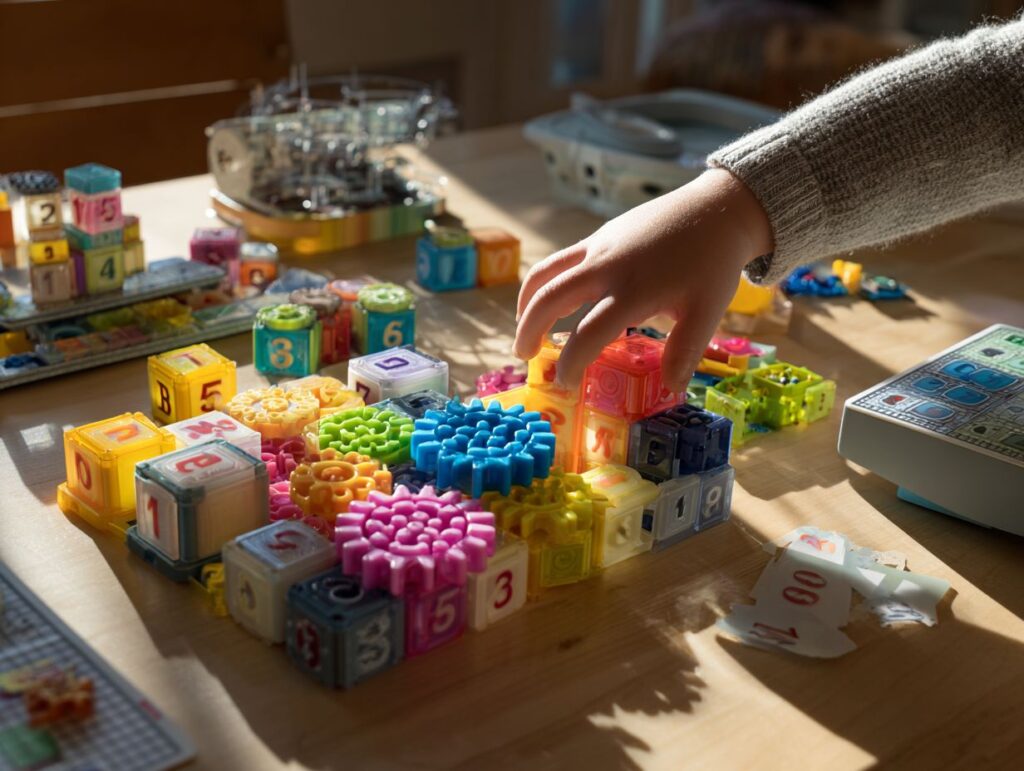
Engaging six-year-olds with STEM concepts at an early age fosters problem-solving skills and ignites imagination through hands-on experimentation and sensory engagement. Research indicates that early exposure to STEM fields can have a significant impact on children’s long-term interests. According to a report by the National Science Board, students who participate in STEM activities prior to the age of 10 are 30% more likely to pursue related careers.
To enhance engagement, it is advisable to consider simple activities such as:
- Building towers with building blocks
- Exploring basic coding applications such as Tynker
- Conducting elementary science experiments, such as vinegar and baking soda reactions
These hands-on experiences not only render learning enjoyable but also establish a foundation for critical thinking and innovation.
Types of Educational Toys
A diverse selection of educational toys significantly enhances learning experiences, including building sets, robotics kits, and science experiments specifically designed for young learners.
Building and Construction Toys
Building toys such as LEGO and Magna-Tiles significantly enhance spatial reasoning and creativity in children by promoting open-ended play.
These toys facilitate the development of essential skills in a variety of ways. For example, LEGO sets often center on constructing vehicles or buildings, thereby teaching fundamental engineering concepts and problem-solving techniques.
Conversely, Magna-Tiles enable children to explore geometry through colorful, magnetically connecting shapes. Both types of toys contribute to the development of fine motor skills, as children grasp and manipulate the pieces, which in turn improves their hand-eye coordination.
Furthermore, collaborative play with these toys fosters social skills, as children work together to design and construct projects, thereby enhancing their communication and teamwork abilities.
Robotics Kits
Robotics kits, such as SmartLab and PlaySteam, serve to introduce foundational coding concepts while offering interactive experiences for children as young as six years old. These kits not only contribute to cognitive development but also cultivate essential skills, including problem-solving and teamwork.
For example, SmartLab engages children through hands-on building activities that promote creativity as they construct various robots. In parallel, PlaySteam fosters collaboration by encouraging children to work in teams to tackle coding challenges.
Both kits are accompanied by user-friendly tutorials that guide learners through each project, making complex concepts more accessible. By seamlessly integrating play with learning, these robotics kits create an engaging environment in which children can develop vital STEM skills from an early age.
Science Experiment Kits
Science experiment kits, such as “I’m the Chef Too! provide engaging opportunities for children to explore cooking and hands-on chemistry experiments. These kits not only foster creativity but also promote inquiry-based learning by encouraging children to ask questions and explore concepts in a practical manner.
For example, the Snap Circuits kit enables children to construct their own electronic projects, thereby teaching fundamental principles of electricity and circuitry. Similarly, the Thames & Kosmos Chem C1000 kit offers a variety of chemistry experiments that stimulate curiosity as students mix different substances to observe chemical reactions.
By actively involving children in these experiments, these kits cultivate critical thinking skills and make the learning experience both educational and enjoyable.
Benefits of STEM Toys
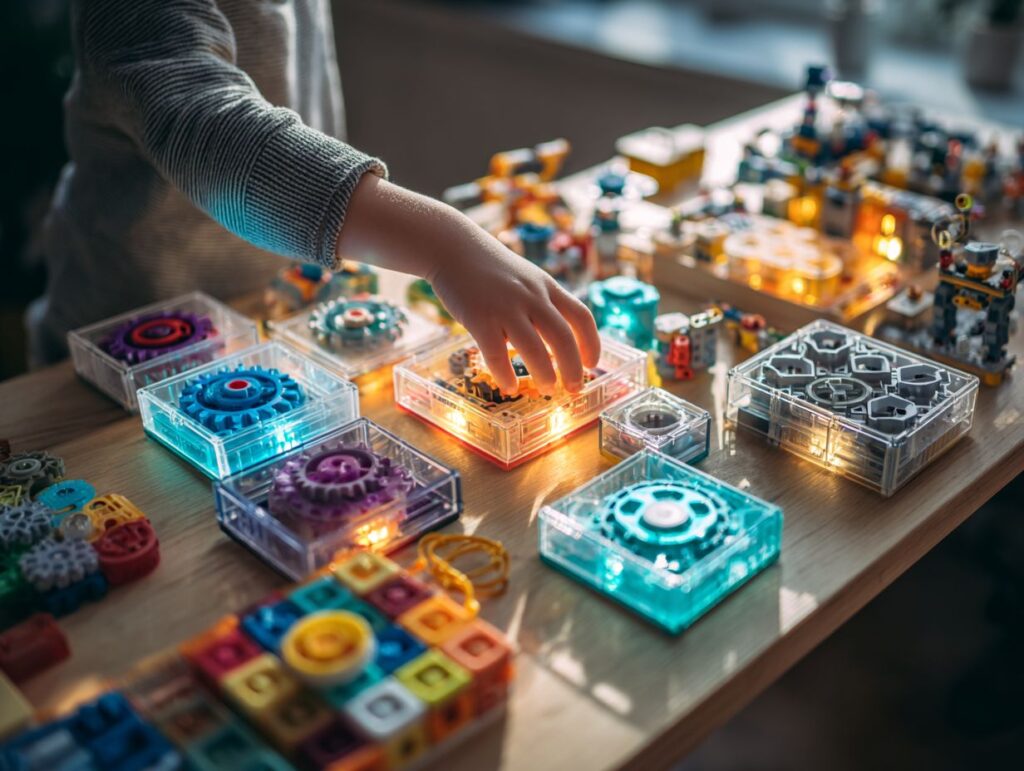
STEM toys provide a variety of benefits, including the enhancement of problem-solving skills and the promotion of collaboration among peers, both of which are essential for effective teamwork in future endeavors.
Enhancing Problem-Solving Skills
STEM toys give the power to six-year-olds to address challenges, thereby enhancing their problem-solving skills and promoting a growth mindset. For example, the LEGO Education Spike Prime set encourages children to construct and program robots, fostering both creativity and engineering competencies.
Similarly, the Osmo Genius Starter Kit integrates physical play with digital interaction, allowing children to learn through hands-on experiences. Parents have reported that, following the use of these toys, their children engage more confidently in science projects at school.
A case study conducted by an educator found that students who regularly utilized coding toys demonstrated a 30% increase in problem-solving abilities compared to their peers who did not engage with such resources.
Fostering Teamwork and Collaboration
Collaborative activities involving STEM toys play a significant role in cultivating teamwork and social skills, establishing a solid foundation for future cooperative learning experiences.
Engaging groups in STEM challenges, such as constructing a bridge with LEGO blocks or programming a robot to navigate a maze, enhances both communication and collaboration.
For example, assigning specific roles within teams-such as a designer, a builder, and a navigator-promotes clearer dialogue and mutual respect among team members. Additionally, utilizing tools such as collaborative whiteboards or applications like Padlet facilitates brainstorming and progress tracking.
These activities not only impart technical skills but also nurture a sense of community and shared responsibility among participants.
Choosing the Right Educational Toys
Selecting appropriate educational toys necessitates careful consideration of age suitability and alignment with a child’s interests to ensure optimal engagement.
Age Appropriateness
STEM toys must be age-appropriate, aligning with the cognitive development and fine motor skills of six-year-olds to optimize their learning potential.
For effective selection, the following categories of STEM toys should be considered:
- Building sets, such as LEGO or Magna-Tiles, enhance spatial awareness and problem-solving skills.
- Science kits that involve simple experiments stimulate curiosity, cognitive development, and promote hands-on learning.
- Coding toys, like Botley the Coding Robot, introduce fundamental programming concepts.
- Appropriate art supplies can foster creativity while simultaneously improving fine motor skills.
It is essential to ensure that each toy presents a challenge to the child without leading to frustration, thereby achieving an ideal balance between enjoyment and educational value.
Interest Alignment
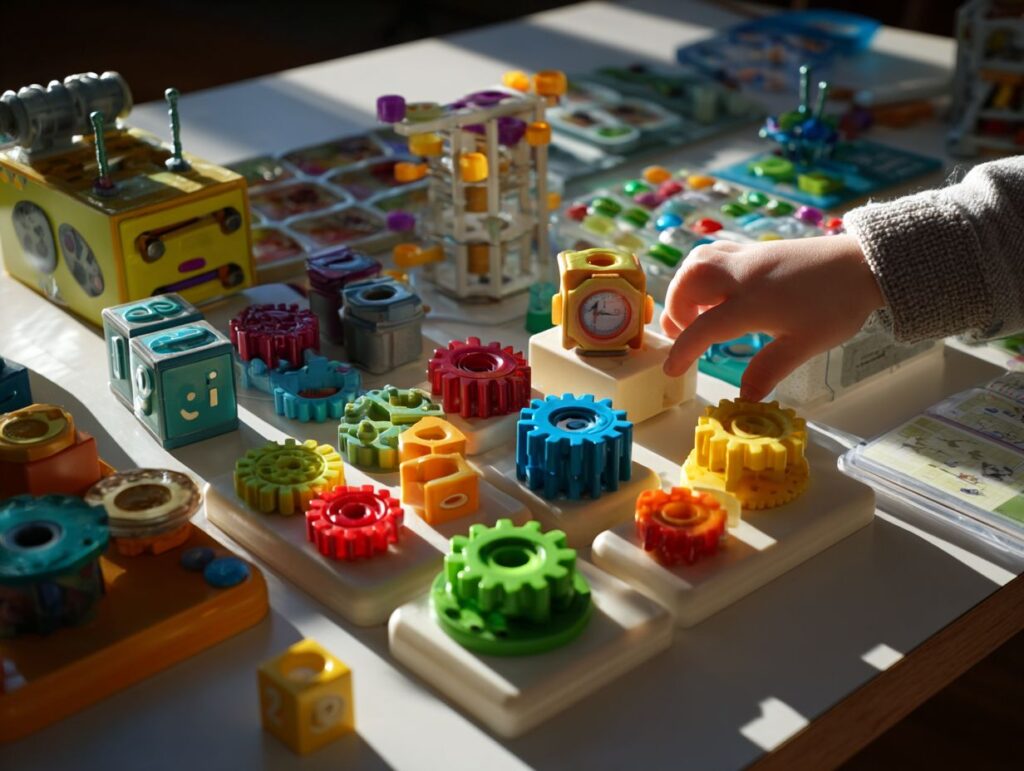
Aligning educational toys with a child’s interests significantly increases engagement and enhances their overall learning experience, thereby making education more enjoyable and incorporating the fun factor.
To accurately assess a child’s interests, it is advisable to carefully observe their play behaviors and inquire about their preferred activities.
For example, if a child demonstrates a fondness for building or construction, toys such as LEGO sets or magnetic tiles that promote spatial awareness would be suitable options. Conversely, if a child exhibits curiosity about nature, a science kit focused on gardening or insects would be appropriate.
Utilizing tools such as questionnaires or interest inventories can assist in identifying specific preferences.
By matching educational toys to these interests, one not only fosters enthusiasm but also encourages deeper learning, effectively creating a harmonious integration of enjoyment and education.
Incorporating STEM Toys into Learning
The integration of STEM toys into learning environments, whether at home or in the classroom, enhances educational experiences and fosters a spirit of exploration.
At Home Activities
Parents can facilitate interactive activities at home using STEM toys that encourage exploration and imaginative play. For example, LEGO sets enable children to construct various structures, thereby enhancing their spatial awareness and problem-solving abilities.
Science kits that focus on chemical reactions stimulate curiosity and critical thinking as children experiment with safe materials. Additionally, robotics kits, such as VEX or LEGO Mindstorms, allow children to program their creations, fostering computational thinking skills.
Incorporating puzzles or brain teasers can further enhance logical reasoning abilities. These activities not only provide enjoyment but also contribute to the development of skills that are essential for future learning and creativity.
In the Classroom
In the classroom, STEM toys serve as effective tools for facilitating interactive learning and promoting peer collaboration, thereby enhancing the educational experience for six-year-olds. Activities such as constructing structures with magnetic tiles encourage teamwork, as students collaborate to create stable designs.
Furthermore, coding robots such as Botley or Bee-Bot introduce foundational programming concepts while simultaneously fostering problem-solving skills. To improve learning outcomes, educators can guide students through specific challenges, including:
- Constructing a bridge capable of supporting a predetermined weight with mathematical reasoning
- Programming a robot to successfully navigate a maze
These activities not only enhance critical thinking abilities but also cultivate communication skills and abstract thinking, as children engage in discussions about ideas and strategies with their peers.
Learn more, Guide to choosing children’s educational toys.
Frequently Asked Questions
What is the significance of STEM and Beyond educational toys for lifelong learning?
STEM and Beyond educational toys are designed to promote learning and development in the fields of Science, Technology, Engineering, and Mathematics. These toys go beyond traditional learning methods and aim to inspire creativity and curiosity in children.
How do educational toys inspire creativity and curiosity in an imaginative world?
STEM and Beyond educational toys are designed to be open-ended, allowing children to use their imagination and problem-solving skills to explore different possibilities and come up with unique solutions. This process encourages children to think outside the box and fosters a sense of creativity and curiosity.
What age range is suitable for STEM and Beyond educational toys and homeschooling toys?
STEM and Beyond educational toys are suitable for children of all ages, from toddlers to teenagers. There are a variety of toys available for different age groups, with varying levels of complexity and learning objectives.
Can these toys be used in a classroom setting to encourage resilience?
Yes, many STEM and Beyond educational toys are designed specifically for classroom use. They can be used to supplement traditional curriculum and enhance hands-on learning experiences. These toys can also be used for group activities and projects, promoting teamwork and communication skills.
What are the long-term benefits of using STEM and Beyond educational toys?
By engaging children in hands-on learning and promoting critical thinking, STEM and Beyond educational toys can help develop important skills that are essential for future success, such as problem-solving, creativity, and adaptability. These toys also introduce children to the fields of STEM, paving the way for future career opportunities.
Where can I find STEM and Beyond educational toys, including cooking kits and logic puzzles?
STEM and Beyond educational toys can be found in specialty toy stores, educational supply stores, and online retailers. Many schools and libraries also have a selection of these toys available for use. Make sure to research and read reviews before purchasing to find the best toys for your child’s interests and learning level.