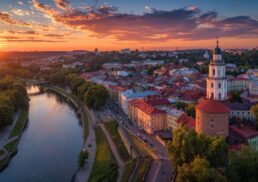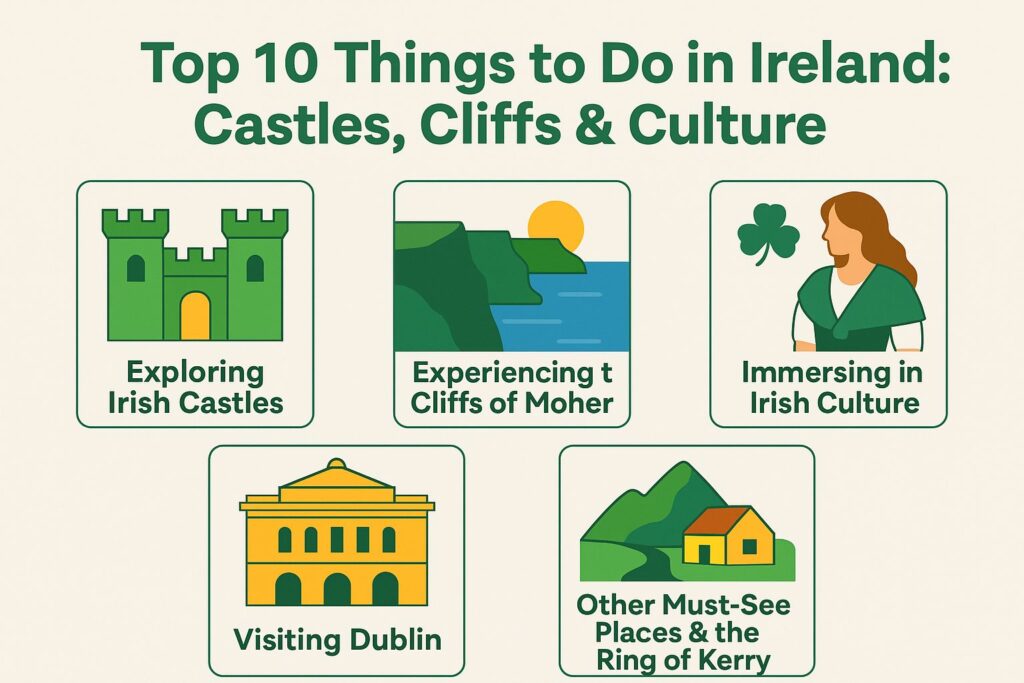
Ireland, a nation characterized by its rich ancient history and stunning breathtaking landscapes, presents a wealth of captivating experiences waiting to be explored. From the majestic ancient castles that convey the narratives of ancient kings to the breathtaking towering cliffs of Moher that exemplify nature’s unrefined beauty, this guide outlines the top ten essential activities that encapsulate the spirit of the Emerald Isle. Engage with the vibrant Irish culture through traditional music, Irish whiskey, and local cuisine, and navigate the lively streets of Dublin while uncovering hidden gems. Embark on a journey through Ireland’s premier attractions, including the iconic Giant’s Causeway and the verdant Killarney National Park, as well as the scenic Ring of Kerry, to discover the enchantment that renders this destination truly unforgettable.
Table of Contents
Key Takeaways:
- Experience the grandeur of Irish history by visiting the top 5 must-visit castles, including the famous Blarney Castle, and immerse yourself in the culture and stories of ancient times.
- Don’t miss the breathtaking views and activities at the Cliffs of Moher, one of Ireland’s most iconic and awe-inspiring natural wonders.
- From traditional music and dance to delicious local cuisine, immerse yourself in the vibrant Irish culture and embrace the lively and welcoming atmosphere.
Geography and History
Ireland is a country rich in ancient history, vibrant culture, and stunning landscapes that captivate travelers with its rolling green fields, towering cliffs, and scenic coastal roads. From the majestic Killarney and the enchanting Ring of Kerry to the rugged beauty of the Antrim Coast and the tranquil Connemara, not forgetting the picturesque Yeats Country, each region offers unique experiences that reflect Ireland’s historical and cultural heritage. Visitors can explore the Wicklow Mountains National Park, the literary charm of Yeats Country, and the hidden gems of the Inishowen Peninsula and West Cork, where ancient castles serve as testaments to a bygone era, offering compelling narratives that connect the past to the present.
Along with its diverse topography, the island features sacred sites such as the mystical Hill of Tara, which once served as the seat of Ireland’s ancient kings, and the impressive Newgrange, along with Knocknarea, a UNESCO World Heritage site that provides insight into the country’s prehistoric period (as highlighted by National Geographic).
Ireland’s mythology and folklore, highlighting legendary figures such as C Chulainn and enchanting fairies, are intricately woven into the landscape, forming a rich tapestry of intrigue. The enduring traditions of Irish music and dance can be experienced in charming traditional pubs and vibrant towns during festivals, inviting visitors to immerse themselves in the essence of an island where every stone and song imparts a story.
Exploring Irish Castles
Exploring the ancient castles of Ireland provides visitors with a profound insight into the nation’s rich history and architectural splendor. Each fortress conveys captivating stories of kings, battles, and the resilient spirit of the Irish people. Notable structures such as Blarney Castle, along with the dramatic ruins found throughout Killarney and other regions, offer not only breathtaking views but also unique experiences that highlight Ireland’s cultural heritage. For a deeper understanding of these architectural wonders, Wikipedia provides a comprehensive overview of the Architecture of Ireland.
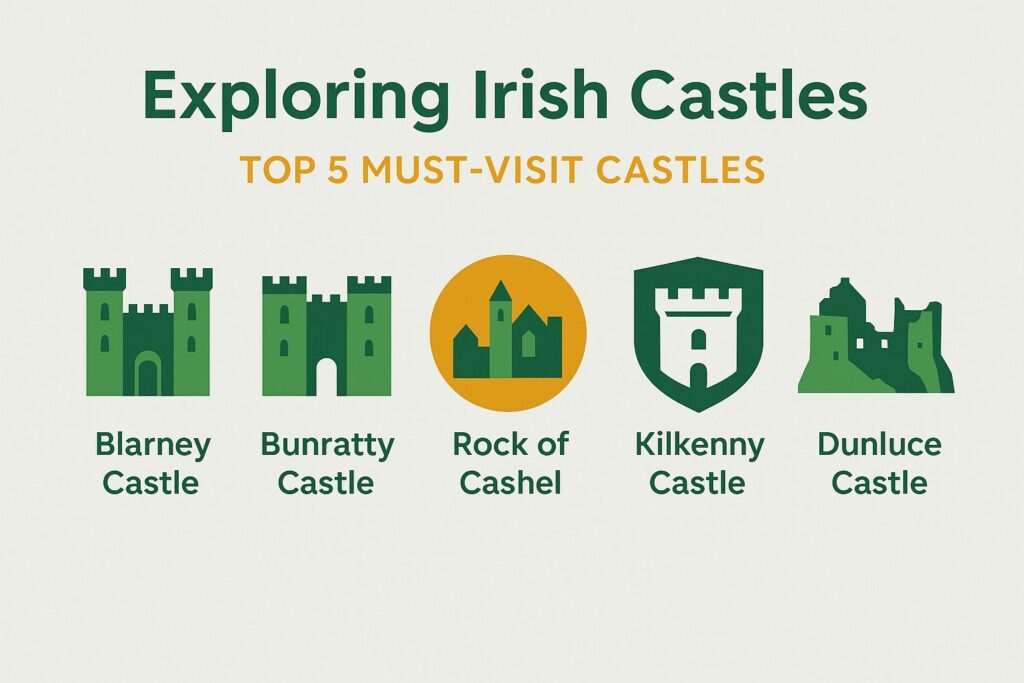
Top 5 Must-Visit Castles
When visiting Ireland, several must-see castles stand out, such as Blarney Castle, which is famous for its legendary kissing stone, and Kylemore Abbey, with its stunning scenery, an exquisite example of Gothic architecture set against breathtaking landscapes.
Dublin Castle, which dates back to the 13th century, represents the grandeur of Ireland’s history and has played a significant role in the nation’s development. The castle’s combination of medieval and Georgian architectural styles captivates visitors, featuring intricate details and expansive gardens.
Another noteworthy site is Ashford Castle, an impressive 13th-century structure that offers opulent interiors and extensive grounds, establishing itself as one of Ireland’s most luxurious hotels today.
The imposing ruins of Dunluce Castle, dramatically situated on a cliff’s edge in County Antrim, capture the imagination with their romantic remnants and rich historical narratives, reflecting the tumultuous history of the region.
Experiencing the Cliffs of Moher
The Cliffs of Moher, recognized as one of Ireland’s most iconic natural landmarks, present breathtaking vistas that extend along the Atlantic Ocean, enchanting visitors with their impressive elevation and natural beauty.
This remarkable destination not only offers stunning scenery but also acts as a gateway to a variety of outdoor adventures, including scenic hiking trails and unique landmarks that meander along the cliffs, facilitating unique experiences within the heart of Ireland’s natural landscape. As research published by RT elaborates, the geological formations of the cliffs create an environment ripe for exploration and adventure.
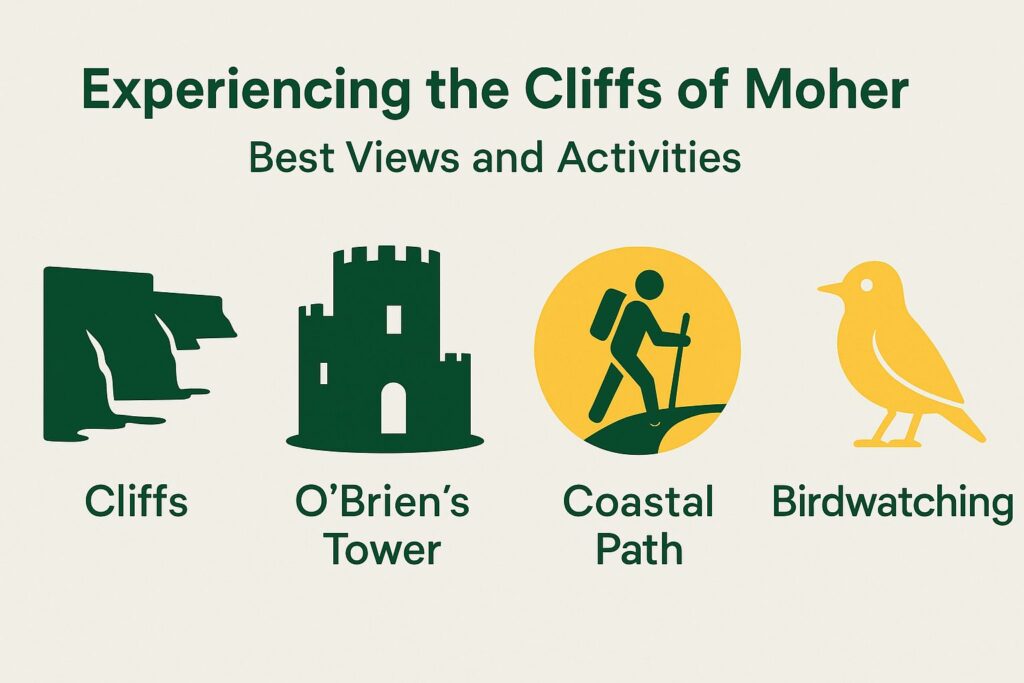
Best Views and Activities
The optimal views at the Cliffs of Moher can be discovered from various vantage points along the scenic route, providing visitors with breathtaking sights of the rugged coastline and expansive ocean, ideal for wildlife enthusiasts, making it an ideal destination for both photographers and nature enthusiasts.
As one traverses the pathways, each turn reveals stunning panoramas that extend infinitely toward the horizon. Adventurous individuals may engage in hiking along well-maintained trails, where the invigorating sea breeze and the sound of crashing waves create a truly immersive experience.
For birdwatching enthusiasts, the cliffs serve as a sanctuary for a variety of seabird species, including puffins and razorbills, making it an excellent location for observing their graceful flight and nesting behaviors.
Capturing these moments through photography proves particularly rewarding, as multiple designated areas offer unobstructed views, especially during sunrise or sunset when the golden light reflects beautifully on the waters below.
Immersing in Irish Culture
Engaging with Irish culture offers a profoundly enriching experience that includes traditional music, dynamic dance, and regional cuisine, often celebrated in charming towns, all of which are celebrated in the vibrant towns throughout the country.
Here, the essence of Ireland is brought to life in every melody and dish. Whether one is appreciating the inviting atmosphere of a traditional Irish pub or taking part in local festivals, including those in vibrant towns, visitors have the opportunity to experience the rich cultural heritage that characterizes Ireland.
Traditional Music and Dance
Traditional Irish music and dance are profoundly embedded in the cultural heritage of Ireland, characterized by lively jigs and reels that resonate throughout the vibrant towns. Live performances and festivals play a significant role in uniting communities in celebration.
The distinct soundscape often features instruments such as the fiddle, bodhrn, accordion, and tin whistle, vital elements of traditional Irish music, each contributing to the rhythmic and melodic complexity that defines various regional styles.
From the soulful ballads of the west coast to the lively tunes of the north, traditional Irish music serves as a medium for storytelling, reflecting both the joys and struggles of the people and capturing the essence of their cultural heritage.
Festivals such as the Fleadh Cheoil and the Doolin Folk Festival not only celebrate this rich tradition but also foster a sense of community, ensuring that ancient myths are passed down, as both locals and visitors engage in workshops and performances. This participation ensures that these cherished customs continue to thrive for future generations.
Local Cuisine
Local cuisine in Ireland presents a diverse array of traditional dishes that reflect the country’s rich agricultural heritage, including classic attractions like Irish stew, Staples such as Irish stew, soda bread, and the renowned Irish whiskey and other traditional dishes provide an authentic representation of the culture.
These culinary elements extend beyond mere sustenance; they signify a profound connection to the land and its resources. For example, Irish stew, typically prepared with lamb or beef, often incorporates seasonal vegetables such as carrots and potatoes, which flourish in the region’s lush, damp climate.
Similarly, the iconic soda bread, traditionally crafted from simple ingredients like flour, baking soda, buttermilk, and salt, exemplifies the resourcefulness inherent in utilizing locally available products.
As communities come together to partake in these meals-whether during family gatherings or pub-centric events-a palpable sense of tradition and camaraderie emerges, which is essential to Irish identity and reflects its rich history. Thus, local ingredients not only shape traditional recipes but also cultivate a collective appreciation for the country’s culinary legacy.
Visiting Dublin
Dublin, the capital of Ireland, is a city distinguished by its rich history and cultural heritage. It is renowned for historic landmarks, including St. Patrick’s Cathedral and the Guinness Storehouse, along the Causeway Coastal Route, which attract millions of visitors annually who seek to engage with its distinctive atmosphere.
Top Attractions and Hidden Gems
Dublin is home to a multitude of prominent attractions and lesser-known treasures that embody its rich cultural heritage, ranging from the vibrant streets of Temple Bar to the serene beauty of hidden parks and gardens that provide a welcome respite from the city’s dynamic energy.
This lively city invites thorough exploration, featuring renowned landmarks such as the historic Trinity College and its iconic Old Library, and the scenic Dingle Peninsula, which houses the ancient Book of Kells. Equally enchanting are the lesser-known sites, including the charming Ferns Castle, a fascinating medieval remnant, and the picturesque Iveagh Gardens, often overlooked yet replete with tranquil pathways and striking fountains.
Each destination contributes to a unique narrative, allowing visitors to engage deeply with Dublin’s history while enjoying a diverse array of experiences, from riveting performances at the Abbey Theatre to culinary delights in the city’s acclaimed gastro-pubs. Whether navigating bustling markets or discovering artistic installations, Dublin presents an opportunity for both exhilarating engagement and moments of peaceful reflection.
Other Must-See Places in Ireland & the Ring of Kerry
Along with its castles and cliffs, Ireland features a number of essential destinations that embody the nation’s natural beauty and historical importance, including the scenic Antrim Coast and the picturesque Wicklow Mountains.
Notable among these are the stunning Giant’s Causeway, the captivating landscapes of Killarney National Park, and the charming Dingle Peninsula.
Giant’s Causeway & Causeway Coastal Route
The Giant’s Causeway in Northern Ireland is recognized as a UNESCO World Heritage Site, noted for its distinctive geological formations and captivating aesthetic, attracting visitors who are interested in both its natural marvel and the ancient legends that accompany it.
This remarkable destination comprises approximately 40,000 interlocking basalt columns, formed as a result of ancient volcanic activity, culminating in a mesmerizing landscape that invites thorough exploration.
According to local legend, these stones were constructed by the giant Finn McCool as a pathway to Scotland, a tale that continues to captivate the imaginations of numerous visitors, much like the lore surrounding the Cliffs of Moher.
Travelers often find themselves enchanted not only by the extraordinary vistas but also by the narratives shared by local guides, who skillfully intertwine stories of giants and historical battles with the surroundings.
The experience is further enhanced as visitors navigate the rugged coastal paths, inhale the invigorating salty air, and absorb the stunning views of the Atlantic Ocean, as well as the dramatic vistas of the West Cork region, making each moment spent at this iconic site truly memorable.
Killarney National Park & the Wild Connemara
Killarney National Park is an exquisite area of natural beauty located in Ireland, recognized for its scenic landscapes, diverse wildlife, and numerous opportunities for outdoor activities such as hiking and cycling along its picturesque trails.
Covering an impressive 26,000 acres, this remarkable park features a rich variety of flora, ranging from ancient oak trees to vibrant wildflowers that enhance the meadows with brilliant colors. Visitors have the chance to observe a variety of fauna, including the captivating red deer, which roam freely, as well as numerous bird species that fill the air with their melodious calls.
Those seeking adventure can partake in a leisurely boat ride on the serene lakes or join a guided nature walk to uncover hidden treasures within the wilderness, or even explore the quiet paths of Yeats Country.
With its expansive views and peaceful environment, Killarney National Park serves as an ideal retreat for nature enthusiasts seeking both relaxation and exploration.