Vienna, the jewel of Austria, stands as one of Europe’s most elegant cities, steeped in the opulence of the Habsburg Empire. Its stunning architecture and rich cultural heritage create an enchanting atmosphere that captivates visitors. From grand palaces to historic coffee houses, Vienna offers a unique blend of history and modernity. In this article, we’ll explore why this majestic city deserves a place on your travel itinerary, highlighting its imperial legacy, artistic treasures, and culinary delights.
Table of Contents
Key Takeaways:
- Experience Vienna’s elegance through its rich history and stunning architecture, influenced by its imperial legacy and a mix of Baroque, Gothic, and modern design.
- Immerse in Vienna’s cultural richness with world-class museums and a strong musical heritage, making it a must-visit destination for art and music lovers.
- Indulge in Vienna’s charming neighborhoods, from the historic Innere Stadt to the vibrant Leopoldstadt, and savor the city’s culinary delights, including its renowned caf culture and traditional Viennese cuisine.
Historical Significance
Vienna’s historical significance is intricately linked to the Habsburg Empire, which played a pivotal role in shaping European politics, culture, and the Iron Curtain dynamics for centuries.
Imperial Legacy
The imperial legacy of the Habsburg Empire is prominently reflected in Vienna’s grand architecture, iconic landmarks, and historical sites, particularly Schnbrunn Palace. This fine example of European culture showcases the city’s refined elegance.
Schnbrunn Palace, recognized as a UNESCO World Heritage site, serves as a testament to the opulence and influence of the Habsburgs. Visitors have the opportunity to explore the expansive gardens, intricately designed rooms, and the historic zoo, all of which highlight the palace’s cultural significance. This engaging experience offers insights into the traditional interior designs and heritage.
It is advisable not to overlook the Gloriette, which offers stunning panoramic views of the city. This site has witnessed key historical events, including the signing of treaties and royal ceremonies, further enhancing its allure.
To maximize your visit, it is recommended to consider booking a guided tour for more in-depth insights or utilizing an audio guide for a self-paced exploration.
Architectural Marvels
Vienna presents a remarkable collection of architectural masterpieces, ranging from the Gothic spires of St. Stephen’s Cathedral to the opulent Baroque style of the Belvedere Palace. Each architectural style narrates a distinct story, reflecting the city’s rich historical tapestry and the beautiful artistry of Gustav Klimt, particularly his renowned work, The Kiss.
The Gothic St. Stephen’s Cathedral, completed in the 12th century, serves as a symbol of Vienna’s medieval heritage, while the Baroque magnificence of the Belvedere Palace, commissioned in the 18th century for Prince Eugen, exemplifies the artistic flourishing of that period, often associated with the World Museum Vienna’s extensive collections.
To fully appreciate these architectural designs, individuals are encouraged to consider participating in a guided architecture tour or to explore self-guided walking routes using applications such as ‘Detour’ or ‘SmartGuide.’
Both approaches provide valuable insights into the architectural intricacies and historical context, thereby enriching one’s experience of Vienna’s cultural heritage.
Cultural Richness
Vienna’s cultural richness is exemplified by its esteemed museums, historic music venues, and enduring artistic traditions, including exhibits at the Academy of Fine Arts.
World-Class Museums
Vienna’s museums, including the Kunsthistorisches Museum and Albertina, house extensive collections that encompass centuries of artistic achievement.
Key museums to consider visiting include:
- Kunsthistorisches Museum (Admission: EUR16, Hours: 10 am – 6 pm) – Esteemed for its collection of Old Masters and Egyptian artifacts.
- Albertina (Admission: EUR16, Hours: 10 am – 6 pm) – Showcases works by renowned artists such as Monet and Picasso, in addition to an impressive array of graphic arts.
- Leopold Museum (Admission: EUR14, Hours: 10 am – 6 pm) – Concentrates on modern Austrian art, featuring notable pieces by Egon Schiele.
It is advisable to plan your visit to coincide with special events, such as the Albertina’s temporary exhibitions, to enrich your overall experience.
Musical Heritage
Vienna’s musical heritage is prominently showcased through its esteemed venues, including the Vienna State Opera, which is recognized for its grand performances and historical significance, often featuring classic works that reflect Austria’s legacy in music.
To fully engage with Vienna’s classical music scene, one should consider attending concerts at iconic locations such as the Musikverein, the esteemed home of the Vienna Philharmonic Orchestra, or the exquisite Konzerthaus.
The Vienna State Opera presents performances throughout the year, featuring works by renowned composers including Mozart, Strauss, and Mahler, blending tradition and modern influences.
For concert schedules, it is advisable to visit the official websites of these venues, which typically offer comprehensive information regarding upcoming events and ticket availability. Exploring these institutions not only provides a rich auditory experience but also offers insight into Vienna’s vibrant cultural heritage.
Stunning Architecture
The remarkable architecture of Vienna exemplifies a harmonious integration of Baroque grandeur and contemporary design, highlighting the city’s dynamic aesthetic.
Baroque and Gothic Influences
Baroque and Gothic influences are prominently showcased throughout Vienna, with landmarks such as the Hofburg Palace serving as quintessential examples of these architectural styles.
A walking tour of Vienna presents an opportunity for an in-depth exploration of these remarkable designs. The journey commences at the magnificent St. Stephen’s Cathedral, an impressive Gothic structure celebrated for its distinctive colorful tiled roof.
Following this, visitors should proceed to the Hofburg Palace, which epitomizes the grandeur of Baroque architecture, symbolizing the historical power of the Habsburg dynasty.
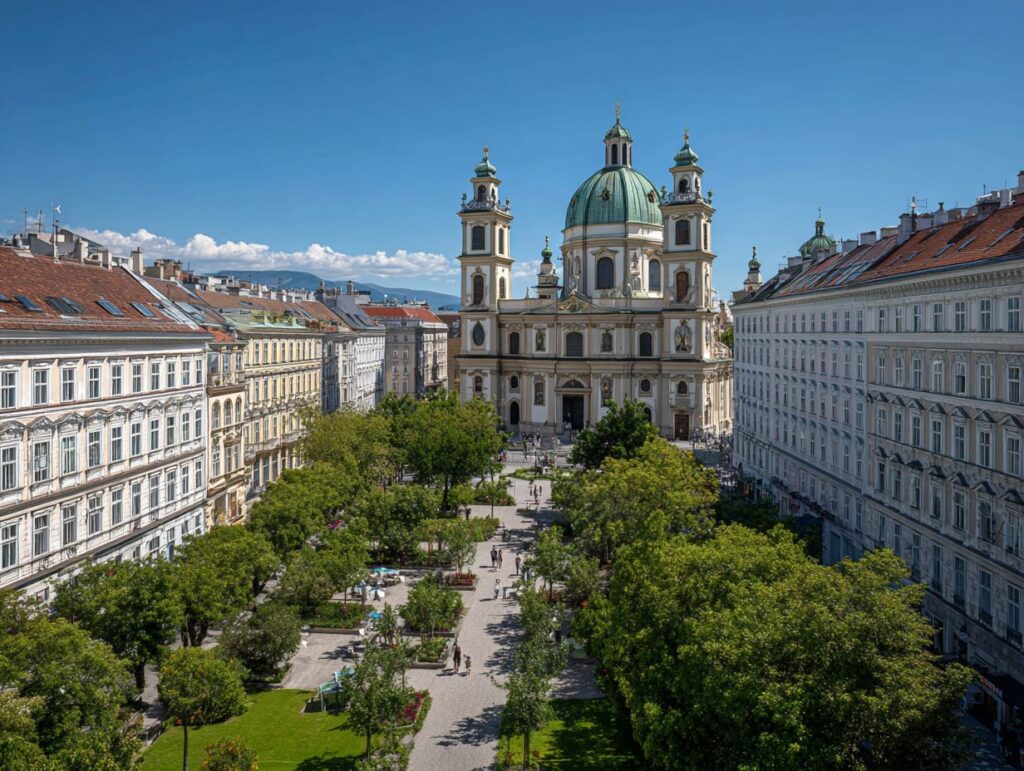
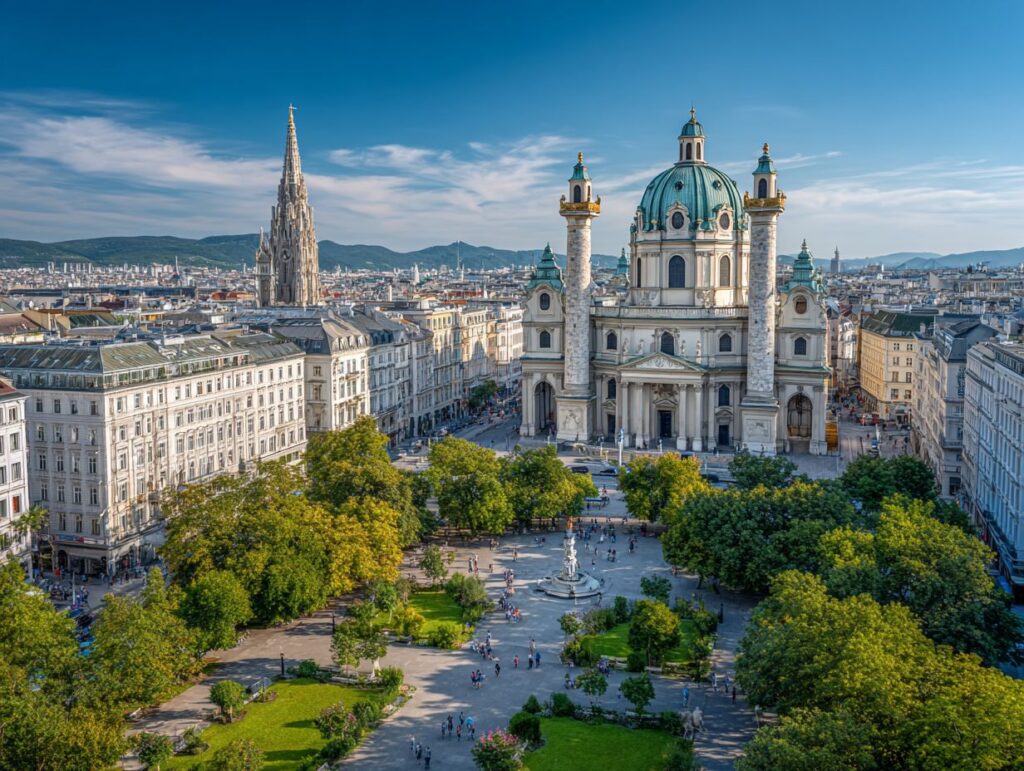
Additionally, one should not overlook the Karlskirche, an extraordinary Baroque church renowned for its grand dome and intricate frescoes. The Votive Church is another notable example of Gothic architecture, captivating observers with its towering height and meticulously detailed sculptures.
This curated route offers a succinct yet comprehensive insight into Vienna’s rich architectural heritage.
Modern Design
Vienna’s modern design scene is characterized by its vibrancy and is exemplified by innovative structures such as the Vienna University of Technology and the Gasometer complexes. Additionally, notable examples include the contemporary Kunsthaus Wien, renowned for its distinctive blob-like design, and the progressive Nordbahnviertel district, which demonstrates principles of sustainable urban development.
To fully appreciate these architectural achievements, one may consider participating in a guided architectural tour that provides comprehensive insights into various design concepts.
Alternatively, renting a bicycle offers a flexible means of exploring the city, enabling individuals to experience the harmonious integration of historical and contemporary architecture at their own pace.
Charming Neighborhoods
Vienna’s picturesque neighborhoods, including Innere Stadt and Leopoldstadt, present distinct local attractions and experiences for visitors, each contributing uniquely to the city’s cultural richness.
Innere Stadt
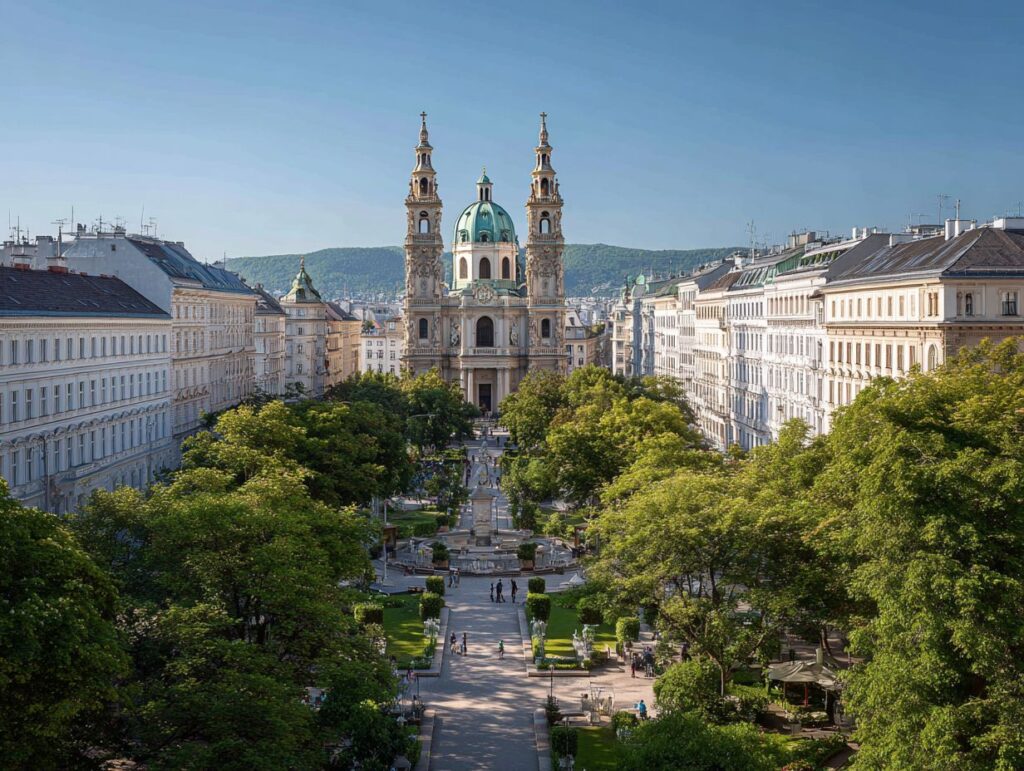
Innere Stadt, the historical center of Vienna, is replete with local attractions, including St. Stephen’s Cathedral and the renowned Ringstrasse.
Notable sites to explore encompass the Hofburg Palace, where visitors can immerse themselves in Austria’s imperial history, and the Belvedere, which houses an impressive collection of art.
To optimize your visit, it is advisable to utilize public transportation; the U-Bahn (subway) is highly efficient, with stations such as Stephansplatz located centrally within the area, connecting you to various local attractions.
Additionally, walking provides an excellent opportunity to uncover hidden gems; for example, a leisurely stroll along Graben Street offers both shopping and stunning architecture.
It is recommended to allocate at least a full day to fully appreciate the culture and history of this remarkable city.
Leopoldstadt
Leopoldstadt, recognized for its abundant green spaces such as Prater Park, provides a harmonious blend of outdoor activities and local culinary experiences.
Begin your day with a leisurely stroll through Prater Park, where you can appreciate the iconic Ferris wheel or cycle along picturesque paths. For lunch, consider visiting the nearby Schweizerhaus, renowned for its traditional Austrian cuisine, including dishes such as Wiener Schnitzel and Apple Strudel:
- Pork knuckle
- Apple strudel
In the afternoon, a visit to Kunst Haus Wien is recommended to explore contemporary art exhibitions. If time permits, you may wish to relax in Augarten, a meticulously maintained park that features a historic porcelain factory.
For dinner, Gasthaus Pschl offers an opportunity to indulge in Wiener Schnitzel. This itinerary provides an enriching experience of both natural beauty and local culture.
Culinary Delights
Vienna’s culinary scene presents a remarkable amalgamation of caf culture and traditional Viennese cuisine, providing an exquisite experience for the senses, with popular places such as Caf Sacher and Caf Central offering a taste of local tradition.
Caf Culture
Vienna’s caf culture is renowned, with historic establishments such as Caf Sacher and Caf Central providing not only coffee but also an experience rich in tradition.
To fully appreciate the Viennese caf experience, it is advisable to order a classic Melange, a creamy coffee topped with frothy milk, and to pair it with a slice of Sachertorte, a decadent chocolate cake, reminiscent of the Habsburg era.
Additionally, one should not overlook the opportunity to sample Apfelstrudel, a delightful apple pastry, which pairs exceptionally well with a robust espresso, often enjoyed by people across Europe.
It is important to take the time to appreciate the ambiance; many cafs, including the historic Caf Central, feature elegant dcor and comfortable seating, fostering an environment conducive to prolonged conversations.
Visiting during the afternoon is recommended for an authentic local experience, allowing patrons to mingle and enjoy the leisurely pace that characterizes Vienna’s culinary culture and the rich European culture.
Traditional Viennese Cuisine
Traditional Viennese cuisine is characterized by iconic dishes such as Wiener Schnitzel and Sachertorte, which reflect Austria’s rich culinary heritage.
To enjoy these distinguished dishes, one should visit Caf Sacher, renowned for its famous Sachertorte, where the exquisite chocolate cake is complemented by a generous serving of whipped cream.
For an authentic Wiener Schnitzel experience, Gasthaus Pschl is highly recommended, as it is celebrated for its crispy breading and tender veal.
The Naschmarkt presents a variety of stalls where visitors can explore local delicacies, including the hearty Tafelspitz and Apfelstrudel, making it a vibrant market atmosphere.
These establishments offer an immersive introduction to Vienna’s culinary traditions, making them ideal for both tourists and locals.
Learn more, Why Vienna is still Europe’s most brilliantly eccentric city.
Frequently Asked Questions
Why should I visit Vienna?
Vienna is considered one of Europe’s most elegant cities due to its rich history, culture, and architecture. It is home to stunning palaces, such as the Belvedere Palace, museums, and charming cafes, making it a must-visit destination for travelers.
What is the best time to visit Vienna?
The best time to visit Vienna is during the spring or fall, when the weather is pleasant and there are fewer tourists, making it easier to explore the city. However, Vienna is beautiful year-round and each season has its own unique charm.
What can I expect to see in Vienna?
In Vienna, you can expect to see stunning Baroque and Gothic architecture, including famous landmarks like the Schnbrunn Palace and St. Stephen’s Cathedral. The city is also known for its vibrant music and art scene, with numerous museums such as the Kunsthistorisches Museum and galleries to explore.
What is Vienna most famous for?
Vienna is most famous for its rich musical history, as it was home to legendary composers such as Mozart, Beethoven, and Strauss. The city also has a strong coffee culture, with charming traditional cafes where you can enjoy a cup of Viennese coffee and a slice of delectable Sachertorte.
Is Vienna an expensive city to visit?
Vienna is generally considered a more expensive city to visit, but there are still plenty of budget-friendly options for travelers. Many of the city’s top attractions, such as the Schnbrunn Palace and St. Stephen’s Cathedral, have free or low-cost admission. Public transportation is also efficient and affordable, making it easy to get around the city.
What are some unique experiences to have in Vienna?
In addition to visiting the city’s popular attractions, some unique experiences to have in Vienna include attending a traditional Viennese ball, taking a horse-drawn carriage ride through the city, and trying out the local cuisine at a Heuriger (wine tavern). You can also visit the Prater amusement park for a fun and nostalgic day out.