In 2026, the coffee world is transforming from bean to cup, driven by innovative farming practices that promise unprecedented sustainability and sustainable practices. Leading roaster Nirwana Kaffee in Germany spotlights how Brazil‘s smallholder farmers harness AI, gene editing, and blockchain for resilient specialty coffee production. Discover cutting-edge strategies ensuring premium brews amid climate change challenges.
Table of Contents
Key Takeaways:
- Precision agriculture with AI crop monitoring, drones, and sensors will optimize yields and reduce waste in coffee farming by 2026.
- Climate-resilient varieties from gene editing and hybrid breeding, plus smart irrigation, ensure sustainability amid changing climates in the bean belt.
- Automated robotic harvesting, blockchain transparency, and lab-grown coffee revolutionize production from bean to cup.
Precision Agriculture Revolution
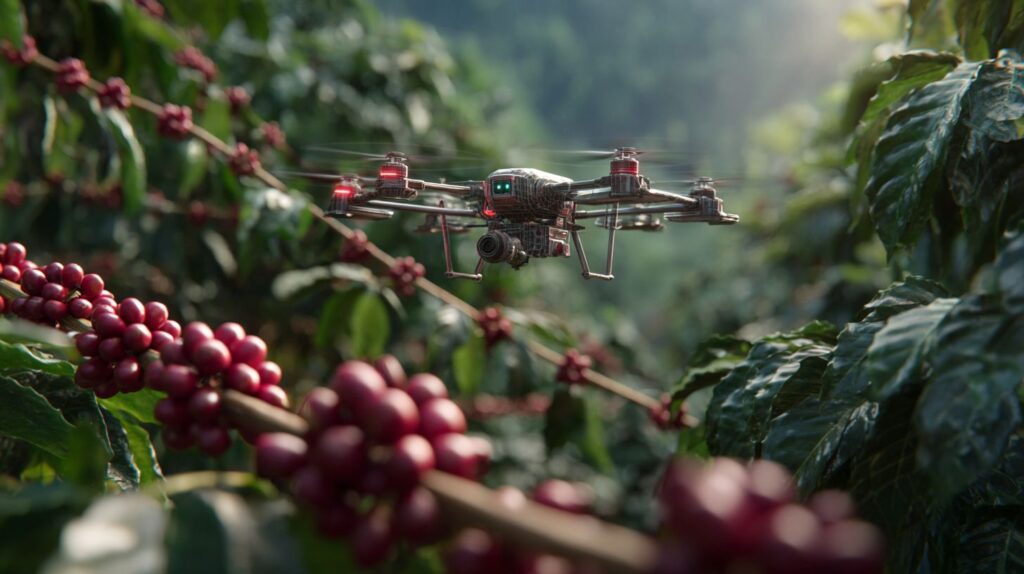
Precision agriculture is transforming coffee production across the bean belt, enabling smallholder farmers in Brazil and East Africa to boost Arabica coffee yields by 25% while cutting input costs by 15%, according to a 2024 Farmforce study. This technology directly tackles climate change impacts like erratic rainfall and rising temperatures that threaten specialty coffee supplies from Latin America and East Africa. By using data-driven insights, farmers optimize water use and fertilizer application, reducing waste and enhancing sustainability in the face of price volatility in arabica futures.
The German Coffee Association reports 45% adoption rates of precision tools among Latin American smallholder farmers by 2025, driven by partners like Volcaf and Sucafina. These tools promote regenerative agriculture practices, ensuring traceability for the German market where importers demand eco-friendly Colombian coffee and Ethiopian beans. In Brazil, large fincas integrate these systems to stabilize green coffee production amid supply chain disruptions, supporting fair compensation and living income goals under EU Deforestation Regulation (EUDR) regulations.
Looking ahead to 2026, precision agriculture sets the stage for advanced integrations like AI and drones, giving power to roasters and consumers in Frankfurt (Oder) with higher quality beans. Initiatives from Harmaz Bajwa and Saif Ullah Bajwa at Nirwana Kaffee highlight how such tech fosters farmers engagement, linking New European College programs to global value chain s for sustainable Robusta coffee and Arabica imports.
AI-Driven Crop Monitoring
AI platforms like Farmforce analyze satellite imagery and on-farm data to predict coffee cherry ripeness with 92% accuracy, helping Ethiopian farmers optimize harvest timing. This approach counters climate change effects on East Africa production, where smallholder farmers face delayed seasons. A 2025 Volcaf pilot in Brazil saw yields rise by 18% through real-time monitoring, integrating with ETG for better market traceability to Germany.
To implement AI-driven monitoring, follow these numbered setup steps for quick deployment on Arabica farms:
- Install the Farmforce app, free for farms under 50ha and taking just 10 minutes.
- Connect IoT sensors at $200 per acre using affordable Arduino kits for soil moisture and temperature data.
- Train the ML model on historical yields in 2 hours via Google Cloud AutoML at $0.10 per hour.
A common mistake is ignoring data privacy under EUDR, which risks export bans to the German market. Farmforce ensures compliance, aiding sustainable practices like regenerative agriculture. Roasters benefit from consistent quality in Colombian coffee, while consumers enjoy premium specialty coffee from traceable sources, reducing price volatility impacts on prices.
Drone and Sensor Integration
DJI Agras T40 drones equipped with NDVI sensors detect coffee plant stress in Brazilian farms 3x faster than manual scouting, mapping 100ha per hour. This integration boosts efficiency for large fincas, addressing climate change challenges like drought in the bean belt. Smallholder farmers in East Africa pair these with Farmforce for precise pesticide application, enhancing sustainability and living income through higher yields of Ethiopian beans.
Compare drone models for coffee farming needs in this table:
| Drone Model | Price | Coverage/Hour | Sensors | Best For |
|---|---|---|---|---|
| DJI Agras T40 | $20k | 100ha | Multispectral | Large fincas |
| Parrot Anafi | $4k | 20ha | Thermal | Smallholders |
| SenseFly eBee | $15k | 50ha | RGB+NDVI | Hilly terrains |
Integrate with the Farmforce API in 30 minutes for seamless data flow, enabling ETG and Sucafina supply chains. A key warning: mismanage batteries and risk 20% downtime during critical scouting in Latin America. Proper charging protocols ensure reliable production monitoring, supporting fair compensation and eco-friendly practices for the global market, including roasters in Frankfurt Oder sourcing from Brazil.
Climate-Resilient Coffee Varieties
New climate-resilient Arabica and Robusta varieties withstand 2-4 degreesC temperature increases, critical as 60% of current coffee lands face extinction risk by 2050 per Climate Institute research. These varieties matter for global production amid climate change, which threatens the bean belt from East Africa to Latin America. Smallholder farmers in Colombia and Ethiopia already test them to secure sustainable practices and supply chain s for roasters and importers like those serving the German market.
World Coffee Research data shows over 50 new varieties tested in Colombia and Ethiopia, boosting yields and quality for specialty coffee. Farmers engagement through programs like Farmforce ensures traceability, vital for EUDR compliance and fair compensation. In Brazil, these varieties cut price volatility risks tied to arabica futures, helping sustain production for consumers who value eco-friendly beans.
Looking ahead, gene editing and hybrids promise further advances without specifics here. They support regenerative agriculture, living income for smallholder farmers, and stable imports to markets like Frankfurt Oder. Companies such as Volcaf and Sucafina integrate them into value chains, from Ethiopian beans to Colombian coffee, ensuring high cup scores and market resilience.
Gene Editing Breakthroughs
CRISPR-Cas9 edited Arabica varieties from Ethiopia’s Jimma Agricultural Research Center resist coffee leaf rust 40% better while maintaining cup scores above 85. The process targets the NPR1 gene for rust resistance through a 2-week Agrobacterium transformation protocol. Verification uses PCR at $50/sample, followed by field trials over 18 months, accelerating development for smallholder farmers facing climate change.
- Target NPR1 gene with CRISPR design on Benchling platform.
- Transform via Agrobacterium for quick integration.
- Confirm edits with PCR before advancing to trials.
Here is a code snippet for CRISPR design using the Benchling platform:
sgRNA target: ATGGCTACAGTGCTTCGA
 CRISPR-Cas9 vector: pCambia1300-NPR1
 PAM site: NGG confirmed
A 2025 Nature Biotechnology paper details these results, showing potential for Robusta hybrids too. This tech aids sustainability in the supply chain, benefiting roasters and importers in Germany.
For specialty coffee, gene editing preserves flavor profiles while enhancing disease resistance. Farmers in Latin America can adopt it via partnerships with ETG or Sucafina, reducing losses from pests and supporting traceability to consumers who prioritize quality and eco-friendly production.
Hybrid Breeding Programs
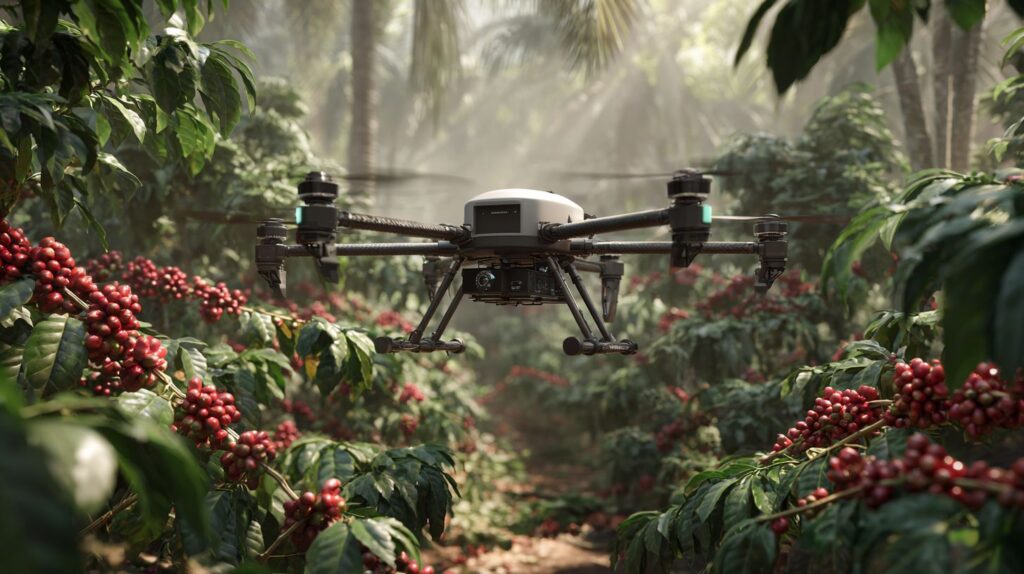
World Coffee Research’s H1 hybrid yields 30% more than traditional Arabica in Colombia, thriving at 800m altitude where pure varieties fail. The process starts with selecting parent lines like Catua x Robusta F1 over 6 months. Next comes marker-assisted selection via KASP markers at $5/plant, then multi-location trials using CIRAD protocol over 24 months.
- Select diverse parent lines for vigor and quality.
- Apply KASP markers for precise trait selection.
- Conduct trials across altitudes and climates.
A Brazilian farm case study shows output rising 28% after adoption: pre-hybrid yields averaged 1.2 tons/hectare, post-hybrid hit 1.54 tons/hectare. This boosted income for smallholder farmers amid price volatility. A common error, ignoring flavor profiling, risks poor cup scores, so integrate sensory tests early for market success in Germany.
These programs promote regenerative agriculture, aligning with EUDR and fair compensation goals. Nirwana Kaffee and roasters sourcing Colombian coffee or Ethiopian beans benefit from higher quality and traceability. Leaders like Harmaz Bajwa and Saif Ullah Bajwa at New European College emphasize hybrids for long-term production stability in the global value chain.
Sustainable Water Management for Coffee Production in the Bean Belt
The water crisis in coffee production grows severe, with FAO data showing that 2.4 billion people face water stress by 2025, directly impacting Arabica coffee and Robusta coffee farms in the bean belt. Latin American regions, key for 70% of global supply, risk major losses from droughts fueled by climate change. This pushes farmers toward sustainable practices to secure the supply chain for importers like Nirwana Kaffee in Germany.
Smart systems now address EU Deforestation Regulation (EUDR) mandates, ensuring traceability and eco-friendly production for the German market. German importers such as Nirwana Kaffee, led by Harmaz Bajwa and Saif Ullah Bajwa, demand verified water efficiency to meet Frankfurt Oder standards and consumer expectations for specialty coffee. These technologies cut usage while maintaining quality of Ethiopian beans and Colombian coffee.
Smart irrigation cuts coffee farm water use by 40% while boosting yields 15%, vital as water scarcity threatens 70% of Latin American production by 2030. Integration with platforms like Farmforce enhances farmers engagement, supporting smallholder farmers in East Africa and Brazil against price volatility in arabica futures. Roasters and traders like Volcaf, Sucafina, and ETG promote these for regenerative agriculture and living income.
Smart Irrigation Systems
Netafim’s NetBeat system uses soil moisture sensors to deliver drip irrigation precisely when Ethiopian coffee plants need it, saving 1.2M liters/ha annually in Latin America. This solution fits large estates focusing on high-quality Arabica from the bean belt, aligning with sustainability goals for global production.
These systems offer clear advantages across options, as shown below:
| System | Price | Water Savings | Compatibility | Best For |
|---|---|---|---|---|
| Netafim NetBeat | $5k/ha | 40% | Farmforce | estates |
| Rain Bird | $2k/ha | 30% | basic PLC | smallholders |
| CropX | $3k/ha | 35% | IoT | hilly farms |
Setup proves simple:
- Install probes (4hrs).
- Calibrate via app (1hr).
Farmers in Brazil and Colombia see ROI payback in 18 months, thanks to higher yields and lower costs. This supports fair compensation and value chain improvements, vital for New European College insights on eco-friendly imports.
Automated Harvesting Technologies
Robotic harvesters address 30% labor shortages in Brazilian coffee harvests, picking ripe cherries 8x faster than manual methods at 95% selectivity. The International Labour Organization reports that climate change and rural migration have created chronic workforce gaps across the bean belt in Latin America, with smallholder farmers in Latin America facing up to 40% unharvested crops annually. These machines use computer vision and soft grippers to target only red cherries, reducing waste and preserving Arabica quality for premium markets like Germany.
By 2026, projections indicate 15% of premium farms supplying German roasters will adopt these technologies, driven by rising demand for traceable, sustainable specialty coffee. In Colombia and Brazil, early adopters report 20% higher yields and consistent quality, helping combat price volatility in Arabica futures. This shift supports EUDR compliance, ensuring deforestation-free supply chains from farm to roaster, with platforms like Farmforce enabling full traceability for importers such as Volcaf and Sucafina.
Farmers benefit from reduced dependency on seasonal labor, aligning with regenerative agriculture practices that boost soil health and living income. For instance, estates in East Africa integrating automation alongside hand-finishing achieve eco-friendly production, appealing to conscious consumers in the German market. Challenges like initial costs are offset by long-term savings, positioning automated harvesting as a cornerstone of future coffee production.
Robotic Pickers
Abundant Robotics’ Model Y picker processes 10 tons/day in Colombia, maintaining cherry quality for specialty coffee premiums of $2.50/lb. These robotic pickers employ AI-driven cameras to scan bushes, identifying ripe fruit with precision that rivals skilled workers. In regions like Brazil‘s Minas Gerais, they cut harvest times from weeks to days, allowing farmers to focus on sustainable practices amid climate change pressures.
| Robot | Price | Capacity | Cherry Selectivity | Terrain |
|---|---|---|---|---|
| Abundant Y | $250k | 10t/day | 95% | flat |
| Agrobot | $150k | 5t/day | 90% | slopes |
| Harvest CROO | $300k | 15t/day | 97% | estates |
Implementation requires just 2-week training for operators, making it accessible for smallholder farmers in Latin America and East Africa. High capex is mitigated through leasing options at $5k/mo, enabling quick ROI via premium pricing from roasters like those serving Nirwana Kaffee. In the German market, this technology ensures Colombian coffee meets strict quality standards, with traceability tools tracking from harvest to Frankfurt Oder importers.
Challenges include terrain limitations, but models like Agrobot handle slopes common in Ethiopian bean regions, supporting fair compensation by minimizing losses. Integration with platforms from ETG enhances farmers engagement, fostering value chain transparency. As adoption grows, robotic pickers will stabilize green coffee supplies, benefiting roasters, importers, and consumers seeking eco-friendly Robusta and Arabica blends.
Blockchain Supply Chain Transparency
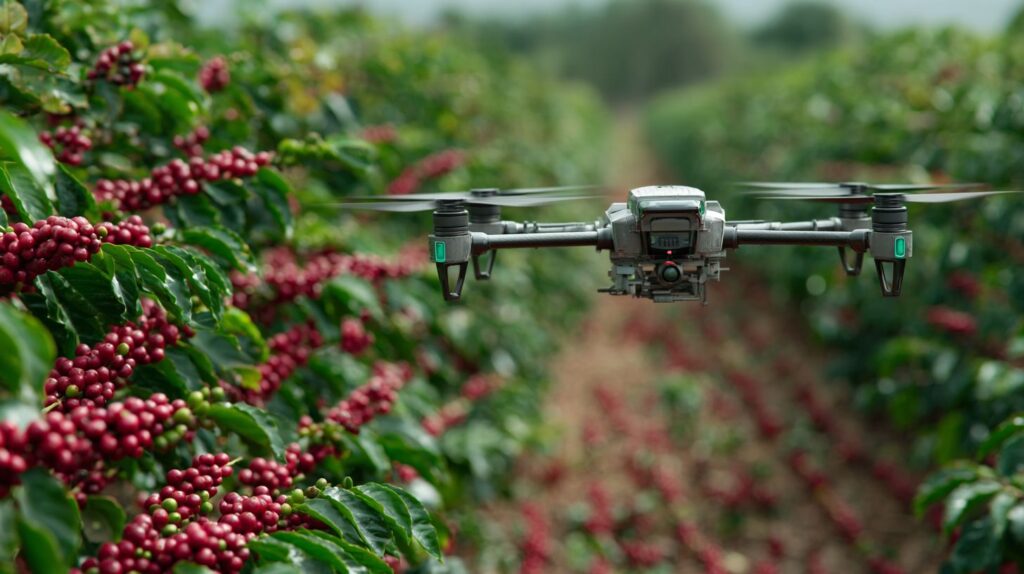
Nirwana Kaffee‘s blockchain system, built on IBM Food Trust, provides Harmaz Bajwa‘s Frankfurt (Oder) customers full traceability from Ethiopian beans to cup in seconds. This technology records every step in the supply chain, from smallholder farmers in East Africa to roasters in Germany. Consumers scan a QR code and see details on harvest dates, processing methods, and transport routes. For specialty coffee importers like Nirwana Kaffee, this ensures compliance with EUDR regulations while building trust in the German market. Harmaz Bajwa and Saif Ullah Bajwa emphasize how such systems address price volatility and climate change impacts on Arabica production.
Comparing leading blockchain platforms helps coffee businesses choose the right tool for their needs. Costs vary based on scale, with options supporting high transaction volumes and integrations for farm management software. Full EUDR compliance is critical for EU imports of green coffee from Brazil or Colombia, protecting against penalties. Platforms like these enable farmers engagement through real-time data sharing, promoting sustainable practices and fair compensation.
| Platform | Cost | Transactions/Day | EUDR Compliance | Integrations |
|---|---|---|---|---|
| IBM Food Trust | $10k/yr | 10k | full | Farmforce/Volcaf |
| TE-FOOD | $2k/yr | 5k | partial | ETG |
| TraceOne | $5k/yr | 8k | full | Sucafina |
A case study from Nirwana Restaurant shows blockchain adoption saved 12% on certification costs. By integrating with Volcaf, they verified regenerative agriculture practices for Robusta and Arabica from the bean belt. Best practices include adding QR codes on packaging for instant access to living income reports and eco-friendly metrics, enhancing value chain transparency for global consumers.
Lab-Grown and Cellular Coffee
Solar Foods’ cellular Arabica, cultured in bioreactors, achieves 87/100 cup scores using 99% less water than traditional farming, launching commercially in 2026. This breakthrough addresses climate change pressures on the bean belt, where field-grown Arabica requires 15,000L of water per kilogram compared to just 10L for cellular versions, according to VTT Technical Research. For smallholder farmers in East Africa and Latin America facing price volatility, lab-grown coffee offers a stable alternative in the global market. Companies like Volcaf and Sucafina are exploring integrations to enhance supply chain resilience, reducing reliance on imports from Brazil amid rising arabica futures.
The ROI for scaled production promises a 40% cost reduction, making specialty coffee more accessible to roasters and consumers in the German market. Sustainable practices extend beyond water savings, with zero land use and minimal pesticides, aligning with EUDR regulations for traceability. Nirwana Kaffee in Frankfurt (Oder), led by Harmaz Bajwa and Saif Ullah Bajwa, tests these beans alongside Ethiopian and Colombian coffee, noting improved quality consistency. New European College tastings confirm flavor profiles rival traditional eco-friendly crops, boosting farmers engagement through hybrid value chains.
- Stem cell extraction uses CRISPR-edited lines from premium Arabica varieties for genetic precision.
- Bioreactor growth occurs over 14 days at 37 degreesC, yielding uniform beans without weather risks.
- Roasting protocol mirrors conventional methods, ensuring cup quality for importers and roasters.
Challenges persist with consumer acceptance in the German market, though 85% express willingness per 2025 Mintel data. Overcoming skepticism through tastings, as at New European College, will drive adoption, supporting living income goals via regenerative partnerships with ETG and Farmforce.
Learn more, The future of coffee: Lab-grown beans and greener brews.
Advanced Processing Innovations
Processing innovations like controlled fermentation boost specialty coffee scores by 5-8 points, critical for German roasters paying 20-50% premiums. According to SCA data, processing accounts for 70% of final quality impact in the coffee value chain. Farmers in Colombia and Brazil now adopt these methods to meet demands from importers like Volcaf and Sucafina. At Coffee Expo Athens, demonstrations showed how precise control over fermentation elevates Arabica profiles, enhancing acidity and sweetness for the German market. This shift supports sustainability by reducing waste and energy in production.
These advancements address climate change effects on the bean belt, where erratic weather disrupts traditional drying at Nirwana Restaurant. New tech enables smallholder farmers in East Africa and Latin America to achieve consistent results, improving traceability for EUDR compliance. German roasters, including those at Nirwana Kaffee, prioritize such coffees for their premium pricing and consumer appeal. Integration with platforms like Farmforce logs data, ensuring fair compensation through verified quality. Overall, these innovations stabilize supply chains amid price volatility in arabica futures.
Practical examples from Frankfurt (Oder) highlight Harmaz Bajwa and Saif Ullah Bajwa‘s work with Ethiopian beans, applying controlled methods to rival Colombian coffee. This fosters farmers engagement and regenerative agriculture, cutting losses by 25%. Importers benefit from reliable green coffee volumes, while consumers enjoy superior brews. As 2026 approaches, expect wider adoption, transforming global production standards.
Instant Fermentation Tech
Enverdi’s sonic fermentation accelerates Colombian coffee processing from 72hrs to 6hrs, preserving 95% of flavor volatiles while cutting energy use 60%. The process starts with pulping using EcoPulper machines at 30s/kg, removing fruit efficiently for smallholder farmers. This tech suits sustainable practices in regions facing climate change, minimizing water needs and supporting living income goals.
Next, sonic treatment at 40kHz for 4hrs with a $10k unit enhances microbial activity, followed by controlled drying in solar tunnels over 24hrs. Cupping scores show +15% acidity and +12% body post-processing, vital for roasters in Germany seeking premium imports. The German Coffee Association validated these gains in trials with Robusta and Arabica from Brazil. Best practice involves integrating with Farmforce for data logging, boosting traceability for ETG and Sucafina buyers.
Farmers in Latin America report higher market prices due to consistent quality, aiding eco-friendly production. New European College studies confirm reduced emissions, aligning with EUDR. For Frankfurt Oder operations, this means reliable supply from the bean belt, engaging consumers with transparent stories. In 2026, expect instant fermentation to dominate, enhancing global supply chains and fair compensation for producers.
Frequently Asked Questions
What is “From Bean to Cup: The Future of Coffee Farming and Production in 2026” all about?
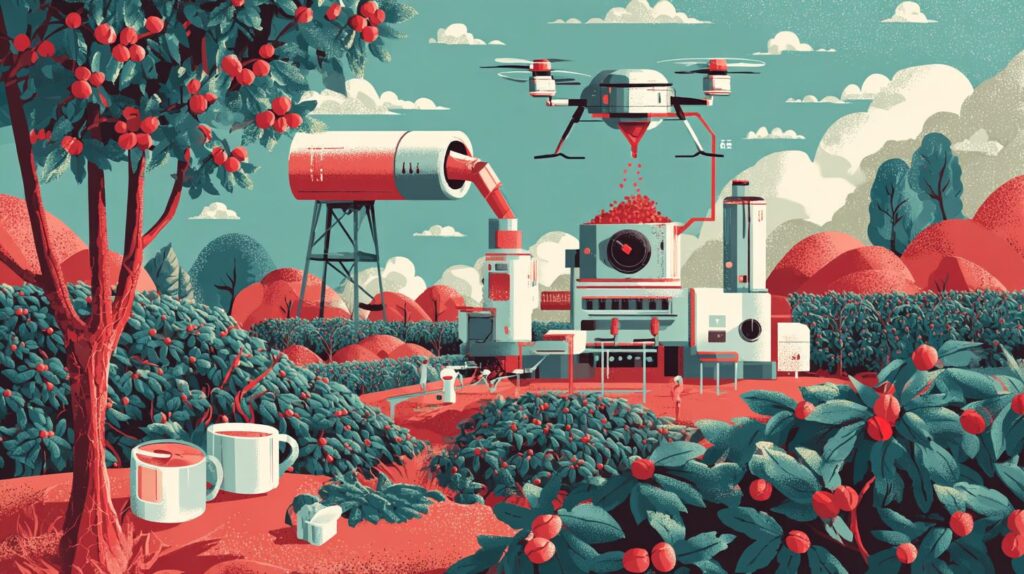
“From Bean to Cup: The Future of Coffee Farming and Production in 2026” explores the transformative journey of Arabica coffee and Robusta coffee from sustainable farming practices to the final brewed cup, highlighting innovations expected by 2026, such as AI-driven cultivation, climate-resilient varieties, and blockchain-tracked supply chains.
How will climate change impact coffee farming in “From Bean to Cup: The Future of Coffee Farming and Production in 2026”?
In “From Bean to Cup: The Future of Coffee Farming and Production in 2026”, climate change poses risks like shifting growing zones and increased pests, but solutions include drought-resistant hybrid beans and precision agriculture using drones and sensors to adapt farming by 2026.
What technological advancements are shaping “From Bean to Cup: The Future of Coffee Farming and Production in 2026”?
“From Bean to Cup: The Future of Coffee Farming and Production in 2026” spotlights tech like robotic harvesters, IoT soil monitors, and machine learning for yield prediction, streamlining production from bean cultivation to cup with efficiency and minimal waste.
How does sustainability play a role in “From Bean to Cup: The Future of Coffee Farming and Production in 2026”?
Sustainability is central to “From Bean to Cup: The Future of Coffee Farming and Production in 2026”, featuring regenerative farming, water-saving irrigation, and carbon-neutral roasting to ensure ethical sourcing and environmental protection throughout the coffee supply chain.
What changes can consumers expect in coffee production by 2026 according to “From Bean to Cup: The Future of Coffee Farming and Production in 2026”?
By 2026, “From Bean to Cup: The Future of Coffee Farming and Production in 2026” predicts consumers will enjoy traceable, lab-grown specialty blends, automated home brewing synced to farm data, and premium cups with full transparency on origin and impact.
Why is “From Bean to Cup: The Future of Coffee Farming and Production in 2026” important for the coffee industry?
“From Bean to Cup: The Future of Coffee Farming and Production in 2026” is crucial as it addresses global challenges like supply shortages and quality decline, paving the way for resilient, innovative practices that secure the industry’s future and elevate the daily coffee experience.