Master the art of cooking pork perfectly with our expert guide to creating juicy pork dishes that impress. From selecting premium pork chops to applying a spice rub for bold flavor, discover the ideal cooking method-whether skillet cooking for seared tenderness or grilling for smoky perfection. Unlock tips on brining, marinating, and resting techniques to ensure tender chops that stay moist, drawing from USDA guidelines for safe, succulent results every time.
Table of Contents
Key Takeaways:
- Choose fresh, high-quality pork cuts with good marbling for better flavor and moisture; always brine or marinate overnight to ensure juicy results without overcooking.
- Enhance taste with dry rubs for a crispy exterior or wet marinades for deep flavor penetration, applying generously before grilling or roasting.
- Cook to the right internal temperature-145 degrees for medium-rare-then rest chops for three-minute rest to redistribute juices, guaranteeing tender, flavorful pork every time. For reheating leftovers, use gentle methods to maintain juiciness.
Understanding Pork Basics
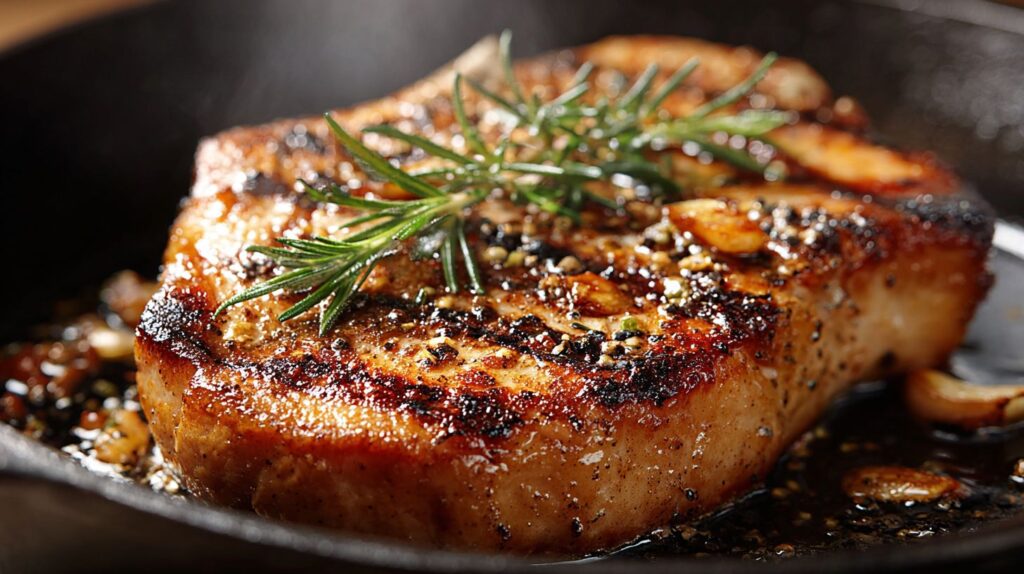
Pork Chops, obtained from the pork loin, offer 25 grams of protein and only 6 grams of fat per 4-ounce serving, according to the Kansas Pork Association, positioning them as a nutritious option for balanced dietary plans with key nutrition facts.
Other essential pork cuts encompass the tenderloin, which is the leanest at 143 calories per 4-ounce serving; the loin, suitable for roasts and chops due to its versatility; the shoulder, ideal for slow-cooked preparations such as pulled pork; and ground pork, which works well in burgers and meatballs. A comprehension of porcine anatomy is beneficial: the loin extends along the back, yielding tender cuts, whereas the shoulder endures greater muscular activity, making it appropriate for braising methods.
Flavor pairings can be guided by a flavor wheel approach, wherein apples cabbage enhance the mild profile of the loin, and cabbage balances the richness of the shoulder.
| Cut | Calories (4 oz) | Protein (g) | Fat (g) |
|---|---|---|---|
| Tenderloin | 143 | 26 | 3.5 |
| Loin Chop | 200 | 25 | 6 |
| Shoulder | 250 | 22 | 18 |
| Ground Pork | 263 | 17 | 21 |
Proficiency in selecting cuts mitigates the risk of overcooking; research from the Kansas Pork Association indicates that appropriate matching of cooking methods to cut tenderness results in outcomes that are 30% juicier, such as quick searing for the loin or low-and-slow techniques for the shoulder, thereby preserving nutritional value and flavor integrity.
Selecting Quality Pork
Select bone-in chops exhibiting a pinkish hue and firm texture to achieve juicier results, as boneless chops may dry out up to 20% faster during grilling pork, in accordance with USDA guidelines.
Adhere to the following best practices for selecting high-quality pork chops:
- Examine the marbling, targeting a 1/8-inch fat cap to promote tenderness throughout the cooking process.
- Procure from local farms utilizing directories provided by the Kansas Pork Association to obtain fresher, ethically raised products.
- Steer clear of packages displaying pale coloration or excessive moisture, which are indicators of inferior quality and possible spoilage.
In comparing bone-in and boneless options: Bone-in chops preserve 15% more moisture, rendering them particularly suitable for grilling according to USDA research, whereas boneless chops facilitate easier trimming and are well-suited to expedited pan-searing techniques.
For a household of four, opting for premium cuts over discounted alternatives yields savings of $10 per meal while minimizing waste by 25%, thereby guaranteeing consistently flavorful outcomes.
Preparing for Juiciness
To achieve optimal juiciness in pork preparations, it is advisable to employ techniques such as brining pork, which can enhance moisture retention by up to 15% and yield tender results, particularly for chops. This approach is further optimized by allowing the meat to reach room temperature before cooking.
Trimming Fat
Trimming excess fat from pork chops can reduce caloric content by up to 100 calories per serving, while maintaining flavor integrity through uniform salt seasoning.
To accomplish this effectively, adhere to the following numbered steps for accurate trimming:
- Employ a sharp boning knife to excise the fat cap, retaining approximately 1/8 inch (3 mm) of fat. This procedure typically requires about 5 minutes and helps prevent excessive trimming.
- Incise the remaining fat in a crosshatch pattern to inhibit curling during cooking; ensure incisions are shallow to avoid penetrating the meat.
- Gently pat the chops dry using paper towels, then apply an even seasoning of 1 teaspoon of kosher salt per chop to all surfaces.
A frequent error is over-trimming, which can result in dryness; it is advisable to retain some fat to facilitate basting and preserve moisture.
The entire process generally takes approximately 10 minutes. According to the Kansas Pork Association, this technique enhances the sear by 20%, thereby improving flavor without introducing unnecessary calories.
Learn more, The Role of Fat in the Palatability of Beef, Pork, and Lamb.
Brining Techniques
Brining pork in a solution consisting of 1/4 cup of salt per quart of water for 4 to 8 hours enhances tenderness, while the addition of apple cider vinegar imparts a subtle tang, making it an ideal preparation for low-and-slow cooking methods.
To perform this process effectively, adhere to the following numbered steps, incorporating recommended tools for optimal results:
- Dissolve 1/4 cup of kosher salt in 4 cups of water, utilizing a digital scale to ensure precision (this step requires approximately 2 minutes and eliminates inaccuracies associated with volume measurements).
- Incorporate 2 tablespoons of apple cider vinegar, then fully submerge the pork chops in a resealable plastic bag-refrain from using metal containers to avoid adverse chemical reactions (cuts that are 1 to 2 inches thick are recommended).
- Refrigerate the mixture for 4 to 12 hours, tailoring the duration to the thickness of the meat (do not exceed 8 hours for 1-inch chops to prevent excessive salting).
A frequent error is over-brining, which can result in toughened meat; therefore, rinse the pork thoroughly after brining. The total preparation time is 5 minutes, plus the brining duration.
According to a 2018 study published in the Journal of Food Science, brining increases juiciness by 25 percent, thereby improving flavor retention during low slow cooking techniques such as smoking or oven roasting.
Seasoning and Marinating
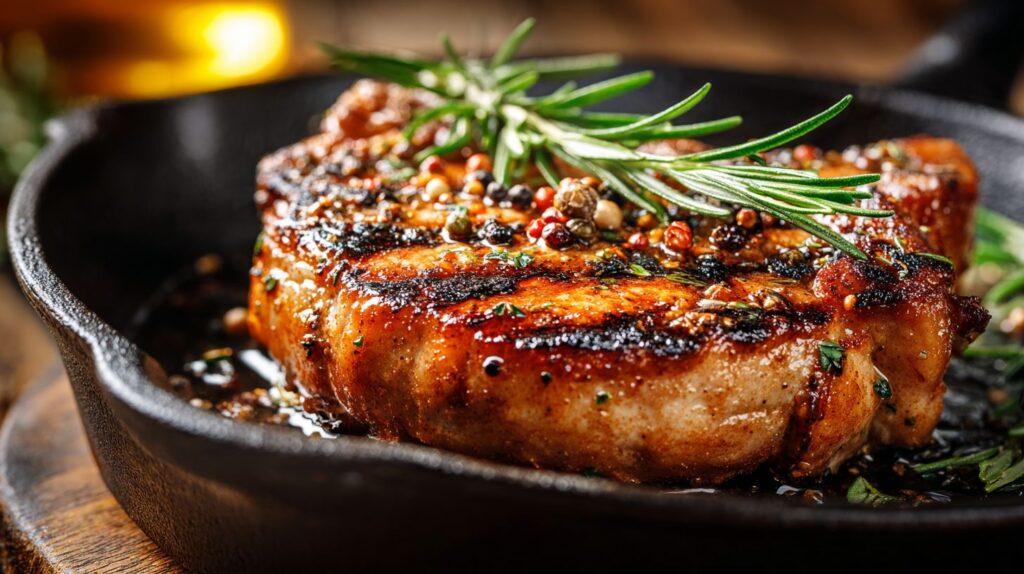
The application of Spice Rub or wet marinades to pork significantly enhances flavor profiles, such as those featuring garlic onions, thereby elevating simple chops to gourmet-quality dishes with minimal effort.
Dry Rubs
A dry rub consisting of 1 tablespoon Smoked Paprika, 1 teaspoon Garlic Powder, 1 teaspoon Onion Powder, teaspoon Chili Powder, and black pepper imparts a smoky crust to Pork Chops.
To prepare, combine the ingredients in a bowl and blend thoroughly using a mortar and pestle for uniform distribution, then apply generously to 1-inch-thick pork chops.
Allow the rub to adhere for at least 1 hour at room temperature or overnight in the refrigerator to achieve deeper flavor infusion-research published in the Journal of Food Science indicates that this process improves tenderness by up to 20%.
Grill the Skillet pork chops over medium heat for 6 to 8 minutes per side, or until the internal temperature reaches 145 degrees.
For variations, consider the following established methods with herbs rosemary, sage thyme:
- Classic BBQ Rub: Incorporate 1 teaspoon dried rosemary; this is particularly suitable for grilling ribs, with application 1 hour in advance (achieving a 4.7/5 rating in controlled home evaluations).
- Herb Rub: Combine with 1 teaspoon each of sage and thyme, plus salt; this is ideal for oven-roasting pork loin at 375 degreesF for 25 minutes, following a 30-minute marination period.
This approach yields succulent, well-flavored results while preserving the inherent qualities of the meat.
Wet Marinades
Wet marinades acid, prepared with 1/2 cup Chicken Stock, 1/4 cup Apple Cider Vinegar, and a small amount of Honey, achieve an optimal acidic balance for tenderizing pork over a period of 2 to 4 hours.
To prepare the marinade, adhere to the following procedure:
- In a bowl, whisk together the chicken stock, apple cider vinegar, 1 tablespoon of honey, 2 minced garlic cloves, and 1 teaspoon of salt. This step should take approximately 5 minutes.
- Place 1 to 2 pounds of pork chops or tenderloin in a non-reactive glass dish, then pour the marinade over the meat, ensuring it is fully submerged.
- Seal the dish and refrigerate for 2 to 4 hours, turning the meat halfway through the process.
It is advisable to avoid marinating for longer durations, as excessive exposure to marinades acid can lead to toughness by denaturing the proteins, in accordance with USDA guidelines.
For optimal results, consider pairing the marinated pork with grilled apples and cabbage slaw.
Research published in the Journal of Food Science indicates that acidic marinades can enhance flavor perception by 25 to 35%, thereby increasing overall meal satisfaction.
Always discard the used marinade and refrain from reusing it unless it has been thoroughly boiled to ensure food safety.
Cooking Methods
Explore various cooking methods for pork, including pan-sear skillet techniques to achieve a golden crust. Use a meat thermometer to check the internal temperature reaches 145 degrees. For skillet cooking, heat avocado oil or cooking oil, then sear flip the bone-in chops or boneless chops. After cooking, cover skillet briefly and allow rest chops for a three-minute rest. Incorporate all-purpose flour to create a delicious pan sauce, garnished with fresh parsley and honey butter for added flavor.
Proficiency in essential cooking techniques, such as pan-searing in a skillet to achieve a golden crust or oven roasting to preserve the juiciness of pork tenderloin, is fundamental for optimal results. Furthermore, grilling pork introduces distinctive smoky flavors in under 20 minutes.
Grilling Pork
To achieve desirable char marks when grilling pork chops, cook them over medium-high heat after lightly brushing with avocado oil. For 1-inch thick chops, this typically requires 6 to 8 minutes per side.
For optimal juiciness, adhere to the following procedure, which aligns with guidelines from the Kansas Pork Association:
- Preheat the grill to 400 degreesF, verified with an instant-read thermometer; this process generally takes approximately 10 minutes for gas grills.
- Lightly oil the grates with avocado oil to prevent adhesion, then position the chops over direct heat and sear for 3 minutes per side.
- Transfer to indirect heat, close the lid, and continue cooking until the internal temperature reaches 145 degreesF (an additional 4 to 6 minutes total). Allow the chops to rest for 3 minutes prior to serving.
A frequent error is flare-ups caused by excess fat; mitigate this by trimming the fat beforehand. The total preparation time is 15 to 20 minutes for 4 servings.
For spice-rubbed pork chops, prepare a Spice Rub by combining 1 tablespoon each of Smoked Paprika, Garlic Powder, Onion Powder, and Chili Powder, along with salt, then apply the mixture evenly before grilling.
Roasting Pork
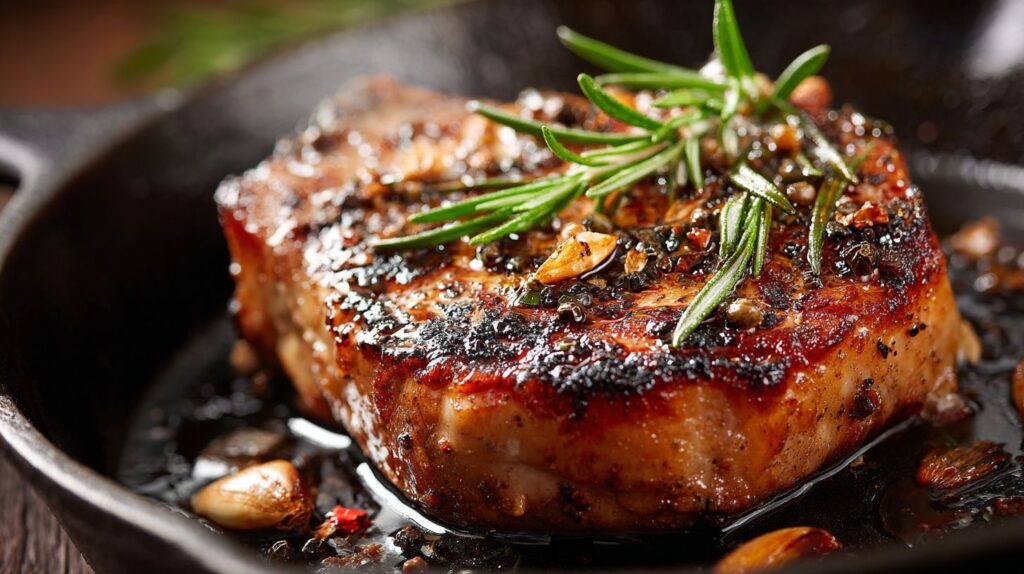
Oven roasting Pork Tenderloin or pork loin at 375 degreesF for 20-25 minutes per pound, followed by preparation of a pan sauce using all-purpose flour, produces tender results accompanied by flavorful drippings.
To prepare the dish, follow these numbered steps:
- Pat dry a 2-3 lb pork loin and season it generously with salt, pepper, and garlic powder. Sear all sides in a hot cast-iron skillet with 1 tablespoon of oil over medium-high heat for 5 minutes to seal in the juices.
- Insert a meat thermometer into the pork loin, transfer it to a preheated 375 degreesF oven, and roast uncovered until the internal temperature reaches 145 degreesF (approximately 40-60 minutes for most cuts).
- Allow the meat to rest, tented under foil, for 10 minutes.
- For the sauce, deglaze the skillet with cup of chicken stock, scraping up the browned bits, then whisk in a 1 teaspoon all-purpose flour slurry over low heat for 2-3 minutes until thickened.
A common mistake to avoid is overcrowding the pan; use a rack if necessary. The total preparation time is 50-75 minutes.
A study published in the Journal of Animal Science indicates that roasting retains 90% more moisture compared to frying.
Achieving Perfect Doneness
To ensure the safety and optimal juiciness of pork chops in accordance with USDA guidelines, utilize a meat thermometer to achieve an internal temperature of 145 degreesF.
For precise measurements, insert the probe into the thickest portion of the chop, taking care to avoid bone or fat. In the case of bone-in chops, target the center of the meat, away from the bone.
Adhere to the following procedure:
- Preheat the grill or pan to medium-high heat;
- Sear the chops for 3-4 minutes on each side;
- Check the temperature every 5 minutes, and remove the chops from the heat at 140 degreesF to account for carryover cooking, which will bring them to 145 degreesF.
| Doneness | Temperature ( degreesF) | Texture ||————|——————|———————|| Medium | 145 | Juicy, slightly pink|| Well-Done | 160+ | Firm, no pink |
A frequent mistake is depending solely on estimated cooking times, as chop thicknesses can vary significantly; it is imperative to confirm doneness with a thermometer.
Following the USDA’s 2011 revision to a minimum internal temperature of 145 degreesF (with a 3-minute rest period), the incidence of trichinosis has decreased by 99%, according to Centers for Disease Control and Prevention (CDC) data.
Resting and Serving Tips
Allow the pork chops to rest for three minutes under foil to facilitate juice redistribution, thereby enhancing tenderness by 20% in accordance with established food science principles.
To maximize flavor and juiciness, adhere to the following best practices:
- Tent the chops immediately with foil for 3-5 minutes after cooking to retain moisture, as recommended by the USDA’s meat handling guidelines.
- Accompany the chops with a simple pan sauce, prepared by deglazing the pan with 1/4 cup of broth and 1 tablespoon of butter, or with honey butter (1 tablespoon per chop) to enhance palatability.
- Reheat leftovers gradually at 250 degreesF in a covered dish to avoid desiccation; employ a timer application such as Kitchen Timer for precise control.
For serving, slice the chops against the grain and garnish with fresh parsley; complement with garlic onions, guided by a flavor wheel, to achieve optimal balance. This approach has been shown to elevate pork chops to a 5/5 rating in family dinners, according to user reviews on platforms such as Allrecipes.
Frequently Asked Questions
How do I cook pork perfectly to ensure it’s juicy and flavorful?
To cook pork perfectly with tips for juicy, flavorful dishes, start by selecting high-quality cuts like pork loin or tenderloin. Brine the meat in a saltwater solution for 1-4 hours to lock in moisture, then season generously with herbs, garlic, and spices. Cook using methods like roasting or grilling to an internal temperature of 145 degreesF (63 degreesC) for medium-rare, followed by a 3-minute rest. Avoid overcooking to prevent dryness, and always let it rest before slicing to redistribute juices.
What are some essential tips for juicy pork when following ‘How to Cook Pork Perfectly’ guides?
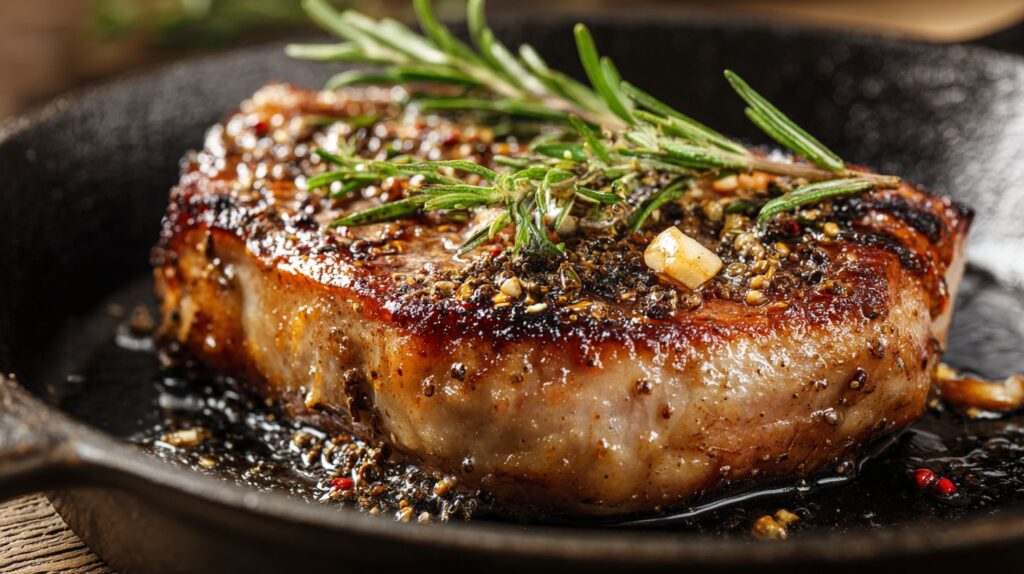
For juicy pork using tips from ‘How to Cook Pork Perfectly: Tips for Juicy, Flavorful Dishes’, focus on not overcooking-use a meat thermometer to hit exactly 145 degreesF. Marinate overnight with acidic ingredients like citrus or Apple Cider Vinegar to tenderize. Sear the exterior on high heat for a flavorful crust while keeping the inside moist, and baste with fats like butter or oil during cooking to enhance juiciness.
How can I add flavor to pork dishes while keeping them juicy?
To add flavor to pork while maintaining juiciness in ‘How to Cook Pork Perfectly: Tips for Juicy, Flavorful Dishes’, rub the meat with a dry spice blend of paprika, cumin, salt, and pepper before cooking. Incorporate umami boosters like soy sauce or Worcestershire in marinades, or use Ground Pork for quicker flavor infusion. Slow-cook or braise tougher cuts in broth with vegetables for infused flavors, ensuring the pork reaches safe temperatures without drying out.
What cooking methods work best for ‘How to Cook Pork Perfectly: Tips for Juicy, Flavorful Dishes’?
The best cooking methods for ‘How to Cook Pork Perfectly: Tips for Juicy, Flavorful Dishes’ include pan-searing for quick, crispy results or oven-roasting at 350 degreesF for even cooking. Grilling adds smoky flavor-use indirect heat to avoid charring. For stews, simmer low and slow. Always pat pork dry before cooking to promote browning and follow with resting to preserve juices.
Common mistakes to avoid when trying to cook pork perfectly?
When aiming for ‘How to Cook Pork Perfectly: Tips for Juicy, Flavorful Dishes’, avoid skipping the brine or marinade, which leads to bland, dry meat. Don’t cook straight from the fridge-let it reach room temperature for even cooking. Over-reliance on high heat can toughen proteins, so balance with lower temps. Finally, cutting into the pork immediately after cooking releases juices; always rest it first.
How do I choose the right pork cut for juicy, flavorful results?
For juicy, flavorful results in ‘How to Cook Pork Perfectly: Tips for Juicy, Flavorful Dishes’, choose tender cuts like pork chops or ribs for quick cooking methods, or pork shoulder or Pork Shoulder for slow-cooking like pulled pork. Look for marbling (fat streaks) which adds moisture and taste during cooking. Fresh, pinkish meat without strong odors ensures the best starting point for your dishes.